TorontoOntario · 36 tours
 Niagara FallsOntario · 25 tours
 New York CityNew York · 30 tours
 Las VegasNevada · 8 tours
 San FranciscoCalifornia · 16 tours
 VancouverBritish Columbia · 17 tours
 DubaiUAE · 54 tours
 Abu DhabiUAE · 5 tours
 Buenos AiresArgentina · 23 tours
 AthensGreece · 31 tours
 AucklandNew Zealand · 38 tours
 CancunMexico · 54 tours
No destinations match “”. Try searching all tours instead — that search understands full questions, not just place names.
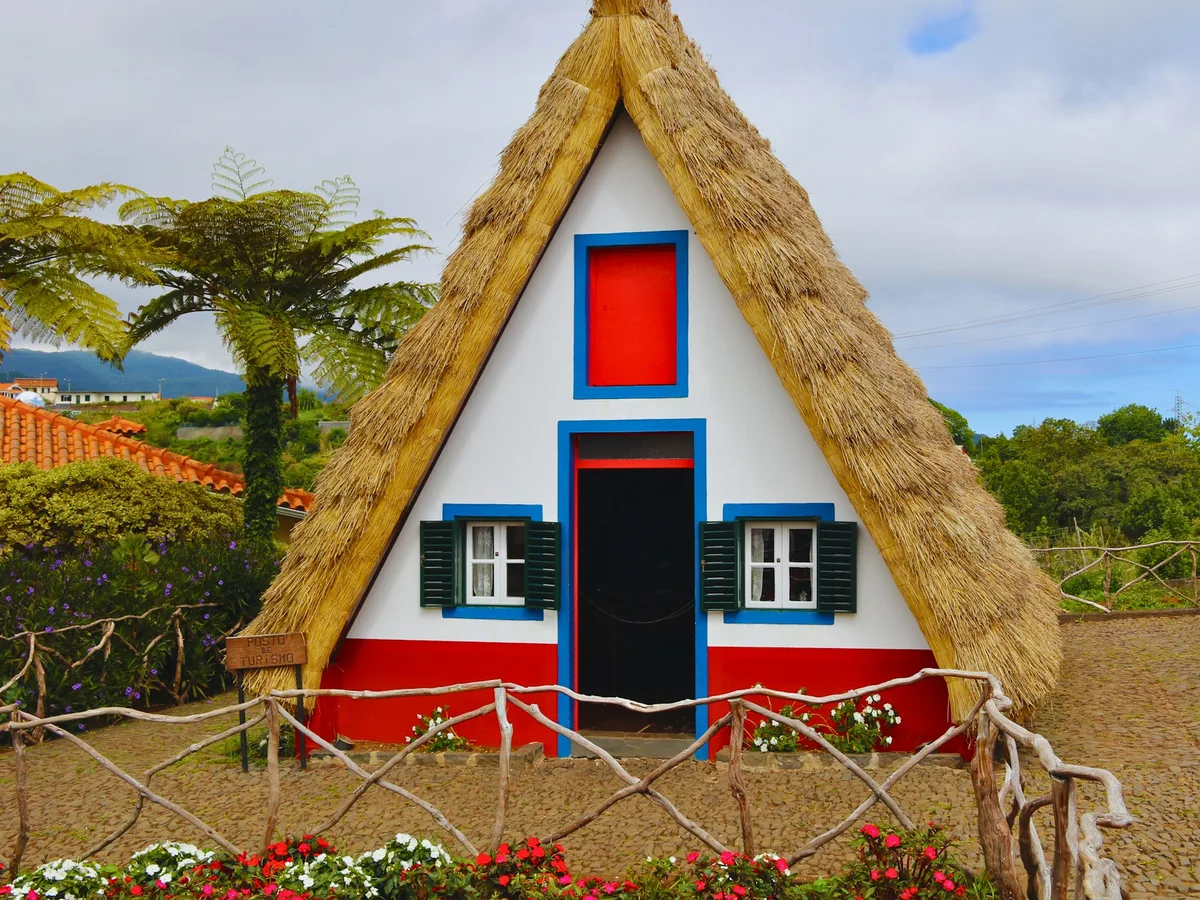
The triangular, brightly painted A-frame houses (palheiros) of Santana on Madeira's north coast, a traditional building style unique to the island.
Visitor guide
The traditional houses of Santana are small, steeply roofed rural homes on Madeira's north coast, in the municipality of Santana in Portugal. Often called palheiros or casas de colmo, they are known for their triangular thatched roofs and bright paint, and they are one of the most recognisable images of the island.
Wikipedia's Santana article describes homes with sloping triangular roofs thatched with straw, white walls, red doors and windows and blue trim. Different sources describe the colours slightly differently, with some mentioning blue, red and white together. The design is an A-frame, with steeply pitched roofs that quickly shed rainwater in a wet climate. The Wikipedia article notes that the roofs are replaced every four to five years.
According to tourism and municipality sources, the structure and facades were built from local timber, and the roofs from straw and heather. The thatch came from cereal crops such as wheat and rye, which were dried, bundled and laid in overlapping layers from the bottom upwards. Inside, the traditional layout was simple, with a ground floor divided into a kitchen and a bedroom and an attic used to store farm produce. The houses were modest homes for farming families, built for basic comfort in a humid mountain climate.
Sources agree that the houses belong to the early rural building tradition of Madeira, but none gives a precise date of origin. The municipality of Santana says the type of construction was once found across the island but largely disappeared as modern housing spread. Today the best-known examples are concentrated in Santana, and several have been restored, with some serving as small shops or museum displays. Wikipedia says most surviving examples are now tourist attractions.
Santana is on the north coast and covers about 95.56 square kilometres with six parishes: Arco de São Jorge, Faial, Ilha, Santana, São Jorge and São Roque do Faial. Settlement status dates from 25 May 1835 and city status from 6 July 2000. The name is a short form of Santa Ana, or Saint Anne, who is the patron saint. The municipality's population was reported as 6,558 in 2021. Most parishes occupy river valleys in mountainous terrain.
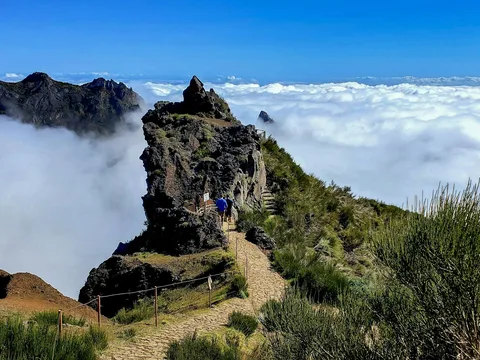
Santana is also the municipality that contains Pico Ruivo, Madeira's highest peak at 1,861 metres, according to Wikipedia. This means the houses sit within easy reach of the island's high mountain scenery, as well as the laurel forest, which Wikipedia says covers about 16 percent of Madeira and was inscribed as a UNESCO World Heritage Site in 1999.
Santana is also home to the Madeira Theme Park, which covers about seven acres and presents the cultures of Madeira and Porto Santo through exhibits and performances. Queimadas Forest Park, at about 860 metres, is surrounded by laurisilva, one of the best-preserved ecosystems of its kind in Macaronesia according to Wikipedia, and receives heavy rainfall, averaging over 2,300 millimetres a year. Travellers usually see the houses on a day around the north coast, and a private driver can combine them with viewpoints and forest walks.
See every tour and attraction we cover in Madeira.