TorontoOntario · 36 tours
 Niagara FallsOntario · 25 tours
 New York CityNew York · 30 tours
 Las VegasNevada · 8 tours
 San FranciscoCalifornia · 16 tours
 VancouverBritish Columbia · 17 tours
 DubaiUAE · 54 tours
 Abu DhabiUAE · 5 tours
 Buenos AiresArgentina · 23 tours
 AthensGreece · 31 tours
 AucklandNew Zealand · 38 tours
 CancunMexico · 54 tours
No destinations match “”. Try searching all tours instead — that search understands full questions, not just place names.
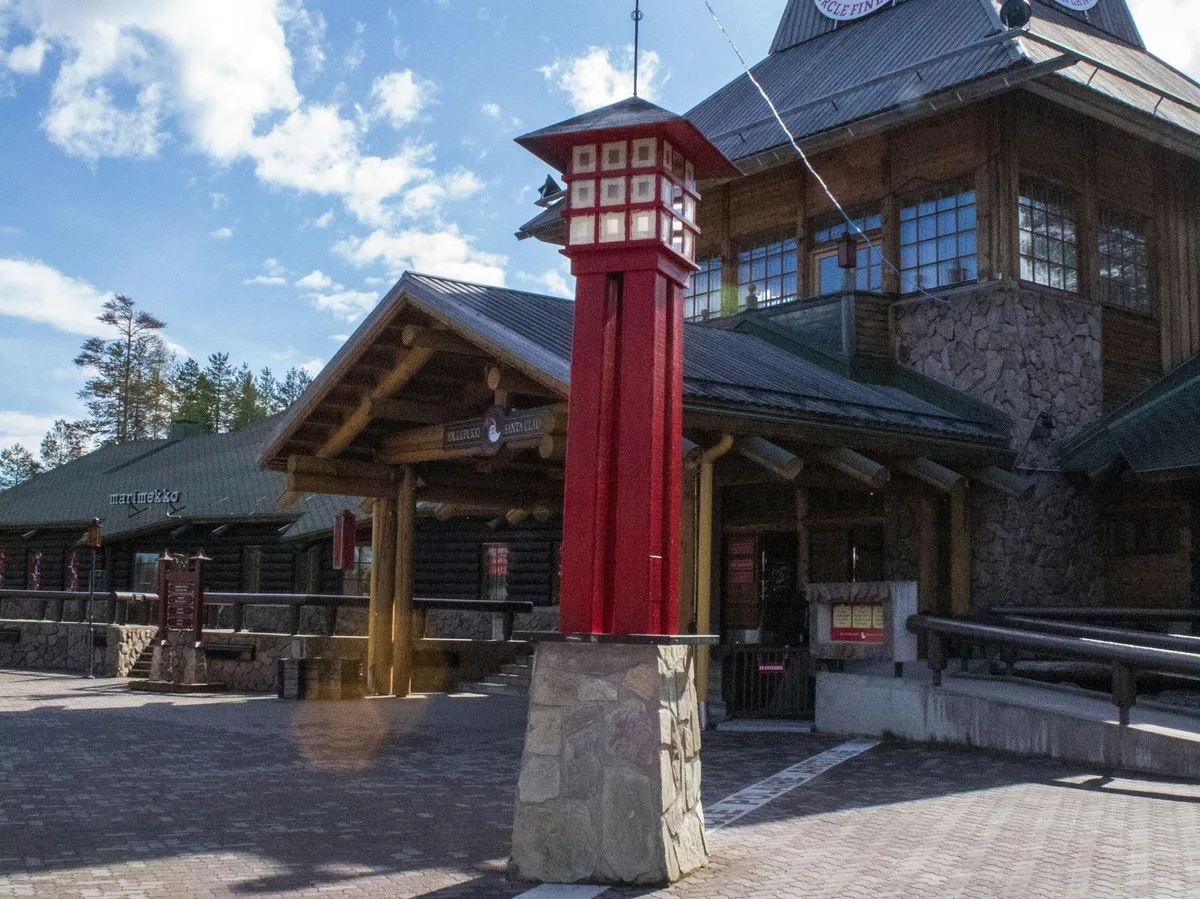
The official hometown of Santa Claus on the Arctic Circle, with a post office, reindeer, husky parks, and a certificate for crossing into the Arctic — plus, in winter, some of Finland's best odds of catching the Northern Lights.
Visitor guide
Rovaniemi is the capital of Finnish Lapland, a city on the Arctic Circle where the Kemijoki and Ounasjoki rivers meet. It is promoted as the official hometown of Santa Claus, and Santa Claus Village, a short distance from the centre, is its best-known attraction.
The city centre lies about 6 km south of the Arctic Circle, between the hills of Ounasvaara and Korkalovaara. The name first appears in official records in 1453, and logging and gold mining in the 1800s helped make the town Lapland's business centre. It gained township status in 1929.
During the Second World War Rovaniemi became a major German military and logistics hub. As German forces withdrew in 1944 during the Lapland War, they destroyed much of the town; Wikipedia estimates about 90 percent of its property was lost. In 1945 Alvar Aalto drafted a new town plan whose layout is known as the reindeer antler plan because it resembles a reindeer's head and antlers. Aalto also designed the city hall, Lappia Hall and the library.
Santa Claus Village, in Finnish Joulupukin Pajakyla, lies about 8 km northeast of the centre and roughly 2 km from Rovaniemi Airport. Visit Rovaniemi, the city's tourism board, says Rovaniemi received the status of Official Hometown of Santa Claus in 2010, while Wikipedia gives 1980 and is inconsistent about the exact year. The site was part of a German Luftwaffe base during the Continuation War, and the Roosevelt Lodge was built in the 1950s for a visit by Eleanor Roosevelt.
The village features a painted line marking the Arctic Circle, with a webcam on it. Wikipedia notes that the actual Arctic Circle lies about 700 m to the north. Other features include Santa's Office, the Santa Claus Main Post Office, where visitors can read letters addressed to Santa, and a museum of snowmobile history. In Finnish tradition, Santa's earlier home is placed at Korvatunturi.
Rovaniemi has a subarctic climate with short, mild summers and long, snowy winters. The midnight sun lasts from about 7 June to 6 July. There is no true polar night, though the sun barely rises in midwinter, and snow covers the ground for around 175 days a year.
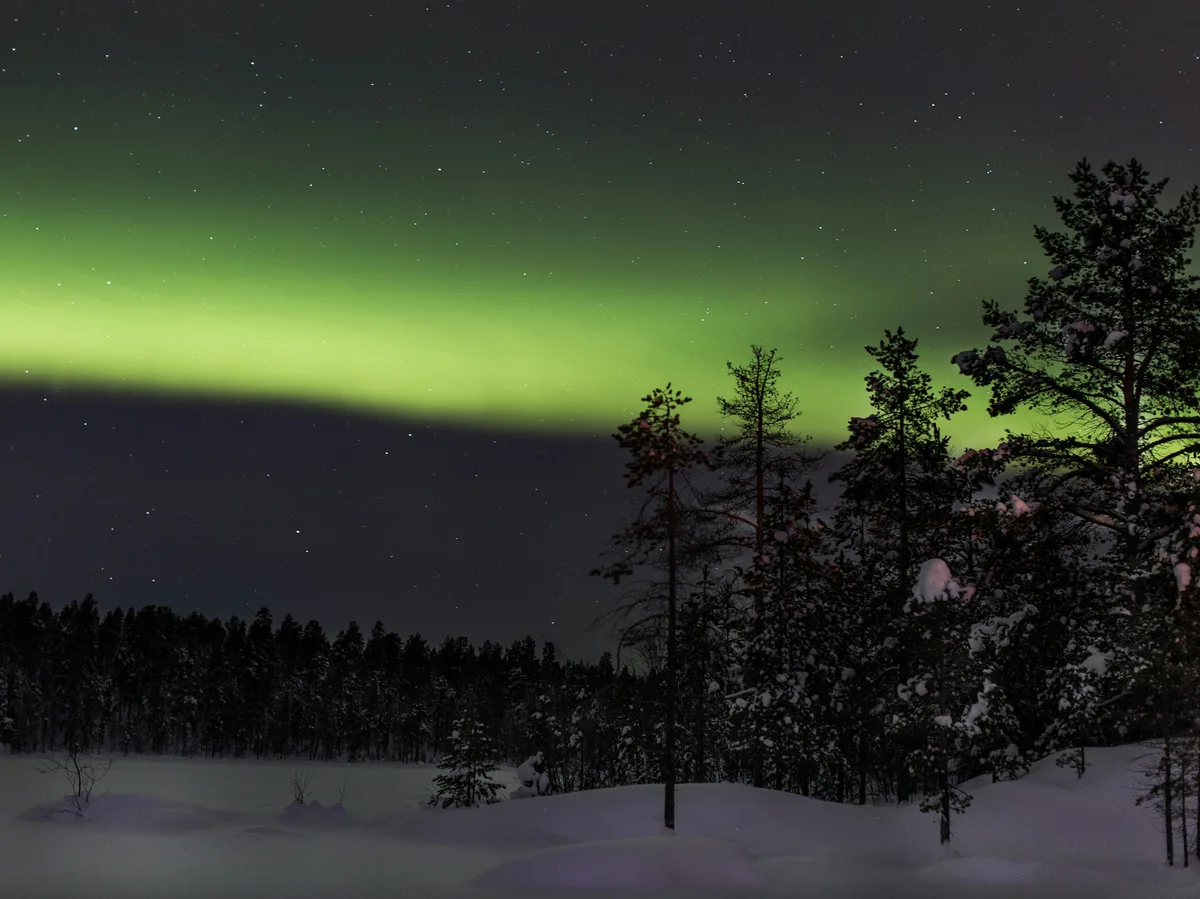
Finnish Lapland can see aurora displays on up to about 200 nights a year, compared with fewer than 20 in southern Finland, which is why the region is a popular winter destination. Seeing the aurora always depends on clear skies and solar activity, so no sighting can be guaranteed.
Beyond the village, the Arktikum Science Museum stands on the bank of the Ounasjoki, the Jatkankynttila bridge carries a flame symbol across the Kemijoki, and the Ounasvaara hill offers a ski centre. The city is also home to the University of Lapland. About 66,000 people live in the municipality, which covers around 8,000 square km, making it one of Finland's largest by area.
A private tour with a dedicated driver suits the spread-out geography, since the village, the city centre and the surrounding wilderness are separated by short drives rather than walking distances.
See every tour and attraction we cover in Finland.