TorontoOntario · 36 tours
 Niagara FallsOntario · 25 tours
 New York CityNew York · 30 tours
 Las VegasNevada · 8 tours
 San FranciscoCalifornia · 16 tours
 VancouverBritish Columbia · 17 tours
 DubaiUAE · 54 tours
 Abu DhabiUAE · 5 tours
 Buenos AiresArgentina · 23 tours
 AthensGreece · 31 tours
 AucklandNew Zealand · 38 tours
 CancunMexico · 54 tours
No destinations match “”. Try searching all tours instead — that search understands full questions, not just place names.
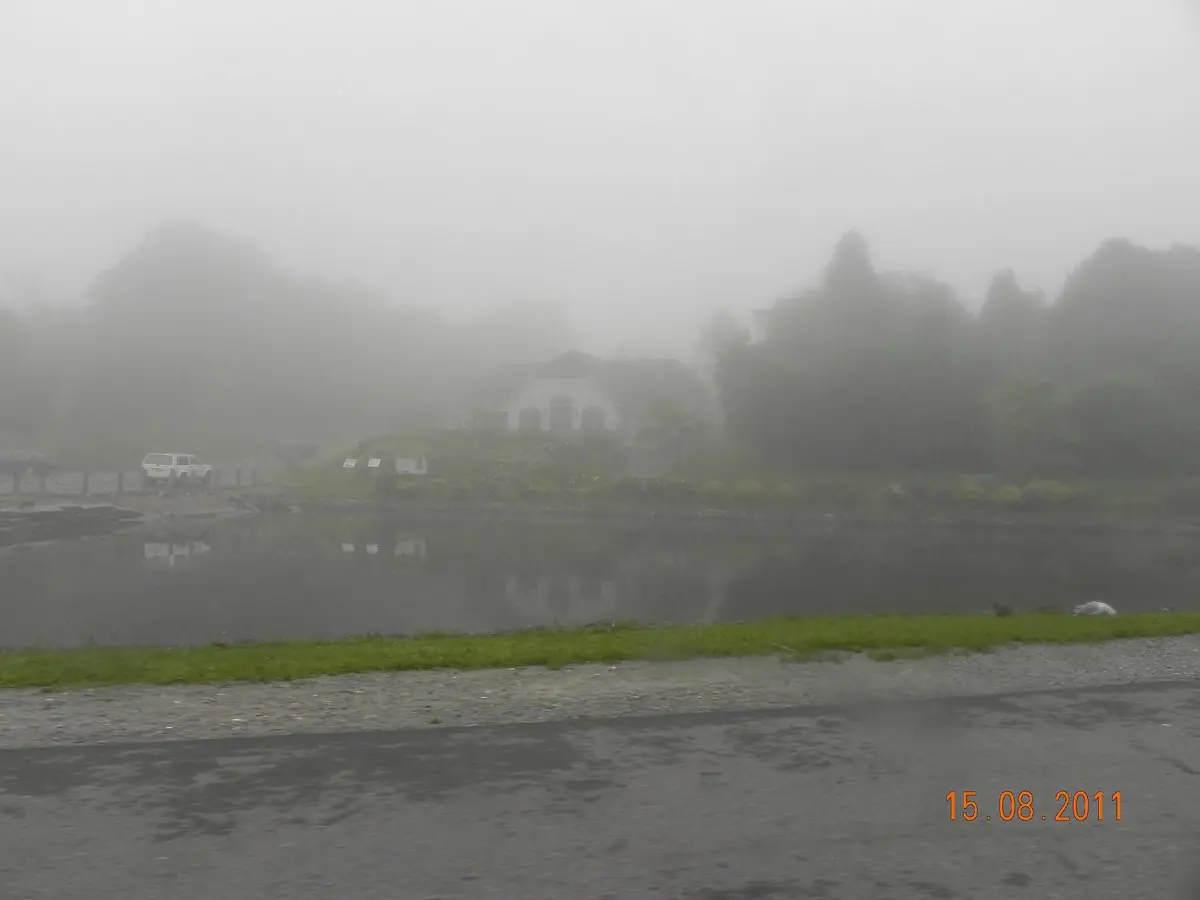
One of Canada's largest urban parks, with lakes, trails, and a small zoo.
Visitor guide
Rockwood Park is a city-owned park of about 890 hectares (2,200 acres) in the north end of Saint John, New Brunswick, made up of forest, lakes, rock outcrops and caves. It is among Canada's larger urban parks, though no exact national ranking is verified here. The park sits inside the Stonehammer UNESCO Global Geopark.
The park was created around Lily Lake in the late 19th century and named by a vote of nearby citizens. Sources disagree on the founding year: the Wikipedia introduction says 1894 while its infobox says 1884, and a commercial campground site gives yet another date. The park is credited to Calvert Vaux, a co-designer of New York's Central Park, who according to Wikipedia took over after his father had made a preliminary report. Ownership passed to the City of Saint John in 1967. One local source credits the Saint John Horticultural Association, formed in 1893, with creating public gardens and parks that fed into the park's development, and the same source reports a 1936 land donation known as the Drury Grant; I could not find a second source for those details, so treat them as local tradition.
Lily Lake was an early source of fresh water for the city, reportedly sold by the bucket for a cent, and a graphite mine operated near its outlet in the 1800s. In 1907 a court ruled that skaters, not ice cutters, held the rights to the lake's ice. On 7 February 1926 an estimated 25,000 people watched Charles Gorman win the World Speed Skating Championship on Lily Lake, where Wikipedia says he set world records in the 220- and 440-yard events. The Lily Lake Pavilion opened in 1907, burned five years later and reopened after restoration in 2006; it is run by a registered charity. A granite sculpture by Hiroyuki Asano was installed at the park entrance in 2012.
Stonehammer describes the park as showing around a billion years of Earth history. Wikipedia lists Precambrian marble and gneiss, igneous rocks of Precambrian to Cambrian age, and Devonian sandstone and conglomerate, divided by the Caledonia Fault, which the main road past Lily Lake Pavilion follows.
Earth magazine's account of the geopark explains why that fault matters: it marks a shear zone where two ancient landmasses, called Avalonia and Ganderia, collided as the Iapetus Ocean closed. The fault can be traced across the city from the Reversing Rapids to Rockwood Park, with Avalonia rocks to the south and Ganderia rocks to the north. Howes Cave was discovered in the 1860s and described in 1904; it formed when naturally acidic rain and groundwater dissolved the marble bedrock. The Natural History Society of New Brunswick studied the park's geology in the late 1800s, and specimens from that survey are held in the New Brunswick Museum collection.
The park offers 53 to 55 trails and footpaths depending on the source, used for hiking, mountain biking and, per Wikipedia, horseback riding, with cross-country skiing and snowshoeing in winter. Lake counts also vary, with ten lakes in the Wikipedia introduction and six natural lakes in its description. Facilities listed include an 18-hole golf course with a driving range, a campground of 189 sites, beaches at Fisher Lake and Lily Lake, boating and fishing, and an outdoor activity centre offering guided climbing and hikes. The park won the Vincent Massey Award for Urban Excellence in 1971.
Wikipedia says the park is open dawn to dusk all year with parking across seven lots, but confirm with the City of Saint John for current trail conditions, facility hours and operator services. Wear sturdy shoes for rocky trails.
Rockwood Park is a few minutes' drive from uptown Saint John. Voyzo runs this as a private tour with your own vehicle and driver and door-to-door pickup, so the timing can be built around the tide or the weather rather than a shared schedule.
See every tour and attraction we cover in Saint John.