TorontoOntario · 36 tours
 Niagara FallsOntario · 25 tours
 New York CityNew York · 30 tours
 Las VegasNevada · 8 tours
 San FranciscoCalifornia · 16 tours
 VancouverBritish Columbia · 17 tours
 DubaiUAE · 54 tours
 Abu DhabiUAE · 5 tours
 Buenos AiresArgentina · 23 tours
 AthensGreece · 31 tours
 AucklandNew Zealand · 38 tours
 CancunMexico · 54 tours
No destinations match “”. Try searching all tours instead — that search understands full questions, not just place names.
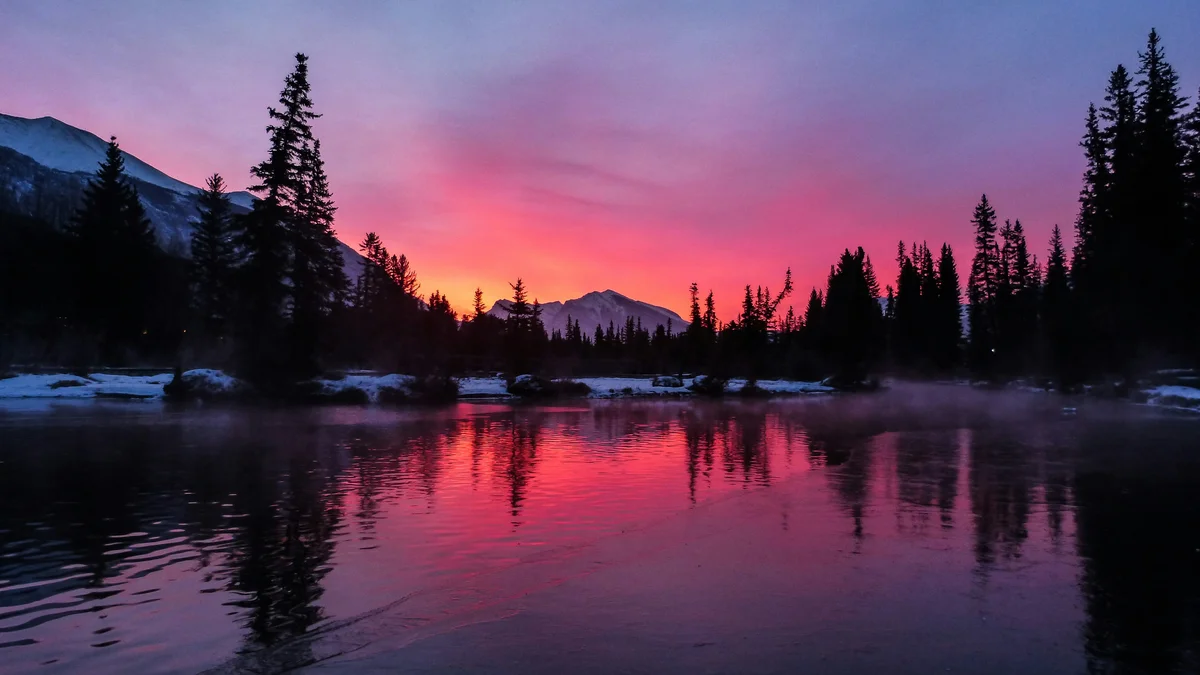
A gentle wooden boardwalk winding through a wetland right behind downtown Canmore, an easy, flat walk with real chances to spot waterfowl and reflections of the surrounding peaks in the creek. It's one of the most accessible short walks in town, connecting directly to Canmore's Main Street shops and restaurants at either end.
Visitor guide
The Policeman's Creek Boardwalk is a short, flat walking route through downtown Canmore, Alberta, following the creek between Main Street and neighbourhoods to the south. It is a gentle way to see the town centre away from traffic.
Policeman's Creek takes its name from the North-West Mounted Police post on its shore. The surviving Canmore NWMP Barracks stands on the west bank at the east end of Main Street, at the corner of Spring Creek Drive. The Canadian Register lists it as built in 1893, after the president of the Canadian Anthracite Coal Company asked the police in 1888 for more officers to stop liquor smuggled from the United States among miners and railway workers. A single constable first worked from rented quarters, and by 1892 permanent accommodation was needed. A one- or two-man detachment then worked from the barracks until 1929, patrolling, checking trains for liquor and keeping order during strikes, especially in 1911.
The register describes a one-storey rectangular log building with dovetailed corners chinked with mud and straw, a front verandah and two shed-roofed extensions, on a small lot beside the creek. Its character-defining elements include round logs with compound dovetail notches, two-over-two wooden windows, original wood flooring inside, whitewashed stones marking the paths, and spruce trees that date from the time of construction. The site once also had a stable, corral and barn. The log building was dismantled and rebuilt in 1908-09 and expanded in 1920-23. After the police left it passed into private hands, and the Town of Canmore acquired it in 1989. It was recognised as a Provincial Historic Resource in 1990, and heritage sources describe it as one of the oldest surviving NWMP buildings in Alberta and one of only three from before the province was created in 1905.
Wikipedia says Canmore was named in 1884 by Canadian Pacific Railway director Donald A. Smith, later Lord Strathcona, after Malcolm III of Scotland, whose nickname was Canmore. The town received a coal mining charter in 1886, its No. 1 mine opened in 1887, and the last operating company, Canmore Mines Ltd., ceased operations in 1979. Nearly all mining structures were demolished in 1980, leaving only the lamp house and a few mine entrances. A local heritage listing dates the Canmore Hotel to 1890-91, which gives the walk some period context. Canmore's population was 450 in 1901 and about 15,990 in 2021.
A raised boardwalk follows the creek from downtown to The Malcolm Hotel and back. One guide suggests starting at the Big Head sculpture, with the trail directly across the street; walks are 20 to 30 minutes for the short route. Explore Canmore credits artist Al Henderson with the Big Head, which it says nods to the Gaelic roots of the town's name. The route includes a pedestrian bridge and a replica of the old Canmore Opera House, and the boardwalk is described as designed to let visitors see the wetlands without disturbing them. A travel guide calls it suitable for strollers and mobility issues, with no elevation gain and benches, and it is described as open year-round and good for birdwatching. Sources give different lengths, from about 2 to 4 kilometres for the wider network of paths, so treat any distance as approximate.
Wikipedia says it is cared for by the Canmore Museum and Geoscience Centre. Check with the Town of Canmore or the Canmore Museum before planning to go inside.
The old Canmore Spur Line, which once served local coal mines, is now a walking trail leading down to the Bow River and the Engine Bridge, a former railway bridge used by mining companies that has been converted for pedestrians.
See every tour and attraction we cover in Canmore.