TorontoOntario · 36 tours
 Niagara FallsOntario · 25 tours
 New York CityNew York · 30 tours
 Las VegasNevada · 8 tours
 San FranciscoCalifornia · 16 tours
 VancouverBritish Columbia · 17 tours
 DubaiUAE · 54 tours
 Abu DhabiUAE · 5 tours
 Buenos AiresArgentina · 23 tours
 AthensGreece · 31 tours
 AucklandNew Zealand · 38 tours
 CancunMexico · 54 tours
No destinations match “”. Try searching all tours instead — that search understands full questions, not just place names.
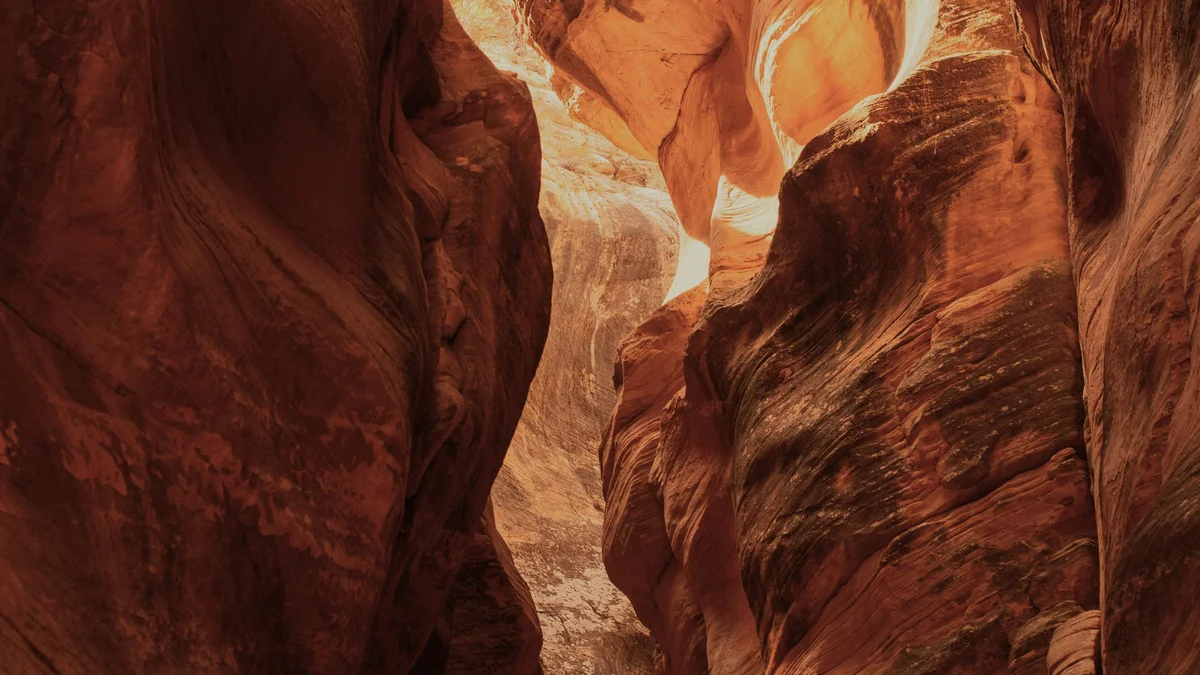
Peekaboo Slot Canyon is a narrow, winding sandstone canyon near Kanab, Utah, about an hour from Zion, where the walls twist and pinch tight enough in places that sunlight only reaches the canyon floor for part of the day. Unlike Zion's Narrows, this area is popular with off-road UTV and ATV tours that access the canyon's rugged approach roads before visitors continue on foot into the slot itself. Its swirling, sculpted rock and warm sandstone tones make it a favorite stop for photographers exploring the Kanab area's wider network of slot canyons.
Visitor guide
Peek-A-Boo Slot Canyon, also called Red Canyon, is a short slot canyon with orange sandstone walls north of Kanab in southern Utah. It is managed by the Bureau of Land Management rather than the National Park Service, so it sits outside Zion National Park itself, in the same broader red-rock region.
The BLM describes Peek-A-Boo as one of the area's most beautiful slot canyons and a popular place for photography, with an easy, short walk of 0.7 miles round trip. Inside, visitors can see the ancient Moqui Steps cut into the canyon wall, and logs balanced between the walls overhead. The BLM lists no fee for visiting.
The American Southwest guide to slot canyons describes the narrows as about half a mile long, with enclosed passages reaching up to roughly 100 feet deep. It says a short opening section lets in sunlight before the slot deepens and darkens under overhanging rock, with smooth, curving walls streaked by thin pale bands and vertical stains of desert varnish. The same source puts a roughly 20-foot pour-off with wedged boulders at the upper end of the slot. Treat these dimensions as one guide's description rather than an official survey.
The canyon is cut into dark red Navajo Sandstone, according to that guide. Wikipedia explains that the Navajo Sandstone began as a vast desert of wind-blown dunes on the western edge of the supercontinent Pangaea in the Early Jurassic, roughly 200 million years ago, though its exact age is still debated. It can reach about 2,300 feet thick, and iron oxides coating the sand grains produce its reds, oranges and yellows. The formation makes up major features in Zion, Arches, Capitol Reef and Canyonlands national parks and in Grand Staircase-Escalante National Monument, and Wikipedia names the Kanab area as the home of its Lamb Point Tongue subunit.
The guide attributes the smooth, curving walls to erosion of the sandstone, and the BLM notes that flash floods continue to reshape the canyon.
Kanab is the county seat of Kane County, sitting at about 4,970 feet on Kanab Creek just north of the Arizona line. Wikipedia says the area was first settled in 1864 when Fort Kanab was built, the town was established in 1870, and the name comes from a Paiute word meaning place of the willows. The town also calls itself Little Hollywood because many Westerns and television series were filmed nearby, and it serves as a base for Zion National Park, the North Rim of the Grand Canyon, Bryce Canyon, Lake Powell and Grand Staircase-Escalante National Monument.
The region belongs to the Grand Staircase, the sequence of cliffs that geologist Clarence Dutton divided into five steps in the 1870s: the Chocolate, Vermilion, White, Gray and Pink Cliffs. Wikipedia says the layers rose roughly 5,000 to 10,000 feet in uplift beginning about 66 million years ago. Grand Staircase-Escalante National Monument was established by President Bill Clinton on September 18, 1996, and is managed by the BLM, which lists a visitor center in Kanab; the BLM sends visitors there for current canyon conditions.
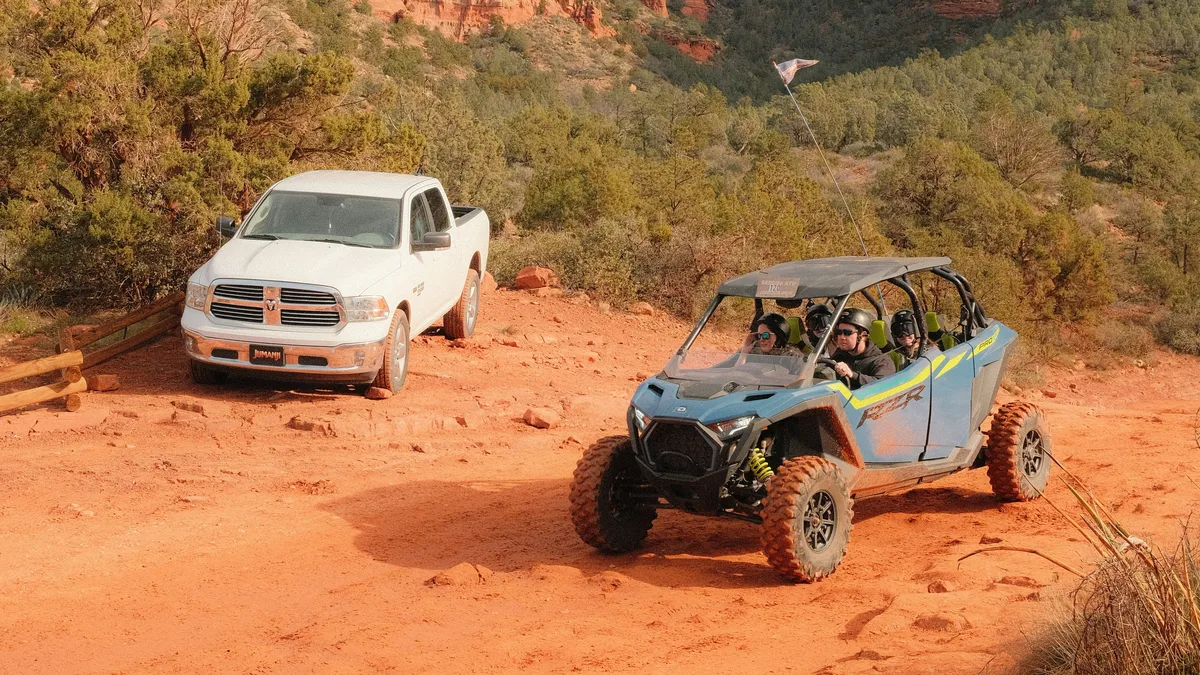
The access is the real adventure. From Kanab the BLM directs visitors north for about 9 miles on the highway, then east after the Peek-A-Boo sign, across a cattle guard to a graveled parking area. From there the route follows BLM route 102 to a wash and then BLM route 106H along the wash until it dead-ends at the canyon. The BLM says the route is deep sand that requires a four-wheel-drive, high-clearance vehicle and may be impassable in summer; ATVs and UTVs are the most common way to cover it.
Like other slot canyons, Peek-A-Boo is shaped by water. The BLM notes that flash floods have pushed boulders into the canyon, creating drop-offs that can pose challenges, and that floods can change the height and difficulty of these obstacles from one season to the next. For current conditions, the BLM points visitors to the Kanab Field Office and the Grand Staircase-Escalante National Monument Visitor Center in Kanab.
There is another, unrelated Peek-a-boo Gulch in Grand Staircase-Escalante National Monument, reached from Hole-in-the-Rock Road and often hiked as a loop with Spooky Gulch. The Kanab-area Red Canyon described here is a different place, and neither should be confused with the Red Canyon near Bryce Canyon, a wooded valley with hoodoos, so check which one you are being offered when comparing trips.
Voyzo provides a private vehicle and driver with door-to-door pickup for the highway portion of the day. Because the sandy approach is typically covered by ATV or UTV, ask us how that stage would be arranged for your group before you commit to a plan.
See every tour and attraction we cover in Zion National Park.