TorontoOntario · 36 tours
 Niagara FallsOntario · 25 tours
 New York CityNew York · 30 tours
 Las VegasNevada · 8 tours
 San FranciscoCalifornia · 16 tours
 VancouverBritish Columbia · 17 tours
 DubaiUAE · 54 tours
 Abu DhabiUAE · 5 tours
 Buenos AiresArgentina · 23 tours
 AthensGreece · 31 tours
 AucklandNew Zealand · 38 tours
 CancunMexico · 54 tours
No destinations match “”. Try searching all tours instead — that search understands full questions, not just place names.
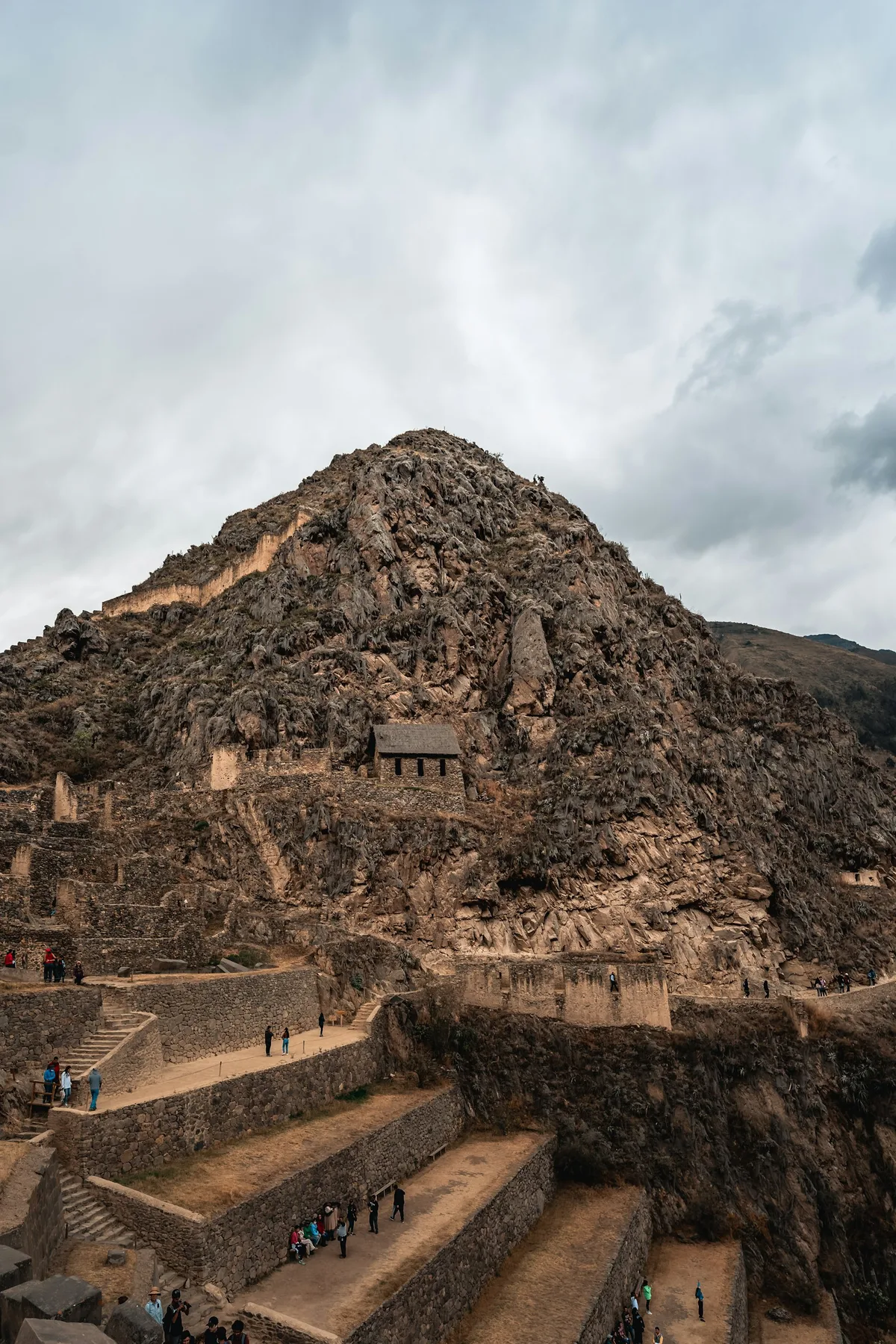
A Sacred Valley town built directly on Inca foundations, its massive terraced hillside fortress and working irrigation channels among the best-preserved Inca engineering still in daily use.
 Multi-Day Tours
A 7-day private, boutique-hotel route through the Sacred Valley, Machu Picchu by premium train, and Cusco, with countryside lunches, a private painting session, and a farewell tasting dinner.
 Multi-Day Tours
A compact 6-day private introduction to Cusco, the Sacred Valley and Machu Picchu — Voyzo's shortest, most essential Peru route.
Visitor guide
Ollantaytambo is a town and Inca archaeological site in the Sacred Valley of southern Peru, in the Urubamba Province of the Cusco Region. Sitting at about 2,792 metres, it is known for its terraced hillside temple complex, its stone storehouses, and a street grid that still follows Inca planning.
Wikipedia reports that some structures predate the Incas, and Wari settlements in the area date to around 600 to 1000 AD. In the mid-15th century the emperor Pachacuti conquered the earlier town and rebuilt it as part of his personal estate. It housed Inca nobility, and the terraces were farmed by yanakuna, retainers of the emperor.
During the Spanish conquest, Manco Inca made Ollantaytambo a temporary capital and fortified it. The article gives 1537 for his defeat of a Spanish expedition on the plain of Mascabamba, which was reportedly flooded; other sources give 1536. Manco later withdrew to Vilcabamba, where he founded the Neo-Inca State. In 1540 the local population was assigned in encomienda to Hernando Pizarro.
The main ceremonial centre is the hill known as Cerro Bandolista, or Temple Hill. Wikipedia notes that calling it a fortress is a misnomer, as its functions were mainly religious. It includes the unfinished Sun Temple with its Wall of the Six Monoliths, and construction appears to have halted at abandonment for reasons that are unknown.
Fine cut-stone terraces climb the slope, including the Pumatallis terraces. The sunken Callejon terraces run about 700 metres and create a microclimate two to three degrees warmer, which allowed lowland plants to grow. Across the valley on the Pinkuylluna hillside stand stone storehouses (qullqas) whose ventilation was designed to preserve grain.
The pinkish rhyolite used in the temple was brought from quarries at Kachiqhata, about five kilometres away across the Urubamba River. Roads and ramps were used to move the blocks, and wooden rollers are thought to have helped. Abandoned stones known as tired stones still lie along the route, and burial towers called chullpas stand nearby.
The living town is laid out on an orthogonal grid around a central plaza, and the southern Plaza de Armas sits on an Inca esplanade. Across the Patakancha River, the Araqhama and Manyaraki area has sanctuaries including the Templo de Agua and the Bano de la Nusta.
Ollantaytambo is a major tourist destination, partly because it lies on the route to the start of the four-day Inca Trail. Hiram Bingham stopped here in 1911 on his way to Machu Picchu. The site involves steep stone stairways, so a private guided visit with a driver lets a group move at its own pace and place the stonework in its historical setting.
Archaeologists distinguish between the ceremonial Temple Hill, the agricultural terraces, the storehouses and the residential grid, which together suggest a planned royal estate rather than a purely military post. Walking between these zones also shows how the Incas used the steep valley sides for both farming and defence, with the terraces doubling as retaining walls.
See every tour and attraction we cover in Peru.