TorontoOntario · 36 tours
 Niagara FallsOntario · 25 tours
 New York CityNew York · 30 tours
 Las VegasNevada · 8 tours
 San FranciscoCalifornia · 16 tours
 VancouverBritish Columbia · 17 tours
 DubaiUAE · 54 tours
 Abu DhabiUAE · 5 tours
 Buenos AiresArgentina · 23 tours
 AthensGreece · 31 tours
 AucklandNew Zealand · 38 tours
 CancunMexico · 54 tours
No destinations match “”. Try searching all tours instead — that search understands full questions, not just place names.
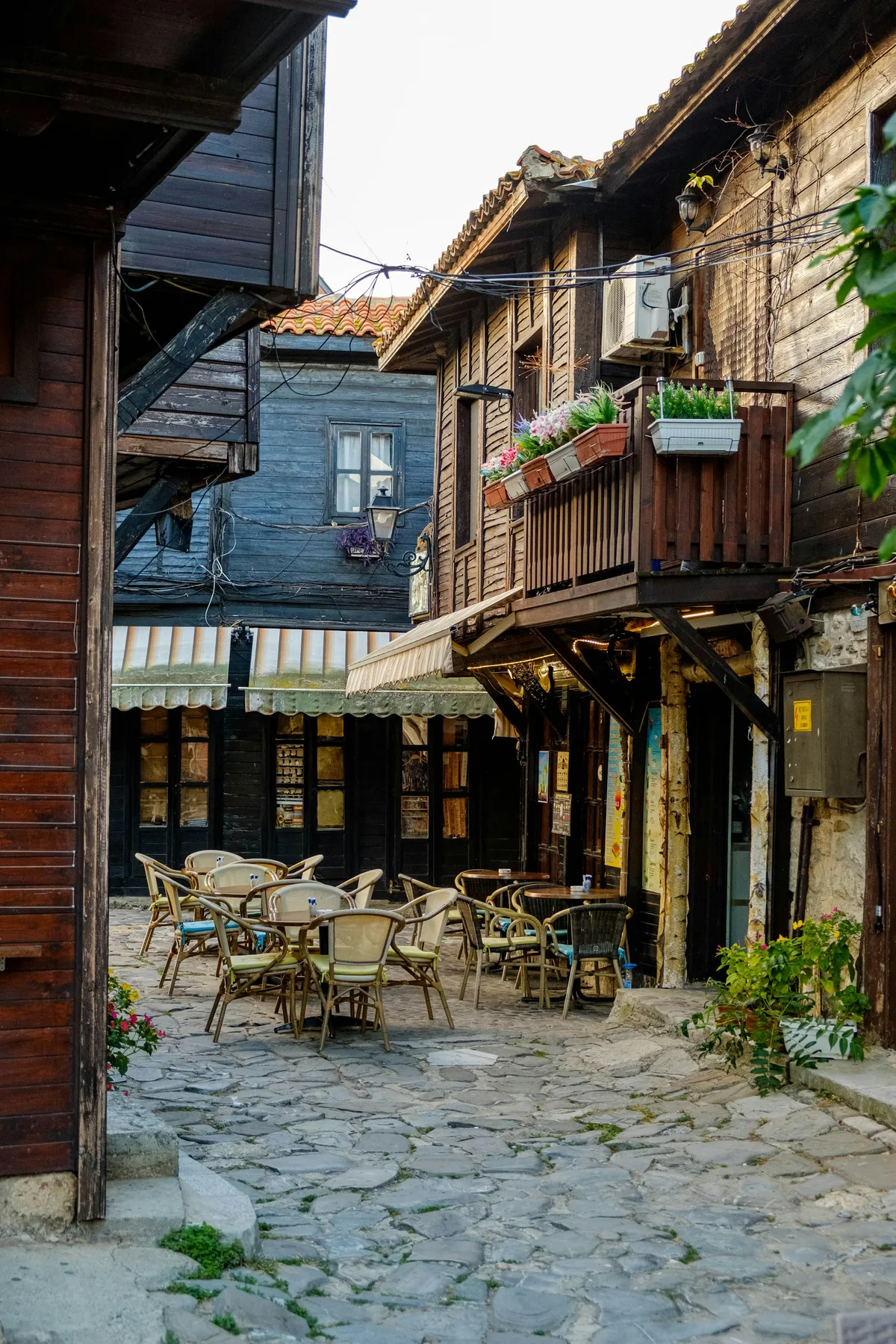
A UNESCO-listed ancient town on a small peninsula on the Black Sea coast, its cobblestone lanes lined with wooden Bulgarian Revival-era houses and the ruins of dozens of churches spanning Byzantine to medieval periods.
Visitor guide
Nessebar, also spelled Nesebar, is an ancient town and seaside resort on the Black Sea coast of Bulgaria in Burgas Province. Its old town sits on a small peninsula that was once an island, joined to the mainland by a narrow, human-made isthmus, and was inscribed on the UNESCO World Heritage List in 1983.
The site began as a Thracian settlement. Dorian settlers from Megara turned it into a Greek colony at the start of the 6th century BCE, and Wikipedia says it was the only Dorian colony on the Black Sea coast and a rival of Sozopol, then called Apollonia. It joined the Delian League under Athens in 425 to 424 BCE. Hellenistic remains include an acropolis, a temple of Apollo and an agora, and a Thracian-era wall survives on the north side. The city minted its own coins, in bronze and silver from the 5th century BCE and gold from the 3rd. Rome took control in 71 BCE but allowed it to keep minting.
The Greek name was Mesembria. The traditional reading of the variant Melsembria as city of Melsas is called tenuous by Wikipedia, so the origin of the name remains uncertain.
From the 5th century CE the town was an important Byzantine stronghold, contested repeatedly with the Bulgars. Khan Krum captured it in 812, Boris I ceded it back to Byzantium in 864, and Simeon the Great later retook it. Under Ivan Alexander, who ruled from 1331 to 1371, it became prosperous. Crusaders led by Amadeus VI of Savoy conquered it in 1366, and the Ottoman capture in 1453 began a period of decline.
About forty churches survive, wholly or partly, and the town is sometimes said to have the most churches per capita. Wikipedia lists the 5th to 6th century St Sophia, known as Stara Mitropoliya, the 6th-century Basilica of the Holy Mother of God Eleusa, the 11th-century St Stephen, or Nova Mitropoliya, rebuilt in the 16th to 18th centuries, and the 13th to 14th century churches of Christ Pantocrator, St John Aliturgetos and the Holy Archangels Michael and Gabriel. Together they show the shift from early Christian basilicas to medieval cross-domed churches.
The 19th century added wooden houses in the style typical of the Bulgarian Black Sea coast and these still define the old town's character. A wooden windmill stands on the isthmus near the town entrance. After the town became part of Bulgaria in 1885 it developed into a seaside resort in the early 20th century, and a new town was built after 1925 while the old town was restored.
UNESCO inscribed the Ancient City of Nessebar in 1983 under cultural criteria iii and iv, with a listed property area of 34.71 hectares (after a minor boundary modification in 2023). Underwater archaeological expeditions by Lyuba Ognenova-Marinova between 1961 and 1972 identified five periods of urban development: a Thracian protopolis, the Greek colony Mesambria, a Roman-ruled village, a medieval settlement and a Renaissance-era town.
The old town is small enough to cover on foot, with cobbled lanes between the churches and wooden houses. A private guided visit can set the churches in order and explain the layers of Thracian, Greek, Byzantine and Bulgarian history.
See every tour and attraction we cover in Bulgaria.