TorontoOntario · 36 tours
 Niagara FallsOntario · 25 tours
 New York CityNew York · 30 tours
 Las VegasNevada · 8 tours
 San FranciscoCalifornia · 16 tours
 VancouverBritish Columbia · 17 tours
 DubaiUAE · 54 tours
 Abu DhabiUAE · 5 tours
 Buenos AiresArgentina · 23 tours
 AthensGreece · 31 tours
 AucklandNew Zealand · 38 tours
 CancunMexico · 54 tours
No destinations match “”. Try searching all tours instead — that search understands full questions, not just place names.
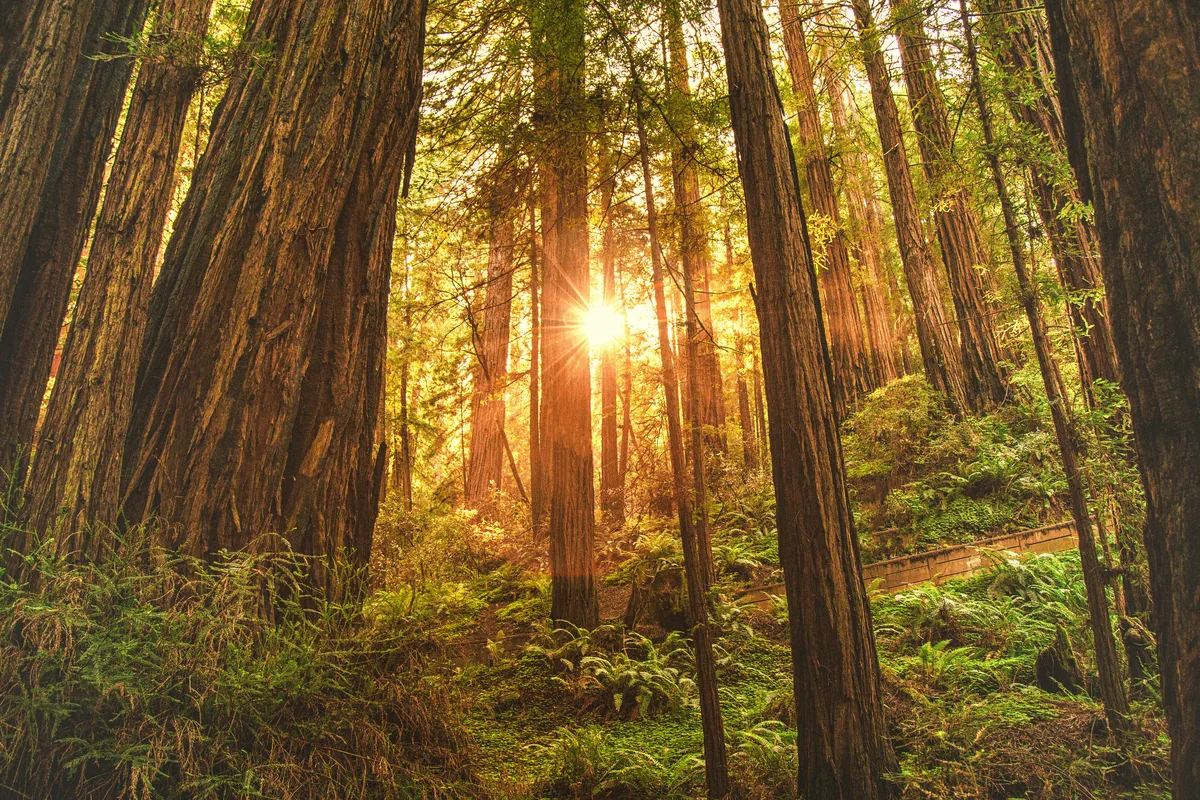
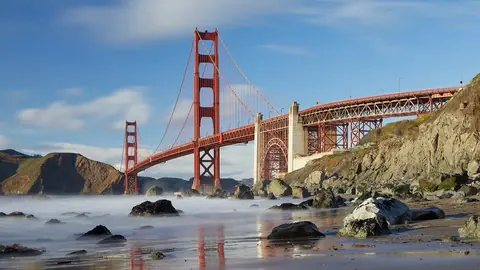
An old-growth coast redwood forest just north of San Francisco across the Golden Gate Bridge, protecting old-growth redwoods, some of them nearly a thousand years old, that were growing centuries before the city was founded.
Visitor guide
Muir Woods National Monument protects a stand of old-growth coast redwoods on the western slope of Mount Tamalpais in Marin County, about 12 miles north of San Francisco. It is part of the Golden Gate National Recreation Area and is managed by the National Park Service.
The monument covers 554 acres, of which about 240 are old-growth redwood forest, though some sources give slightly different totals. The tallest tree is about 258 feet, and most of the big redwoods are 500 to 800 years old, with the oldest estimated at more than 1,000 years. Redwood Creek runs through the canyon, and coastal fog supplies summer moisture: droplets collect on needles and fall to the forest floor, and the trees also take moisture from the fog directly. Understory trees include California bay laurel, bigleaf maple and tanoak, each adapted to low light. The park reports at least 69 bird species, most of them small neotropical migrants. Banana slugs are common, and California giant salamanders are occasionally seen crossing trails.
Redwood Creek has supported coho salmon and steelhead, both federally listed. Young fish spend their first year in the creek's shade before heading to the ocean, and adults return after about three years at sea to spawn and die, delivering ocean nutrients to the forest. The National Park Service reports that roughly 60 percent of the creek's banks were armored with rock by the Civilian Conservation Corps in the 1930s, which left the channel straight, shallow and short of large woody debris. A habitat enhancement project has since removed some of that rock and added logs to the creek.
The canyon was Coast Miwok homeland for thousands of years. By 1900 it was one of the last uncut redwood stands near San Francisco, spared partly because it was hard to reach. William and Elizabeth Thacher Kent bought about 300 acres in 1905 for $45,000, the NPS timeline says, though other sources describe the purchase as 611 acres. In 1907 a water company sought to dam the creek, and Kent responded by donating land to the federal government. On January 9, 1908, President Theodore Roosevelt proclaimed Muir Woods a national monument under the Antiquities Act of 1906. The NPS timeline calls it the seventh national monument (another NPS page says tenth) and the first created from land donated by a private individual. Roosevelt wanted it named for Kent, but Kent asked that it carry the name of John Muir. Kent later served in Congress from 1910, and Wikipedia notes that he supported the flooding of Hetch Hetchy Valley, a decision that ended his friendship with Muir.
Wikipedia also records that a first inn stood near the grove by 1900 and burned around 1907, and that a second inn was built in 1913. A railway to the grove carried passengers from 1907 to 1929, attendance tripled to more than 180,000 after the Golden Gate Bridge opened in 1937, and Civilian Conservation Corps crews built bridges and stream works in the 1930s. On May 19, 1945, delegates to the United Nations conference held a memorial ceremony for Franklin D. Roosevelt in Cathedral Grove and placed a plaque. The monument was added to the National Register of Historic Places in January 2008, according to Wikipedia.
The second Sunday in June brings the Dipsea Race, whose course passes through the monument. Wikipedia notes that the 1958 film Vertigo appears to be set at Muir Woods but was filmed at Big Basin Redwoods State Park, and that Jack Kerouac's The Dharma Bums (1958) mentions hiking there.
Muir Beach, Mount Tamalpais State Park and Sausalito are close by, and the monument is a natural pairing with the Golden Gate Bridge on a half-day trip from San Francisco.
See every tour and attraction we cover in San Francisco.