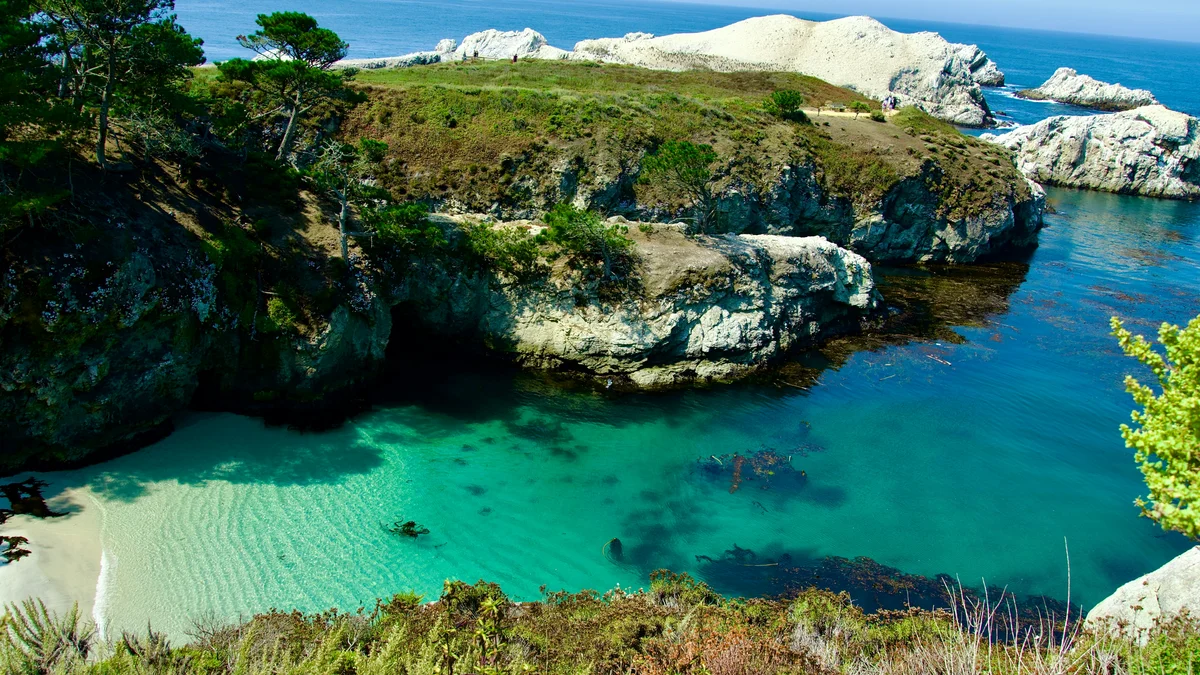
TorontoOntario · 36 tours
 Niagara FallsOntario · 25 tours
 New York CityNew York · 30 tours
 Las VegasNevada · 8 tours
 San FranciscoCalifornia · 16 tours
 VancouverBritish Columbia · 17 tours
 DubaiUAE · 54 tours
 Abu DhabiUAE · 5 tours
 Buenos AiresArgentina · 23 tours
 AthensGreece · 31 tours
 AucklandNew Zealand · 38 tours
 CancunMexico · 54 tours
No destinations match “”. Try searching all tours instead — that search understands full questions, not just place names.
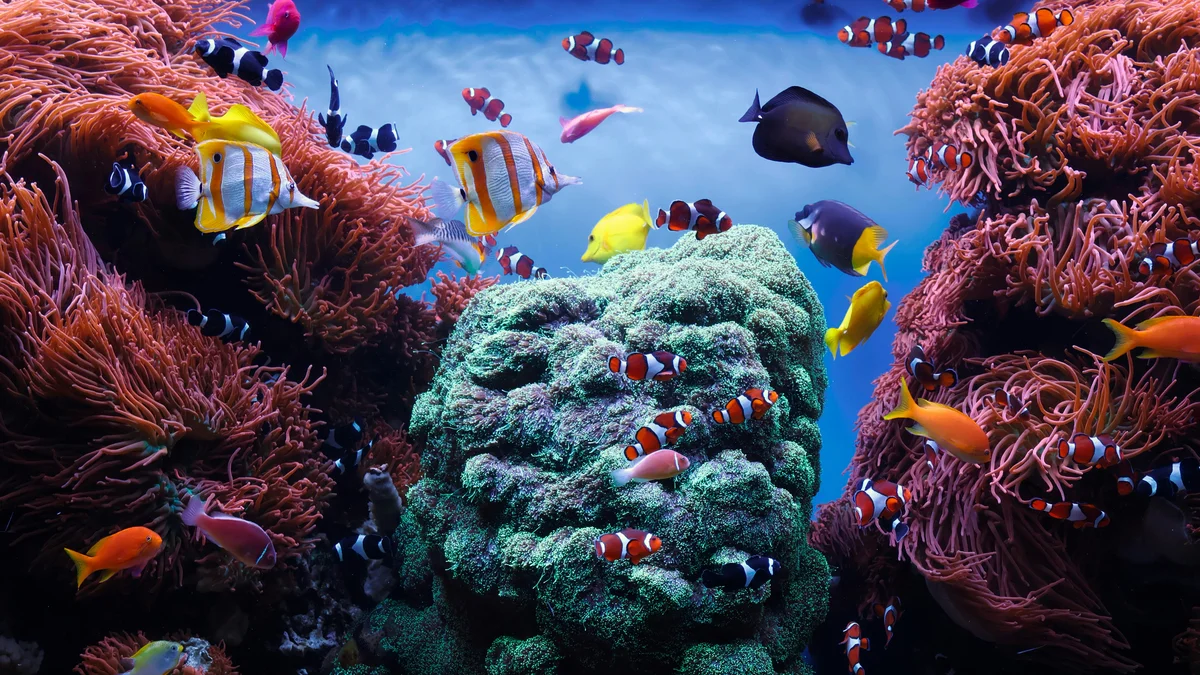
A world-renowned aquarium built on the site of a former sardine cannery, known for its towering kelp forest tank and sea otter exhibits drawn directly from the bay outside its windows.
Visitor guide
The Monterey Bay Aquarium is a nonprofit public aquarium at 886 Cannery Row in Monterey, California, that opened on October 20, 1984, on the site of the former Hovden Cannery. Its stated mission is to inspire conservation of the ocean, and its exhibits draw on the waters of Monterey Bay just outside.
The idea came from scientists at Stanford's Hopkins Marine Station, including Chuck Baxter, Nancy Burnett, Robin Burnett and Steve Webster. Earlier proposals for a Monterey County aquarium, in 1914, 1925 and 1944, had failed for lack of money and public support. The Hovden Cannery, opened in 1916, switched to canning squid after the sardine fishery collapsed in the early 1950s and shut down in 1973; the building, next door to Hopkins Marine Station, was then purchased by Stanford University. A one-time personal gift from David and Lucile Packard provided the initial construction costs, which the aquarium says ultimately totaled $55 million. Julie Packard was part of the planning group.
The architects, Esherick, Homsey, Dodge and Davis, designed the new building on the cannery site, keeping the old boiler house. They built the aquarium around the old boiler house, which remains as a non-working exhibit, and the design echoes the cannery with plain cement walls, many rooflines, large windows and exposed pipes and ducts. Nearly half the structure extends over the bay, in water up to about 120 feet deep, and foundation work had to be done at low tide, often at night. The building won an AIA National Honor Award in 1988 and, according to Wikipedia, the AIA's Twenty-five Year Award in 2016. It opened with 83 tanks in 12 galleries, and by 2014 it had about 200 live-animal exhibits.
The Kelp Forest, about 28 feet tall, is described as the first successful attempt to keep a living kelp forest in an artificial setting; a surge machine designed by David Packard mimics the pulse of California's currents. The Open Sea wing opened in 1996 as Outer Bay, at a reported cost of about $57 million, and was renamed during a 2011 renovation. Its 1.2-million-gallon tank, about 90 feet across, 52 feet front to back and 35 feet tall, is the aquarium's largest, and its viewing window was reportedly the largest of any aquarium when installed. The 2011 renovation, a 10-month project reported at about $19 million, was needed after tuna movements damaged the glass tiles. The Monterey Bay Habitats tank is a figure-eight exhibit whose wharf section uses real pilings from the city's harbor.
The aquarium's facts and figures page lists more than 86,000 animals and plants representing 618 species, and it has pioneered jellyfish husbandry: a Planet of the Jellies exhibition in 1992 led to a permanent jellies gallery in 1996, and aquarists cultured comb jellies in a lab for the first time in 2016. It was the first US aquarium to display an ocean sunfish, in 1986. Great white sharks were exhibited in Project White Shark between 2004 and 2011, after an 11-day attempt in 1984. A Baja California exhibit in 2016 included land animals for the first time, and a deep-sea exhibit followed in April 2022, built with help from MBARI technology.
The Sea Otter Research and Conservation program began in 1984, and more than 800 otters had completed rehabilitation by October 2017. California declared southern sea otters fully protected in 1913, and they received federal Endangered Species Act protection in 1977. Otters eat sea urchins that graze kelp, and the aquarium's kelp forest resilience work is one of its listed programs.
The aquarium launched the Seafood Watch consumer guide in 1999 after a 1997 exhibition on fishing, and it partners with the Monterey Bay Aquarium Research Institute (MBARI) on deep-sea research and with Stanford on research including tuna. Its Tuna Research and Conservation Center, founded in 1994 with Hopkins Marine Station, has studied Pacific bluefin tuna. An ocean policy and law division was created in 2004, and the official site also lists work on plastic pollution policy. On education, Wikipedia reports that about 75,000 California students, teachers and chaperones visit free each year, and that the Bechtel Family Center for Ocean Education and Leadership opened in 2019.
The aquarium stood in for the fictional Cetacean Institute in Star Trek IV: The Voyage Home (1986), and Pixar reportedly drew on it for the fish hospital in Finding Dory (2016).
Tickets, timed entry, hours and programs change, so check the official site before you go. The aquarium's location on Cannery Row means you can combine it with a walk along the old canning district.
A private vehicle and driver can take you door to door to the aquarium and onward to Cannery Row, Pacific Grove or other Monterey Peninsula stops. Voyzo can plan the day around your pace and interests.
See every tour and attraction we cover in Monterey.