TorontoOntario · 36 tours
 Niagara FallsOntario · 25 tours
 New York CityNew York · 30 tours
 Las VegasNevada · 8 tours
 San FranciscoCalifornia · 16 tours
 VancouverBritish Columbia · 17 tours
 DubaiUAE · 54 tours
 Abu DhabiUAE · 5 tours
 Buenos AiresArgentina · 23 tours
 AthensGreece · 31 tours
 AucklandNew Zealand · 38 tours
 CancunMexico · 54 tours
No destinations match “”. Try searching all tours instead — that search understands full questions, not just place names.
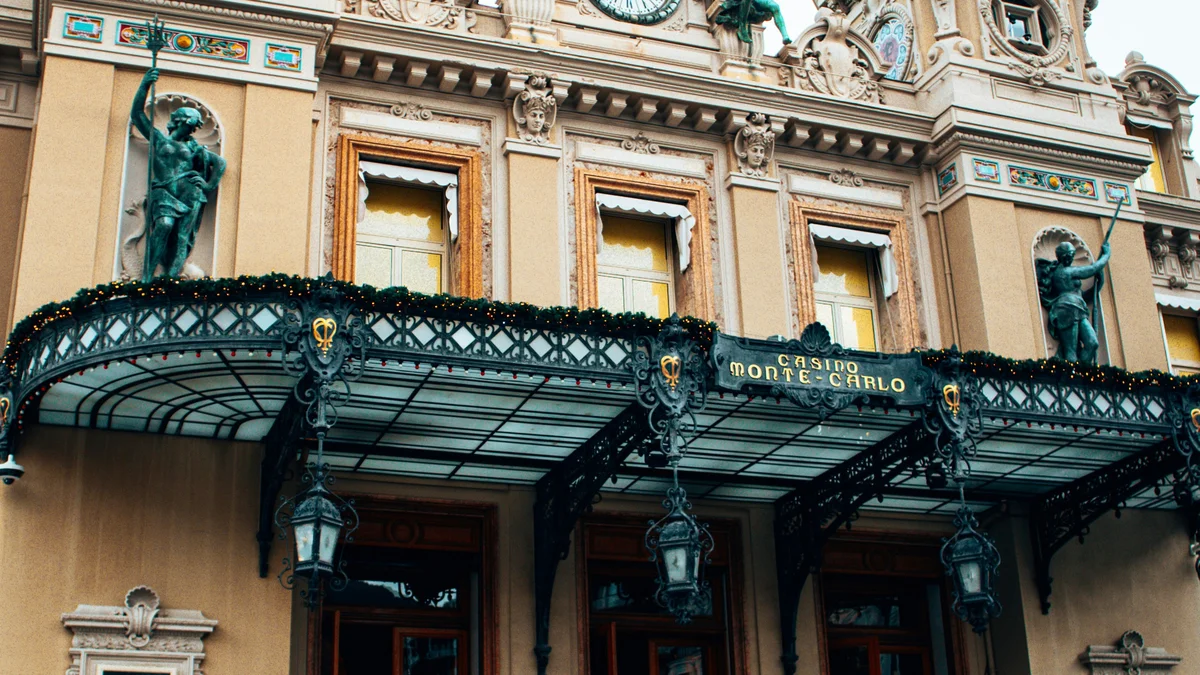
Opened in 1863 and designed in part by Charles Garnier, architect of the Paris Opera, the Casino de Monte-Carlo remains the most iconic symbol of the principality's Belle Époque glamour. Its ornate facade, gilded gaming rooms, and manicured Place du Casino have appeared in numerous films, from James Bond features to Grace Kelly's own Hollywood-to-royalty story. Monégasque citizens are actually barred by law from gambling inside, a long-standing rule dating to the 19th century.
Visitor guide
The Monte Carlo Casino, officially the Casino de Monte-Carlo, is a gambling and entertainment complex in Monaco. It includes the casino, the Opera de Monte-Carlo and the office of Les Ballets de Monte-Carlo, and stands as one of the best-known buildings on the Riviera.
The idea of a casino originated with Princess Caroline, wife of Prince Florestan, as a way to rescue the House of Grimaldi from financial trouble. According to Wikipedia, the family's finances had worsened after two towns, Menton and Roquebrune, declared independence in 1848 and stopped paying taxes. In 1854 Prince Charles recruited a team to devise a development plan for a spa, a casino and villas, and the first casino opened on 14 December 1856 in a mansion in La Condamine.
Early results were poor, as Monaco lacked roads to Nice and comfortable accommodation. The casino moved to the Spelugues area, with construction on the new site beginning in 1858 to designs by Gobineau de la Bretonnerie. It was completed in 1863, along with the neighbouring Hotel de Paris.
In 1863 Francois Blanc, a French entrepreneur who ran the Bad Homburg casino, agreed to take over the business after persuasion from Princess Caroline. A new company, the Societe des Bains de Mer, was formed, and Blanc received a 50-year concession. On 1 June 1866 Prince Charles III decreed that the Spelugues area would be called Monte Carlo.
In 1878 and 1879 the casino was transformed and expanded to designs by Jules Dutrou and Charles Garnier, the architect of the Paris opera house, now the Palais Garnier. Garnier designed the concert hall facing the sea, later named the Salle Garnier, and in 1880-81 the Trente-et-Quarante gaming room was added. Later changes obscured some of his work, but Wikipedia says the casino still has a distinctly Beaux-Arts style.
The casino is owned and operated by the Societe des Bains de Mer, a public company in which the Monaco government and the ruling princely family hold a majority interest. Citizens of Monaco are forbidden to enter the gaming rooms. Wikipedia mentions two famous stories: the 1913 roulette streak in which the ball fell on black 26 times in a row, the best-known example of the gambler's fallacy, and Joseph Jagger's 1873 win, publicised as breaking the bank at Monte Carlo by exploiting a bias in a roulette wheel.
The casino sits beside the Hotel de Paris and the Cafe de Paris on the Place du Casino, and the exterior and square are popular for photographs. Entry to gaming rooms is restricted by age and dress codes, and rules change, so check requirements beforehand. A private tour with a driver can include the square and opera house as part of a wider Monaco visit.
See every tour and attraction we cover in Monaco.