TorontoOntario · 36 tours
 Niagara FallsOntario · 25 tours
 New York CityNew York · 30 tours
 Las VegasNevada · 8 tours
 San FranciscoCalifornia · 16 tours
 VancouverBritish Columbia · 17 tours
 DubaiUAE · 54 tours
 Abu DhabiUAE · 5 tours
 Buenos AiresArgentina · 23 tours
 AthensGreece · 31 tours
 AucklandNew Zealand · 38 tours
 CancunMexico · 54 tours
No destinations match “”. Try searching all tours instead — that search understands full questions, not just place names.
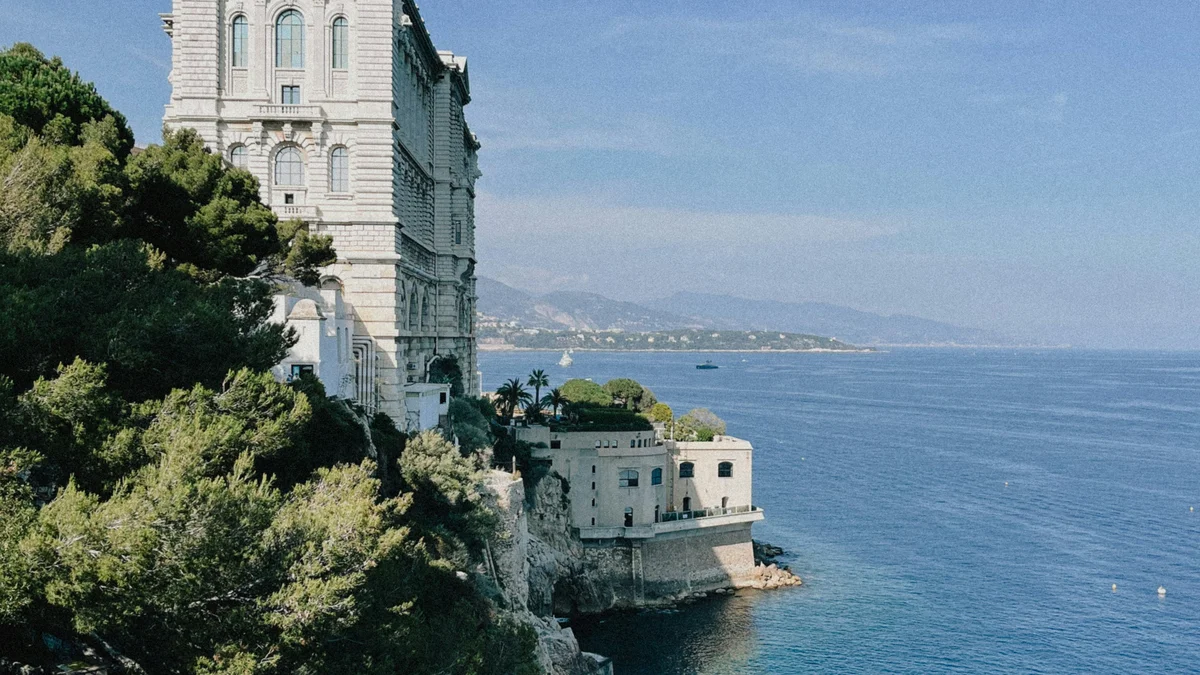
Built directly into the cliff face of Monaco-Ville and completed in 1910, the Oceanographic Museum was founded by Prince Albert I, a keen amateur oceanographer, and later directed for over three decades by Jacques Cousteau. Its dramatic facade rises straight up from the Mediterranean, and the museum inside houses a historic collection of marine specimens alongside a large aquarium. The rooftop terrace offers one of the best sweeping views of the sea from anywhere in Monaco.
Visitor guide
The Oceanographic Museum of Monaco (Musee oceanographique) is a museum of marine sciences in Monaco City, set on a sheer cliff above the Mediterranean. It forms part of the Institut oceanographique, which is committed to sharing knowledge of the oceans.
The museum was inaugurated in 1910 by Prince Albert I, the modernist reformer of Monaco. At the celebrations he invited not only officials and celebrities but also the world's leading oceanographers of the day to help develop the idea of a future Mediterranean Commission dedicated to oceanography, which is now called the Mediterranean Science Commission. The museum celebrated its centenary in March 2010 after extensive renovations.
Jacques-Yves Cousteau was the museum's director from 1957 to 1988, a period during which it became closely associated with ocean exploration.
The museum's setting is part of its appeal. It stands high on the cliff of the Rock of Monaco, so its facade can be seen from the sea and from the harbour below, and its Baroque Revival style gives the front a stately, theatrical look.
Wikipedia describes the building as a monumental example of Baroque Revival architecture, with an imposing facade above the sea that rises to a height of 85 metres. It took eleven years to build and used 100,000 tons of stone from La Turbie. During construction, the names of twenty well-known oceanographic research vessels chosen by Prince Albert I were inscribed on the frieze of the facade.
The museum houses collections of sea fauna, including starfish, seahorses, turtles, jellyfish, crabs, lobsters, rays, sharks, sea urchins, eels and cuttlefish, together with model ships, animal skeletons, tools, weapons, and objects made from pearls, molluscs and nacre. On the first floor, A Sailor's Career showcases the work of Prince Albert I and includes the laboratory from L'Hirondelle, the first of his research yachts. Observations made on board helped lead to an understanding of anaphylaxis, for which Dr Charles Richet received the Nobel Prize in Physiology or Medicine in 1913.
An aquarium in the basement presents a wide range of marine life, with hundreds of species of fish (one Monaco guide cites over 350) alongside invertebrates, as well as displays of Mediterranean and tropical ecosystems. Artists such as Damien Hirst and Philippe Pasqua have also displayed work in the museum.
The museum is part of Monaco's long tradition of marine conservation and research. Wikipedia also notes that Monaco hosts one of the world's first protected marine habitats and the International Atomic Energy Agency Marine Environment Laboratories. In 1989 a French marine biologist discovered a patch of the tropical seaweed Caulerpa taxifolia directly under the museum's walls, an introduction whose source remains a matter of controversy.
The museum sits beside the Rock of Monaco, close to the Prince's Palace and the Old Town. A private tour with a driver can combine it with the palace and Monte Carlo. Check arrangements in advance, as exhibits and access change over time.
See every tour and attraction we cover in Monaco.