TorontoOntario · 36 tours
 Niagara FallsOntario · 25 tours
 New York CityNew York · 30 tours
 Las VegasNevada · 8 tours
 San FranciscoCalifornia · 16 tours
 VancouverBritish Columbia · 17 tours
 DubaiUAE · 54 tours
 Abu DhabiUAE · 5 tours
 Buenos AiresArgentina · 23 tours
 AthensGreece · 31 tours
 AucklandNew Zealand · 38 tours
 CancunMexico · 54 tours
No destinations match “”. Try searching all tours instead — that search understands full questions, not just place names.
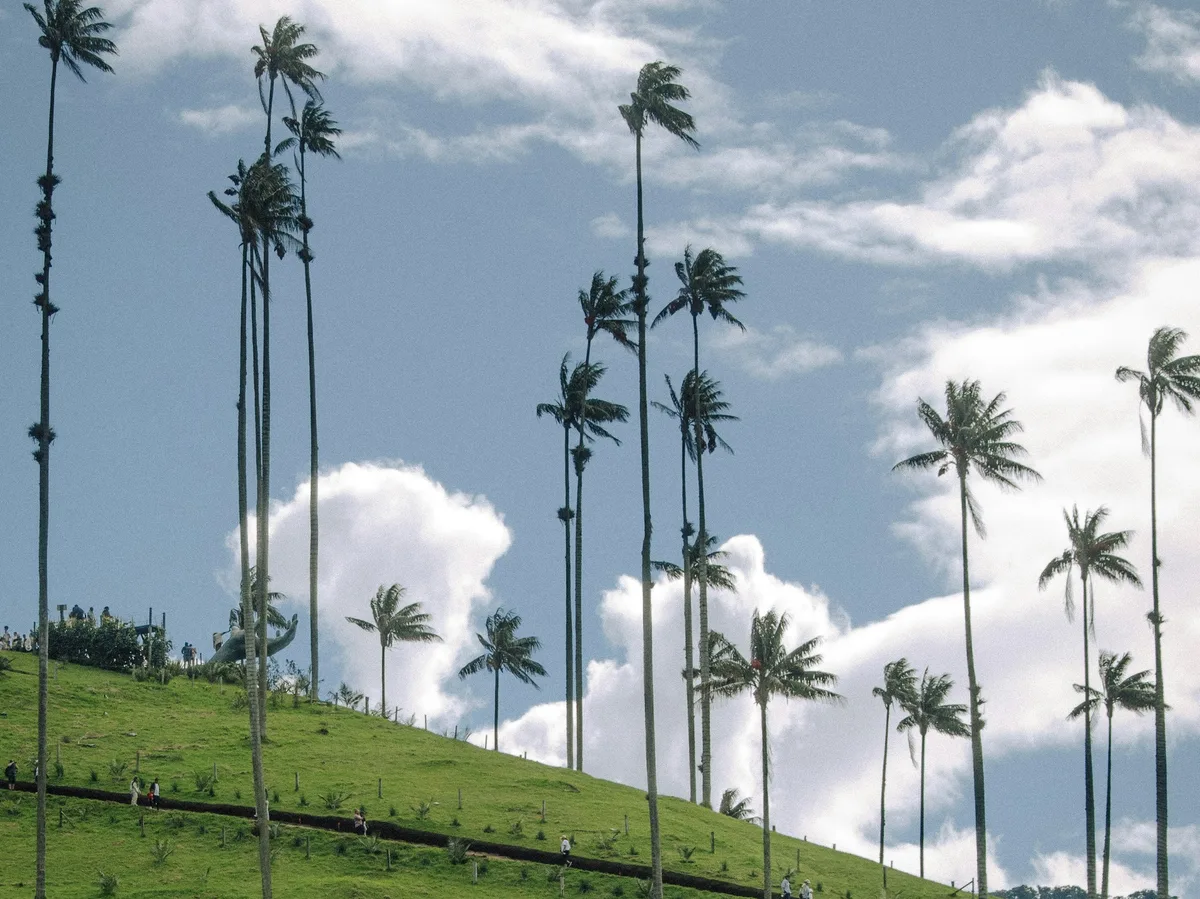
An ancient Tayrona settlement hidden deep in the Sierra Nevada de Santa Marta's jungle, reached only by a multi-day trek and 1,200 stone steps to terraces built centuries before Machu Picchu.
Visitor guide
Ciudad Perdida, also known as Teyuna and Buritaca-200, is the archaeological site of an ancient Tairona city in the Sierra Nevada de Santa Marta in northern Colombia. Its stone terraces, paths and circular plazas sit in dense forest above the Buritaca River, within the municipality of Santa Marta.
According to Wikipedia, dates for its founding vary by source: Wikipedia gives around 800 CE, while the Colombian Institute of Anthropology and History (ICANH) says the oldest structures, buried under later terraces, date to about the 6th century CE and that the Tairona-period town was abandoned between about 1580 and 1650. It was built by the Tairona, and was most likely a political and manufacturing centre on the Buritaca River. Population estimates for the settlement range widely, from about 2,000 to 8,000 people. The Tairona are reported to have left the city in the 16th century, after years of trade and conflict following the arrival of the Spanish.
The Kogi people, among the surviving Indigenous descendants of the Tairona, call the city Teyuna and regard it as the heart of a network of villages once inhabited by their ancestors. Kogi accounts say their communities knew of and visited the site long before it became widely reported.
The commonly told story is that the site came to wider attention in the early 1970s (the Colombian Institute of Anthropology and History dates the looters' find to 1975), in 1975, according to the Colombian Institute of Anthropology and History, when a local treasure hunter from the Sepulveda family climbed a stairway of stones after retrieving a bird they had shot. Gold figures and ceramic urns then began to appear on the black market, which alerted archaeologists. A team led by the director of the Instituto Colombiano de Antropologia reached the site in 1976, and the city was reconstructed between 1976 and 1982.
Since 2009 the non-profit Global Heritage Fund has worked at the site to help protect it from climate, vegetation, neglect and looting. Colombia's national parks authority and the Colombian Institute of Anthropology and History manage the area together with Indigenous organisations, who take part in decisions about the territory.
Ciudad Perdida consists of a series of about 169 terraces carved into the mountainside, a network of tiled roads, and several small circular plazas. The terraces once held houses and ceremonial spaces, and they now appear as grassy platforms cut from the slope. Reaching the main part of the city involves climbing roughly 1,200 stone steps through the forest, according to Wikipedia.
Researchers believe that only about 30 to 40 percent of comparable sites in the Sierra Nevada have been explored, and recent lidar mapping has been revealing more, which suggests Ciudad Perdida was one of many settlements in the region.
The site is reached on foot through jungle, along river crossings and forest trails, and the trek is a multi-day journey rather than a short outing. Conditions are hot and humid, with seasonal rain that can make the trails muddy. Because the area is an Indigenous territory of the Kogi, Wiwa, Arhuaco and Kankuamo peoples, visits are organised under local rules and with licensed guides, and respectful behaviour is expected. A private operator can help with planning, but the route itself is physically demanding and best suited to prepared walkers.
See every tour and attraction we cover in Colombia.