TorontoOntario · 36 tours
 Niagara FallsOntario · 25 tours
 New York CityNew York · 30 tours
 Las VegasNevada · 8 tours
 San FranciscoCalifornia · 16 tours
 VancouverBritish Columbia · 17 tours
 DubaiUAE · 54 tours
 Abu DhabiUAE · 5 tours
 Buenos AiresArgentina · 23 tours
 AthensGreece · 31 tours
 AucklandNew Zealand · 38 tours
 CancunMexico · 54 tours
No destinations match “”. Try searching all tours instead — that search understands full questions, not just place names.
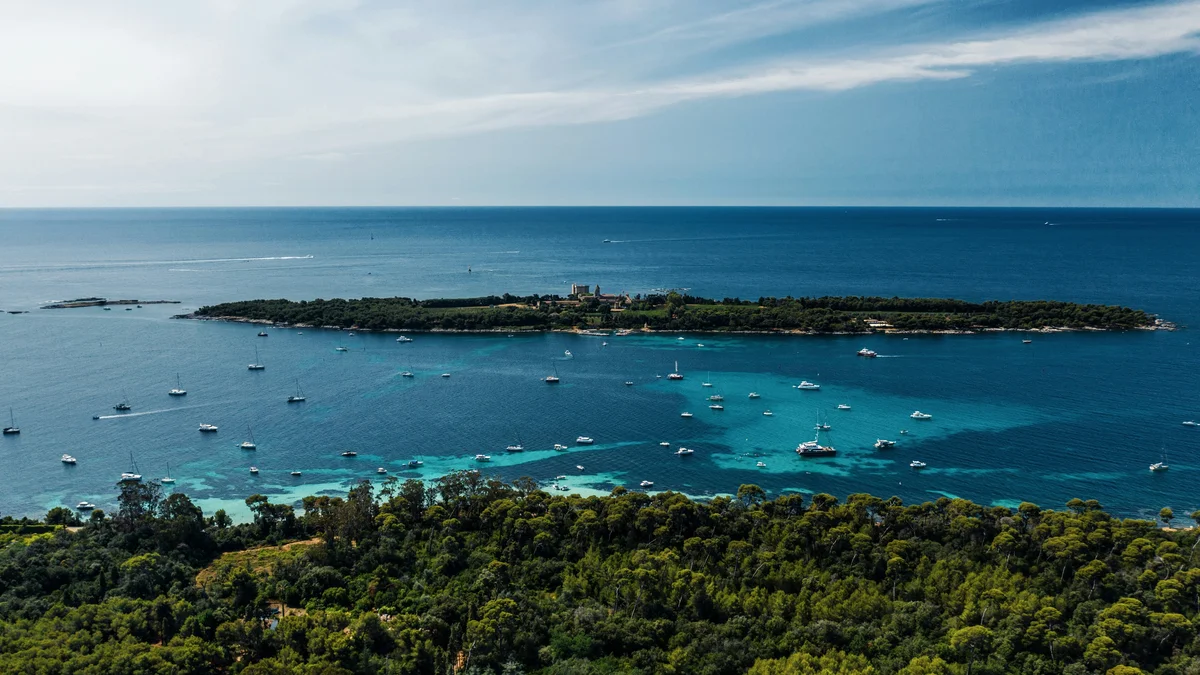
The Lérins Islands are two real islands, Sainte-Marguerite and Saint-Honorat, sitting just off the coast of Cannes and reachable by a short public ferry. Saint-Honorat is home to a genuine working Cistercian monastery, Lérins Abbey, founded in the 5th century, where monks still produce their own wine and liqueur today. Sainte-Marguerite has a real 17th-century fortress, Fort Royal, once used as a prison and said to have held the legendary Man in the Iron Mask.
Visitor guide
The Lerins Islands (Iles de Lerins) are a group of five Mediterranean islands off the French Riviera, in the bay of Cannes in southeastern France. The two largest, Ile Sainte-Marguerite and Ile Saint-Honorat, are known for a historic fortress prison and a working monastery, and the islands belong administratively to the commune of Cannes.
The smaller southern island is named after Saint Honoratus, who founded a monastery there around the year 410. According to tradition, Honoratus intended to live as a hermit but was joined by disciples, and by 427 the community had become, in the words of the writer John Cassian, an immense monastery. Legend has it that Saint Patrick, patron of Ireland, studied there in the fifth century. Around 732, Abbot Porcarius and many monks were killed in a raid; according to myth, others escaped after an angel warned the abbot.
Medieval pilgrims visited the island, and a fortified monastery was built between the 11th and 14th centuries. The monastery was disestablished in 1787, and in 1859 the island was bought by the Bishop of Frejus, who wanted to re-establish a religious community. A Cistercian community settled there ten years later and has remained since. Wikipedia says the monks divide their time between prayer and making wine, honey, lavender oil and a herbal liqueur called Lerina.
Ile Sainte-Marguerite is the largest island, nearly 3 kilometres long (published area figures range from roughly 1.5 to 2.1 square kilometres), and the closest to Cannes, roughly 700 metres from the Palm Beach headland. It is most famous for the Fort Royal, a fortress prison where the so-called Man in the Iron Mask was held for 11 years between 1687 and 1698. The fort was built between 1624 and 1627, extended during the Spanish occupation of 1635 to 1637, and strengthened by the French afterward. Part of the fort now houses the Musee de la Mer, which displays archaeological finds from shipwrecks off the island, including Roman ceramics.
The island's name is linked to a legendary Saint Marguerite, sister of Saint Honoratus, who in legend led a community of nuns there. Her story appears to come from medieval writings rather than firm history.
The islands were first inhabited in Roman times. Andalusian pirates raided them in 1047, Spain held them from 1635 to 1637, and the English navy occupied them in 1707 during the siege of Toulon. During the Revolution they were renamed Ile Marat and Ile Lepeletier.
Boat services link Cannes to the islands, with the trip to Sainte-Marguerite taking about 15 minutes, according to Wikipedia. The monastery buildings are largely closed to casual visitors, though the abbey church and ruins are open to the public. Arrangements and ferry operators change, so confirm current details; a private tour can plan the mainland portions of the day around the crossing.
See every tour and attraction we cover in Cannes.