TorontoOntario · 36 tours
 Niagara FallsOntario · 25 tours
 New York CityNew York · 30 tours
 Las VegasNevada · 8 tours
 San FranciscoCalifornia · 16 tours
 VancouverBritish Columbia · 17 tours
 DubaiUAE · 54 tours
 Abu DhabiUAE · 5 tours
 Buenos AiresArgentina · 23 tours
 AthensGreece · 31 tours
 AucklandNew Zealand · 38 tours
 CancunMexico · 54 tours
No destinations match “”. Try searching all tours instead — that search understands full questions, not just place names.
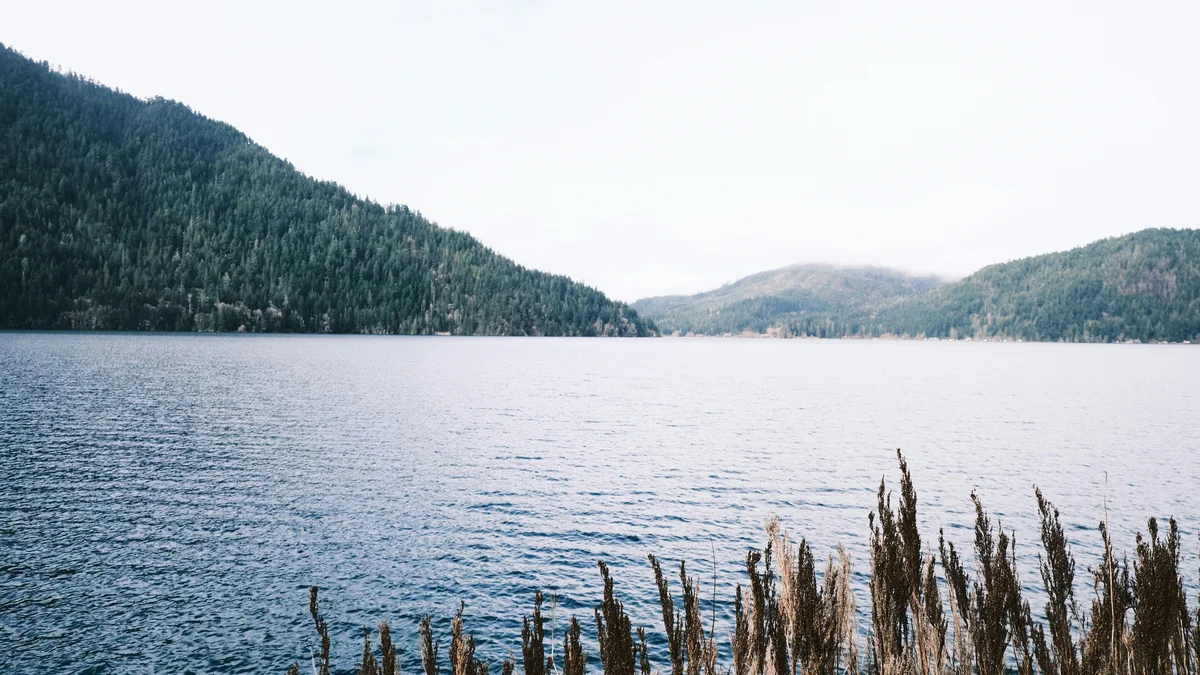
Carved by glaciers during the last ice age, Lake Crescent plunges to depths of over 600 feet and is known for water so clear and low in nitrogen that it takes on a striking deep blue-green color on sunny days. The lake is home to two trout species, the Beardslee and Crescenti, found naturally nowhere else in the world, a result of the lake's long isolation from other waterways. The historic Lake Crescent Lodge and the popular trail to Marymere Falls both sit along its forested shoreline within Olympic National Park.
Visitor guide
Lake Crescent lies entirely within Olympic National Park, about 18 miles west of Port Angeles, and is known for its deep, clear blue water. The National Park Service describes it as a cold, glacially carved lake whose depths plunge to 624 feet.
Glaciers carved the valley during the last Ice Age. Sources differ on the later events: the park's visitor page places a massive landslide that separated the lake from Lake Sutherland about 7,000 years ago, a park lesson plan gives roughly 9,000 years, and Wikipedia says about 8,000 years ago a slide dammed Indian Creek. Wikipedia adds that many geologists think the two lakes formed together and were later divided, and that water then spilled out through the Lyre River over Lyre River Falls. The Klallam and Quileute story, which the park's brochure presents as legend alongside the geology, tells of a mountain spirit who hurled a boulder that dammed the river.
Wikipedia gives the lake a surface area of 5,127 acres at an elevation of about 580 feet, holding roughly half a cubic mile of fresh water by a 2013-2014 estimate. The official maximum depth is 624 feet, making Lake Crescent the second-deepest lake in Washington after Lake Chelan. A 2013-2014 survey measured about 596 feet, so quote the depth with that caveat; Wikipedia says an older reading of over 1,000 feet was likely sonar bouncing off steep underwater slopes. Wikipedia attributes the lake's clarity to low nitrogen levels that limit algae growth.
The NPS says the Lake Crescent populations of steelhead and cutthroat became isolated from other Olympic Peninsula trout and diverged into two unique variants, the Beardslee trout and the Crescenti cutthroat trout. Both are described as found nowhere else in the world. Wikipedia explains that the fish became landlocked because they could not climb Lyre River Falls, with the Beardslee trout spawning in the Lyre River above the falls and the Crescenti cutthroat spawning in Barnes Creek. Since 2001, catch-and-release regulations have applied on the lake, and the park notes that annual spawning estimates for both remain well under 500 fish.
The origin of the name is uncertain; Wikipedia suggests it may come from the shape of the lake or from nearby Crescent Bay, named in 1846. The same source says fur trappers John Sutherland and John Everett explored the area in 1849, and that the lake was first called Everett Lake. It was included in the Olympic Forest Reserve in 1897, designated a recreation area in 1921, and added to Olympic National Park in 1938.
The park traces the lake's reputation as a sport-fishing haven to an 1895 visit by Admiral Leslie Beardslee. Resorts followed. Avery and Julia Singer began building a hotel and cottages at Barnes Point in 1914 and opened Singer's Tavern in 1915. The two-story main building used local timber in an Arts and Crafts-influenced design with Roycroft-style furnishings. The Singers sold the property in 1927, and the National Park Service bought Singer's Lake Crescent Tavern in 1951. Wikipedia reports that the lodge's historic district, covering 11 lakeshore buildings, was listed on the National Register of Historic Places on July 13, 2007. The NPS also publishes a historic structures report on Lake Crescent Lodge; check the NPS for the lodge's current operating details.
President Franklin D. Roosevelt toured the Olympic Peninsula in 1937 and discussed the proposed national park during a stop at the lake, and Congress authorized the park the following year. Accounts disagree on the details: one places his overnight stay at the lodge on September 30, while others describe a breakfast at the neighboring Rosemary Inn on October 1.
The most popular day hike is the 0.9-mile one-way trail to Marymere Falls, which runs through old-growth forest to a 90-foot waterfall and can be reached from the Storm King Ranger Station or Lake Crescent Lodge. Other routes along the lake include the Spruce Railroad Trail on the north shore, which follows a railroad grade built during World War I to haul spruce for aircraft production; Wikipedia says it was finished in 1919, a year too late for that purpose, and abandoned in 1951. The route runs about four miles and leads past a former railroad tunnel to Devils Punch Bowl, a bay that Wikipedia calls a popular swimming and diving spot.
The lake sits along the road between Port Angeles and the Pacific coast, so a private vehicle and driver with door-to-door pickup can include a lakeside stop without anyone worrying about parking. Check the NPS for current access and facilities.
See every tour and attraction we cover in Olympic National Park.