TorontoOntario · 36 tours
 Niagara FallsOntario · 25 tours
 New York CityNew York · 30 tours
 Las VegasNevada · 8 tours
 San FranciscoCalifornia · 16 tours
 VancouverBritish Columbia · 17 tours
 DubaiUAE · 54 tours
 Abu DhabiUAE · 5 tours
 Buenos AiresArgentina · 23 tours
 AthensGreece · 31 tours
 AucklandNew Zealand · 38 tours
 CancunMexico · 54 tours
No destinations match “”. Try searching all tours instead — that search understands full questions, not just place names.
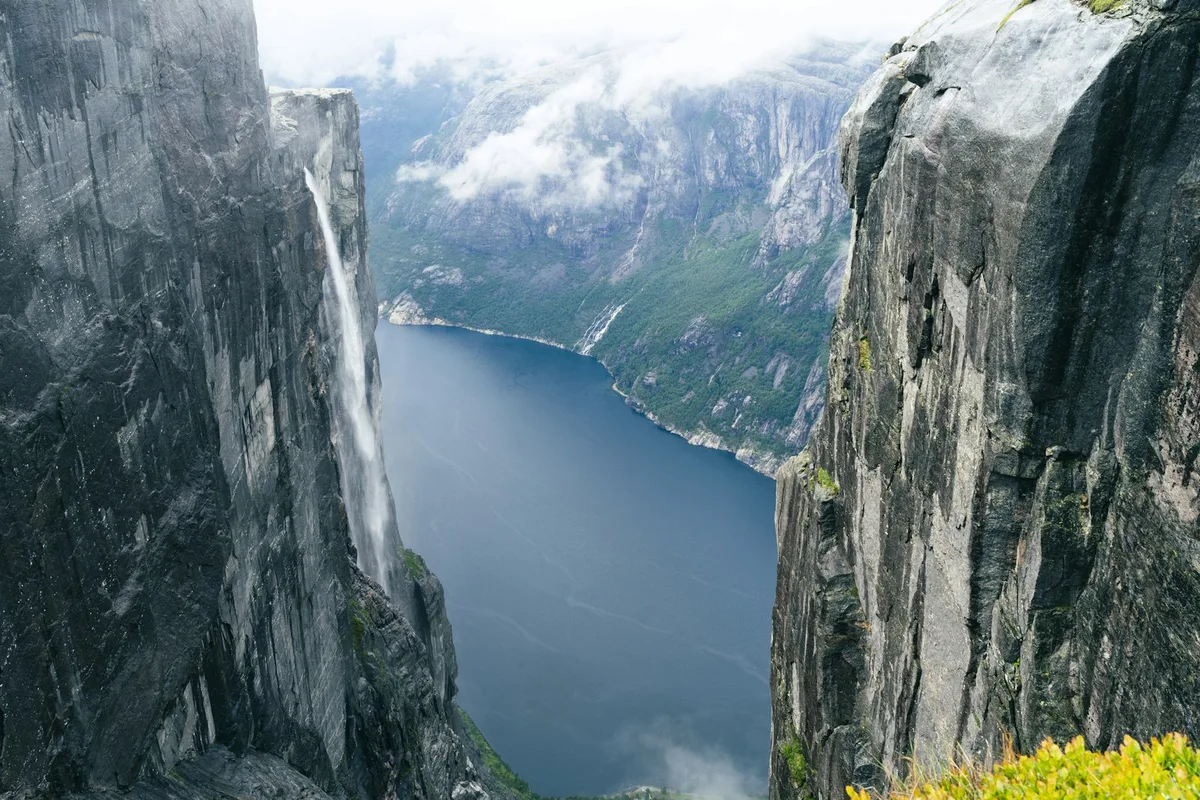
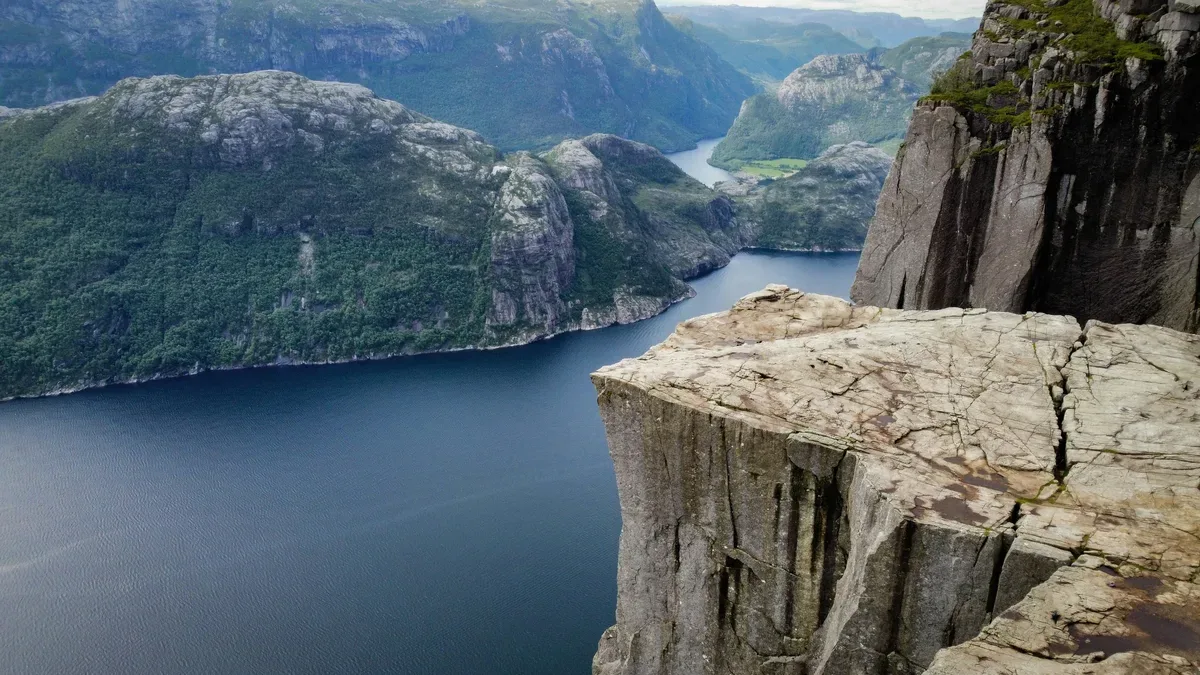
A mountain in Rogaland county above Lysefjord, famous for Kjeragbolten — a boulder wedged in a crevice above a 984-metre drop — reached via a strenuous marked hiking trail.
Visitor guide
Kjerag is a mountain in Sandnes municipality, Rogaland county, Norway, standing on the southern shore of Lysefjorden just southwest of Lysebotn. Its northern side is a cliff that drops almost straight to the fjord. It is best known for Kjeragbolten, a boulder wedged in a crevice at the mountain's edge, and for a demanding marked hiking trail.
Wikipedia gives the elevation of Kjerag as 1,132 metres. The cliff on the northern face falls 984 metres almost vertically to the fjord, and the waterfall Kjeragfossen drops from the mountain into Lysefjorden and is described as one of the tallest in the world. The name may come from kje, meaning kid or young goat, and ragg, meaning goat's hair or shaggy fur, a reference to the rough texture of the mountainside.
The mountain is sometimes visited by people who find Preikestolen crowded, since both overlook Lysefjorden and the area is in the same part of Rogaland.
Kjeragbolten is a boulder of about 5 cubic metres wedged between rock walls at the edge of the mountain. It can be walked onto without equipment, but there is a direct drop of 241 metres below it, and a further 735 metres of steep gradient down to the fjord. The name is said to mean Kjerag Boulder or Kjerag Bolt. Because visitors stand on a stone suspended above a very large drop, the spot has become a symbol of Norwegian adventure travel.
The easiest ascent starts at the visitor centre at Øygardsstølen and takes about two and a half to three hours each way. The best walking season is from late June to September, depending on snow. Reaching the trailhead is possible by road from Stavanger, which takes about two hours and is closed in winter, or by a summer tourist ferry from Lauvvik to Lysebotn. The trail is strenuous and includes steep sections of rock where chains provide support, so sturdy footwear and good weather matter.
Kjerag is a well-known BASE jumping destination. Stein Edvartsen made the first officially registered jump in 1994, and Wikipedia reports 48,668 registered jumps through 2016, with 131 recorded accidents and a number of fatalities. The cliff was first climbed in spring 1985 by the British team of Pat Littlejohn, Steve Jones, Dick Renshaw and Lyndsey Foulkes, who abseiled in without seeing the wall from below and chose their route from photographs. Pete Whittaker later free-soloed the Renshaw-Foulkes route in the summer of 2020. Many difficult routes now climb the mountain's steep faces.
Kjerag is an outing for fit walkers in settled summer weather, and the road access from Stavanger is seasonal. A private tour with a driver can handle the long mountain approach and the ferry options, leaving the day free for the hike itself. Anyone planning to stand on the boulder should be comfortable with exposure and should follow local guidance on weather and conditions.
See every tour and attraction we cover in Norway.