TorontoOntario · 36 tours
 Niagara FallsOntario · 25 tours
 New York CityNew York · 30 tours
 Las VegasNevada · 8 tours
 San FranciscoCalifornia · 16 tours
 VancouverBritish Columbia · 17 tours
 DubaiUAE · 54 tours
 Abu DhabiUAE · 5 tours
 Buenos AiresArgentina · 23 tours
 AthensGreece · 31 tours
 AucklandNew Zealand · 38 tours
 CancunMexico · 54 tours
No destinations match “”. Try searching all tours instead — that search understands full questions, not just place names.
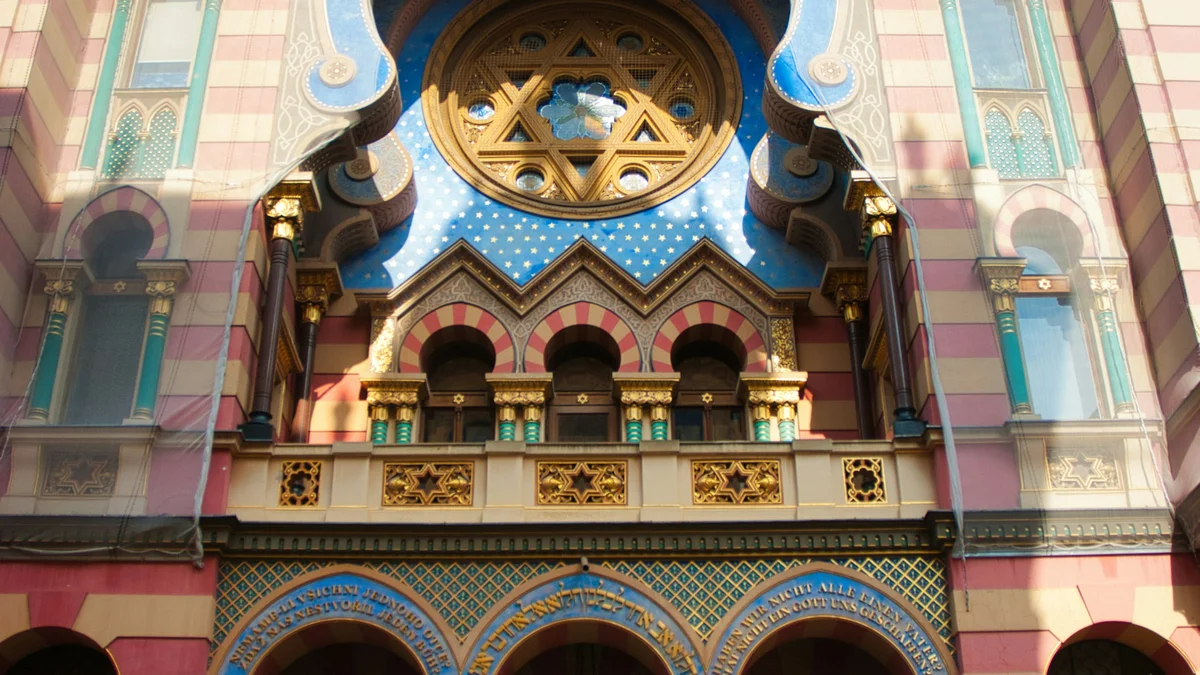
Known as Josefov, Prague's historic Jewish quarter is home to several real synagogues, including the Old-New Synagogue from the 1270s, among the oldest active synagogues in Europe, and the ornate Moorish-revival Jerusalem Synagogue built in 1906. The centuries-old Old Jewish Cemetery, with its tightly stacked headstones, sits alongside the Jewish Museum's collection of ceremonial artifacts. The district remains a living center of Prague's Jewish community, not just a historical site.
Visitor guide
Josefov, also called the Jewish Quarter, is the smallest cadastral area of Prague and the former Jewish ghetto, lying within the Old Town. Wikipedia notes that Jews are believed to have settled in Prague as early as the 10th century, and that six synagogues, the Old Jewish Cemetery and the Old Jewish Town Hall survive today as part of the Jewish Museum in Prague.
The community was eventually concentrated in a walled ghetto. In 1262, Přemysl Otakar II issued a Statuta Judaeorum granting a degree of self-administration. The ghetto was most prosperous toward the end of the 16th century, when the Jewish mayor Mordecai Maisel, a wealthy financier, used his money to develop it. In 1850 the quarter was renamed Josefstadt after Emperor Joseph II, who emancipated Jews with the Edict of Tolerance of 1782. Most of the old quarter was demolished between 1893 and 1913 in a renewal modelled on Paris, which is why today's streets give little impression of the crowded medieval ghetto that reputedly held over 18,000 inhabitants.
The Old New Synagogue (Staronová synagoga), completed in 1270, is Europe's oldest active synagogue according to Wikipedia and the oldest surviving medieval synagogue with a twin-nave design. It is one of Prague's earliest Gothic buildings. One explanation of the name derives it from the Hebrew al tnay, meaning on condition: legend says angels brought stones from the Temple in Jerusalem on condition that they be returned when the Temple is rebuilt. The vaults have five ribs rather than the usual four or six, and twelve windows are said to echo the twelve tribes. The tradition that the body of the golem created by Rabbi Judah Loew lies in the attic is a legend, and an exploration of the attic in 2014 found no trace of one.
The Pinkas Synagogue, completed in 1535 in Gothic style, is the second oldest surviving synagogue in Prague and today commemorates approximately 80,000 Czech Jewish victims of the Holocaust. The Maisel Synagogue was consecrated in 1592 after Mordecai Maisel obtained a privilege from Emperor Rudolf II; it was damaged by fires and rebuilt several times and now serves as a museum depository. The Spanish Synagogue, completed in 1868 in Moorish Revival style on the site of the older Altschul, became a museum in 1955 and is known for its richly decorated interior. The High Synagogue and Klausen Synagogue date from the 16th century, and the Jewish Town Hall is an 18th-century Rococo building.
The Old Jewish Cemetery is described as one of the largest of its kind in Europe and was in use from the first half of the 15th century until 1786. The oldest gravestone, from 1439, belongs to the rabbi and poet Avigdor Kara. Because there was little room and Jewish piety does not allow old graves to be abolished, layers of soil were piled up, in places forming as many as twelve layers, which explains the dense forest of tilted gravestones and the raised ground level. Burials include Rabbi Judah Loew (the Maharal), Mordecai Maisel, the historian David Gans and Rabbi David Oppenheim. Wikipedia calls it Europe's oldest surviving Jewish cemetery in its overview of the quarter, though that claim is best treated with care.
Franz Kafka was born in the quarter, and a modern statue of him by Jaroslav Róna stands beside the Spanish Synagogue. The sites carry a solemn history, and a knowledgeable private guide helps visitors understand the layers of community life, loss and memory they hold.
See every tour and attraction we cover in Prague.