TorontoOntario · 36 tours
 Niagara FallsOntario · 25 tours
 New York CityNew York · 30 tours
 Las VegasNevada · 8 tours
 San FranciscoCalifornia · 16 tours
 VancouverBritish Columbia · 17 tours
 DubaiUAE · 54 tours
 Abu DhabiUAE · 5 tours
 Buenos AiresArgentina · 23 tours
 AthensGreece · 31 tours
 AucklandNew Zealand · 38 tours
 CancunMexico · 54 tours
No destinations match “”. Try searching all tours instead — that search understands full questions, not just place names.
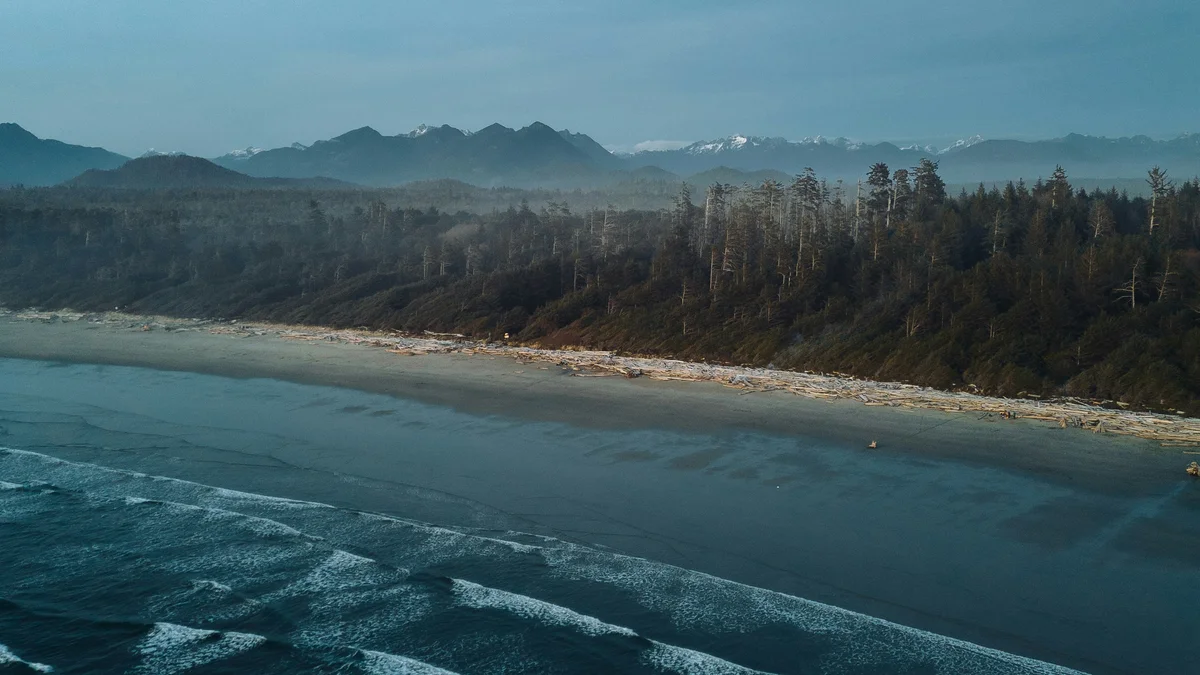
A real set of natural hot springs inside Maquinna Marine Provincial Park, reachable only by boat or floatplane from Tofino, roughly 30 nautical miles up the coast. Water flows down a series of rock pools from a genuinely hot source into the ocean, with a boardwalk trail through old-growth rainforest connecting the dock to the springs themselves.
Visitor guide
Hot Springs Cove is a geothermal spring on the wild outer coast of Vancouver Island, northwest of Tofino in Clayoquot Sound, where hot mineral water tumbles over rock into a chain of ocean-side pools. There is no road to it: visitors arrive by boat or floatplane and finish the trip on foot along a boardwalk through coastal rainforest. It is one of the most distinctive day trips on the island's west coast.
The springs lie inside a provincial park that was long known as Maquinna Marine Provincial Park, protecting about 2,563 hectares and established in 1955. In March 2025 the park was renamed Nism̓aakqin Park under provincial legislation; the name was provided by the Ahousaht First Nation and is translated by BC Parks as "our land that we care for" in Nuu-chah-nulth. The springs themselves are called mux̣ʷšiƛa in the Ahousaht language, which BC Parks renders as "steaming from rock". The community and bay take their English name, Hot Springs Cove, from the springs, which older records list as Ramsay Hot Spring.
Sources describe this stretch of coast in slightly different ways. Hesquiaht people are commonly named as the traditional territory holders around the cove, and the Hesquiaht community relocated to Hot Springs Cove after the 1964 tsunami. BC Parks, however, works with the Ahousaht Nation, through the Maaqutusiis Hahoulthee Stewardship Society, on a visitor use management strategy for the springs, and a business corporation connected to Ahousaht operates the park. Treat the area as shared Nuu-chah-nulth country whose stewardship arrangements are still evolving, and check BC Parks for current details.
Visitors are usually told that the water emerges from a rock crevice at roughly 50°C (about 122°F). Travel sources commonly explain that seawater seeps down along a geological fault, is heated deep underground, and is pushed back up through fractured rock. The depth figure of around 5 km often repeated for this process comes from travel writing rather than a geological study, so treat it as indicative. BC Parks describes the water cascading down a small waterfall into six rocky pools, each cooler than the last as ocean swells mix in. At high winter tides the pools can fill with cold seawater, and BC Parks warns that rough water and floating debris can cause injury, so tide timing matters.
BC Parks lists access by boat or floatplane from Tofino, Ucluelet, Gold River, Tahsis or Hot Springs Cove, using operators holding park-use permits. Tour operators from Tofino commonly describe a water-taxi or boat trip of around an hour and a half, or a floatplane flight of roughly 20 minutes; confirm the current trip details with your operator. From the head of the dock, a boardwalk of about 2 km leads through old-growth forest to the springs, with a viewing platform along the way. A rebuild of the boardwalk was carried out in partnership with Ahousaht, and BC Parks notes it can be slippery with frost or rotting leaves in fall and winter. The personalised carved planks that visitors once paid for are no longer part of the arrangement.
Because the springs sit beyond the road network, the experience is built around a boat or floatplane operator. Voyzo can arrange private-vehicle pickup and a driver for the road leg to and from Tofino, so the day begins and ends without a car park to find. Check the transport operator and BC Parks for current schedules, access conditions and any park requirements.
See every tour and attraction we cover in Vancouver Island.