TorontoOntario · 36 tours
 Niagara FallsOntario · 25 tours
 New York CityNew York · 30 tours
 Las VegasNevada · 8 tours
 San FranciscoCalifornia · 16 tours
 VancouverBritish Columbia · 17 tours
 DubaiUAE · 54 tours
 Abu DhabiUAE · 5 tours
 Buenos AiresArgentina · 23 tours
 AthensGreece · 31 tours
 AucklandNew Zealand · 38 tours
 CancunMexico · 54 tours
No destinations match “”. Try searching all tours instead — that search understands full questions, not just place names.
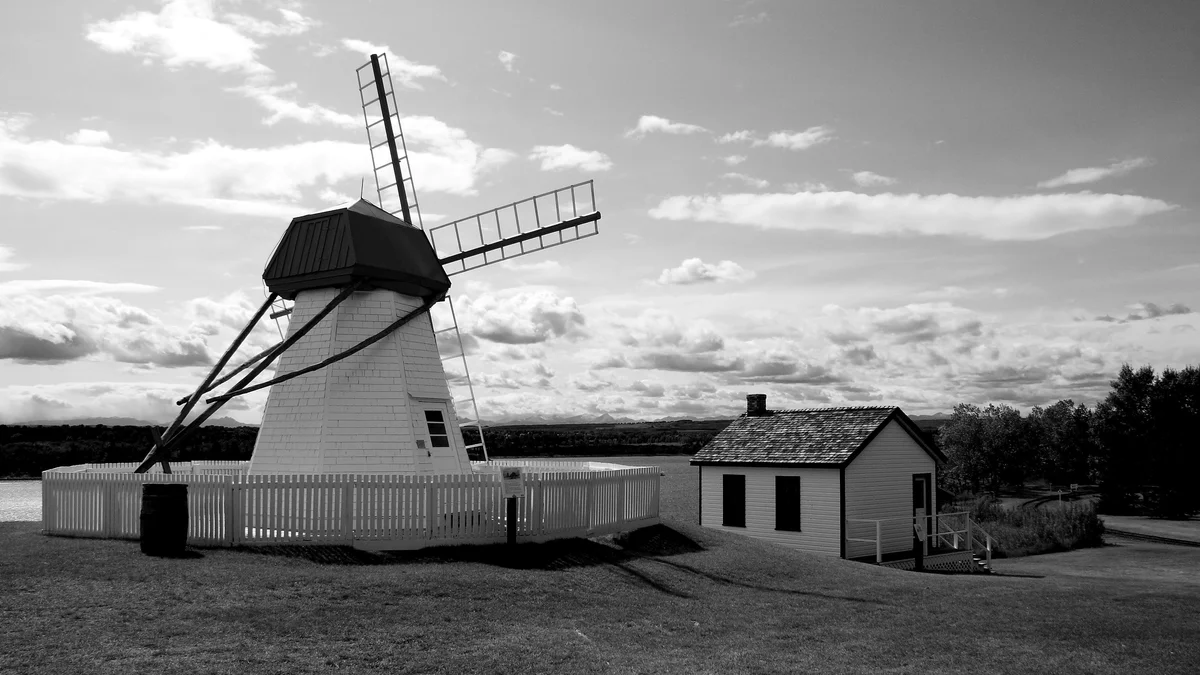
One of North America's largest living history museums, according to the park, spread across 127 acres (about 51 hectares) beside the Glenmore Reservoir. Costumed interpreters, an antique steam train, and Calgary's only operating paddle-wheeler bring more than a century of Western Canadian history to life, alongside the Gasoline Alley Museum's vintage vehicle collection.
Visitor guide
Heritage Park Historical Village is a living history museum on 127 acres (about 51 hectares) of parkland beside the Glenmore Reservoir in southwest Calgary. It opened on July 1, 1964, and presents western Canadian life from the fur-trade era of the 1860s through to the 1950s. Many of its buildings were moved here from other sites and furnished with period artifacts, and staff in historical dress and antique vehicles keep the place moving.
The park's origins go back to 1961, when trustees of the Woods Foundation and City of Calgary commissioners discussed a pioneer-themed park for children. According to the park's own account, the Woods Foundation contributed $150,000, the City matched it and supplied the land, and Calgarians pledged a further $77,000. Early planning was shared between city officials and the Glenbow Foundation, and the Heritage Park Society, formed in the fall of 1963, took on construction and operation.
The speed of the start-up is part of the story. The park says that within about nine months roughly two dozen historic buildings had been moved in, repaired and furnished with a few thousand artifacts, and that a vintage train had been restored to running order on 4,300 feet of newly laid track. On opening day the park ran on about 100 volunteers, six full-time staff and 22 part-time employees.
The grounds are arranged by era rather than as one blended village. A replica Hudson's Bay Company fur-trading fort stands for the earliest period, a pre-railway settlement village follows, and a railway-era prairie town fills in the early twentieth century. Heritage Plaza and the Gasoline Alley Museum bring the story forward to the age of the automobile and the petroleum economy. Heritage Park says it has over 180 exhibits and service structures: about 50% relocated and restored originals, 25% replicas and 25% analogues.
Other features include a First Nations Encampment representing Indigenous peoples of southern Alberta in the nineteenth century, an antique midway with working historical rides such as the Bowness Carousel, and the Little Synagogue on the Prairie, a building dating to 1913. Innovation Crossing, overlooking the reservoir, adds an energy-themed exhibit.
Rail is the signature experience. Wikipedia describes a passenger train pulled by one of two working steam locomotives, plus a roundhouse built in 1981, a car shop and an operating turntable. A Canadian Pacific 0-6-0, number 2024, is among the engines named, and a streetcar from the former Calgary Street Railway also belongs to the collection. On the water, the S.S. Moyie is a paddle steamer re-creation that sails the Glenmore Reservoir; sources describe it as a 1964 re-creation rather than an original vessel.
Gasoline Alley Museum collects antique cars, gasoline pumps and related memorabilia, and, along with Heritage Plaza, sits at the front of the site. Heritage Plaza includes the Haskayne Mercantile Block, with period-style shops, and restaurants. Horse-drawn wagons and vintage vehicles carry visitors around the grounds.
For its 60th anniversary in 2024 the park described itself as one of Canada's most visited living history museums, citing more than 618,000 guests in 2023. Treat that as the park's own figure. It is easy to reach by Calgary's C-Train, which has a Heritage station, though a group travelling together will find the layout and distances easier with door-to-door transport.
Seasons and operating areas change: at times of year the Historical Village runs on a limited schedule while Heritage Plaza and Gasoline Alley stay open, so check Heritage Park directly for current hours, tickets and which areas are running. A private Voyzo tour with a driver can include Heritage Park as a stop alongside other Calgary sights, with pickup arranged to suit your group; the time you allow is up to you, and it is a large site, so wear comfortable shoes and plan for a good part of a day if you want to see the train, the boat and the eras in full.
See every tour and attraction we cover in Calgary.