TorontoOntario · 36 tours
 Niagara FallsOntario · 25 tours
 New York CityNew York · 30 tours
 Las VegasNevada · 8 tours
 San FranciscoCalifornia · 16 tours
 VancouverBritish Columbia · 17 tours
 DubaiUAE · 54 tours
 Abu DhabiUAE · 5 tours
 Buenos AiresArgentina · 23 tours
 AthensGreece · 31 tours
 AucklandNew Zealand · 38 tours
 CancunMexico · 54 tours
No destinations match “”. Try searching all tours instead — that search understands full questions, not just place names.
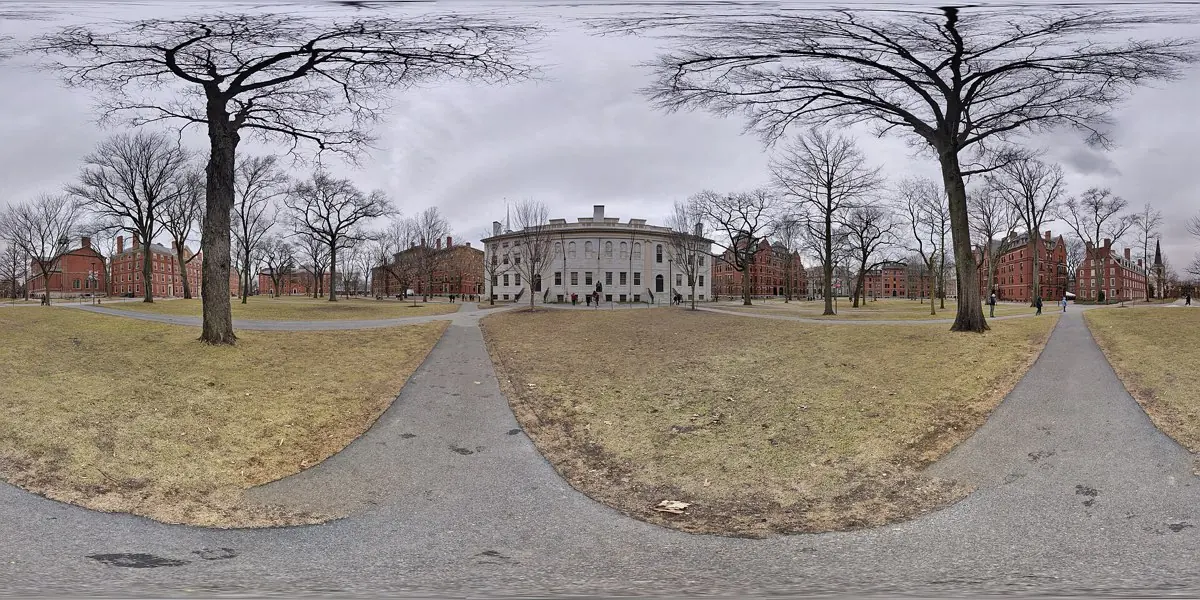
The oldest institution of higher education in the US, with a historic campus open to the public.
Visitor guide
Harvard University is the oldest institution of higher learning in the United States, founded in 1636 in what is now Cambridge, just across the Charles River from Boston. Harvard Yard, the red-brick heart of the campus, is the part most visitors come to walk through.
Harvard says it was founded on October 28, 1636, by vote of the Great and General Court of the Massachusetts Bay Colony. It took the name Harvard College in 1639, honoring John Harvard, a clergyman who died in 1638 and left the young college about half his estate (Wikipedia gives 780 pounds) and his library; sources variously put the books at some 320 volumes or more than 400. John Harvard was the first major benefactor, not the founder. His books were mostly lost when the original Harvard Hall burned in 1764; all but one volume was destroyed.
The 1650 charter, which still governs the university according to Harvard, pledged it to the education of English and Indian youth, and an Indian College stood in the Yard from 1655 to 1698. Harvard now has a campus of about 209 acres in Cambridge plus campuses in Boston's Longwood and Allston neighborhoods, and describes itself as having 14 schools; Harvard Library holds more than 20 million volumes according to Wikipedia.
The Yard covers about 22.4 acres and grew around the college's first parcel of land, bought in 1637. Its perimeter has 27 gates, and the Yard was listed on the National Register of Historic Places on February 6, 1973. Massachusetts Hall, built in 1720, is Harvard's oldest surviving building. University Hall, from 1815, has a white granite facade that departed from the red-brick Georgian look around it. Tercentenary Theatre is the central space framed by Memorial Church and Sever Hall, and four libraries stand in the Yard: Houghton, Lamont, Pusey and Widener.
The statue visitors photograph most is the seated bronze of John Harvard by Daniel Chester French, unveiled on October 15, 1884, and paid for by Boston philanthropist Samuel James Bridge. Because no portrait of Harvard survives, the Harvard Gazette reports that the model was a student, Sherman Hoar of the Class of 1882. The base reads "John Harvard, Founder, 1638," which gives the statue its nickname, the Statue of Three Lies: it is not a true likeness, he was a benefactor rather than the founder, and the college dates to 1636.
Harvard's Visitor Center, established in 1962, lists a student-led Historical Tour of the Yard, a Visit Harvard app with a self-guided walking tour, and a walking tour on Harvard and the legacy of slavery. Registration rules, group sizes and schedules change, so check Harvard directly. Museums and libraries have their own policies on access.
Harvard sits across the river from central Boston, so it fits comfortably into a private day. With Voyzo, a private driver can bring you from your hotel or door directly to Cambridge, let you explore the Yard and surrounding square at your own pace, and carry on to your next Boston stop afterward. Check Harvard and individual buildings for current visitor access.
See every tour and attraction we cover in Boston.