TorontoOntario · 36 tours
 Niagara FallsOntario · 25 tours
 New York CityNew York · 30 tours
 Las VegasNevada · 8 tours
 San FranciscoCalifornia · 16 tours
 VancouverBritish Columbia · 17 tours
 DubaiUAE · 54 tours
 Abu DhabiUAE · 5 tours
 Buenos AiresArgentina · 23 tours
 AthensGreece · 31 tours
 AucklandNew Zealand · 38 tours
 CancunMexico · 54 tours
No destinations match “”. Try searching all tours instead — that search understands full questions, not just place names.
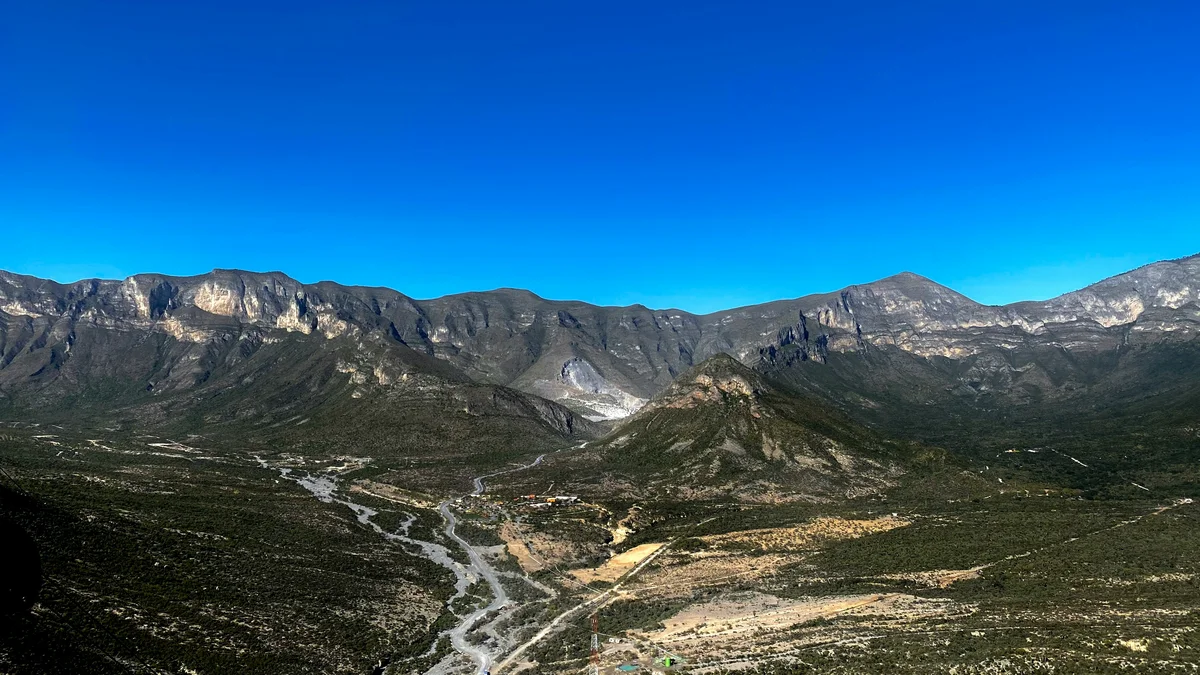
A cave system formed an estimated 50 to 60 million years ago, located roughly 30 km from Monterrey and reached by a scenic cable car, with two descending paths revealing a combined 27 chambers of limestone stalactites and stalagmites more than 100 meters below the entrance.
Visitor guide
Grutas de Garcia, also called the Garcia Caves, is a limestone cave system inside the Sierra del Fraile in the municipality of Garcia, Nuevo Leon, Mexico, roughly 30 km from Monterrey. Reached by an aerial tramway, it is known for its chambers of stalactites and stalagmites and for marine fossils embedded in its walls.
According to Wikipedia, the caves were found in 1843 by Fray Juan Antonio de Sobrevilla during a casual excursion through the mountains, although some Spanish-language accounts credit a local family, the Marmolejos, so the story of the discovery varies by source. The mountain that holds the caves is known as El Fraile, meaning the Friar, and a protected area covers the Sierra del Fraile.
The caves are cut into limestone and are thought to have formed some 50 to 60 million years ago. In prehistoric times the area lay beneath the sea, which explains the sea shells and snail shells visible as fossils on the cave walls. Wikipedia gives a depth of 105 meters and an internal temperature of about 18 degrees Celsius, which makes the interior noticeably cooler than the surrounding Nuevo Leon landscape in warm months.
The caves have a single entrance, and visitors descend along two routes. Wikipedia describes one path of about 2.5 km with 16 chambers and another of about 1 km with 11 chambers, so the sources together describe a system of 27 chambers, though the published length and chamber figures are not fully consistent. Along the routes, stalactites and stalagmites fill the chambers, and several formations carry popular names.
Among them are the Salon de la Luz (Light Chamber), where light filters through clear rock in the ceiling, and La Octava Maravilla (The Eighth Wonder), a column formed where a stalagmite meets a stalactite. The Salon del Aire (Air Chamber) has a balcony about 40 meters high, and the Mirador de la Mano is a stalagmite shaped like a human hand. Other named formations include El Nacimiento, La Fuente Congelada, La Torre China, El Teatro and El Arbol de Navidad.
The easiest way up to the entrance is a roughly five-minute ride on an aerial tramway, which replaced older funicular equipment in 2002 according to one French-language source. A steep path also leads up the mountainside to the cave mouth. The ride gives wide views over the surrounding valley and the Sierra before the descent into the cave begins.
Tourist use of the caves is described by one source as dating from the late 1940s. Visitors should not confuse the site with the Grutas de Bustamante, a separate cave found in 1906 in another part of Nuevo Leon.
The caves are a natural half-day excursion from Monterrey, and the cooler, humid cave air and the stairs and paths inside mean comfortable footwear is useful. A private guided visit suits the site well, since a guide can explain the geology and the named formations as you move through the chambers.
See every tour and attraction we cover in Monterrey.