TorontoOntario · 36 tours
 Niagara FallsOntario · 25 tours
 New York CityNew York · 30 tours
 Las VegasNevada · 8 tours
 San FranciscoCalifornia · 16 tours
 VancouverBritish Columbia · 17 tours
 DubaiUAE · 54 tours
 Abu DhabiUAE · 5 tours
 Buenos AiresArgentina · 23 tours
 AthensGreece · 31 tours
 AucklandNew Zealand · 38 tours
 CancunMexico · 54 tours
No destinations match “”. Try searching all tours instead — that search understands full questions, not just place names.
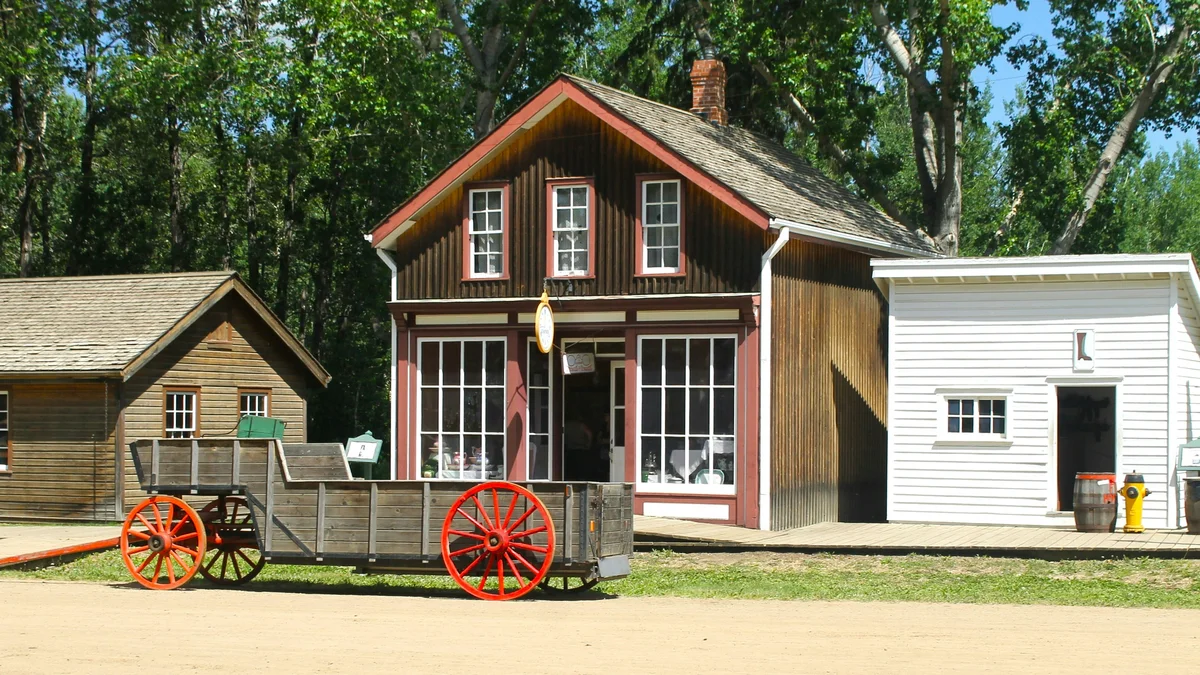
A living history museum, described by Wikipedia as Canada's largest by area, recreating Edmonton across four distinct eras — an 1846 fur-trading fort, and streets from 1885, 1905, and 1920 — with costumed interpreters and real heritage buildings relocated from around the city.
Visitor guide
Fort Edmonton Park is a living-history museum on the North Saskatchewan River in Edmonton, described by Wikipedia as the largest living history museum in Canada by area, at about 64 hectares. It recreates the city's growth through a 1846 fur-trade fort and three later streets.
The fort was the first section to open, in 1974, with construction beginning in 1969 under the Fort Edmonton Foundation. According to Wikipedia, 1885 Street opened by the late 1970s, 1905 Street in the early 1980s and 1920 Street by the early 1990s. A 1920 Midway and Exhibition opened in 2006 and was expanded in 2008. The steam train has carried visitors from the entrance to the fort since 1977, though some sources give earlier dates.
The idea of preserving the original fort dates to 1912, when the Women’s Canadian Club first proposed it, but the real Hudson’s Bay Company fort was torn down in 1915. The Rotary Club of Edmonton revived the idea in 1966 as a Golden Anniversary project, and the Fort Edmonton Historical Foundation formed in 1969. These earlier-history dates are carried over from this site’s previous text and are worth confirming with the park before you quote them.
The park closed for a major renovation of roughly three years and reopened on 1 July 2021. Travel Alberta put the cost at about CAD 165 million. The Indigenous Peoples Experience, a 30,000-square-foot indoor exhibit, opened as part of the work and now comes first in the visit.
The Indigenous Peoples Experience explores First Nations and Métis cultures through stories, live interpreters and interactive and audiovisual elements, developed with the Métis Nation of Alberta and the Confederacy of Treaty Six First Nations. It won a Thea Award in November 2021, according to Wikipedia.
The fort recreates Edmonton as a Hudson's Bay Company trading post in 1846. 1885 Street shows the settlement era, 1905 Street the period around Edmonton's incorporation as a city and the arrival of the railway, and 1920 Street the early automobile era, with a midway. Costumed interpreters bring the buildings to life in season. Hotel Selkirk is a working hotel on site.
Wikipedia describes the park as having five sections, with the Indigenous Peoples Experience first and then the fort and the three streets, so a visit moves forward in time from 1846 to the 1920s. Each street has period buildings, shops and vehicles, and interpreters in costume explain trades and daily life. Programs and which buildings are staffed vary by season.
The park is in the river valley in south-west Edmonton. Operating season, interpreters and events change through the year, so check the park's website for current hours, tickets and programs.
Allow several hours, because the site is large and walking between eras adds up. Voyzo's private vehicle and driver can collect your group from your door and wait or return, which helps families and visitors with limited mobility. It can be paired with other Edmonton stops.
See every tour and attraction we cover in Edmonton.