TorontoOntario · 36 tours
 Niagara FallsOntario · 25 tours
 New York CityNew York · 30 tours
 Las VegasNevada · 8 tours
 San FranciscoCalifornia · 16 tours
 VancouverBritish Columbia · 17 tours
 DubaiUAE · 54 tours
 Abu DhabiUAE · 5 tours
 Buenos AiresArgentina · 23 tours
 AthensGreece · 31 tours
 AucklandNew Zealand · 38 tours
 CancunMexico · 54 tours
No destinations match “”. Try searching all tours instead — that search understands full questions, not just place names.
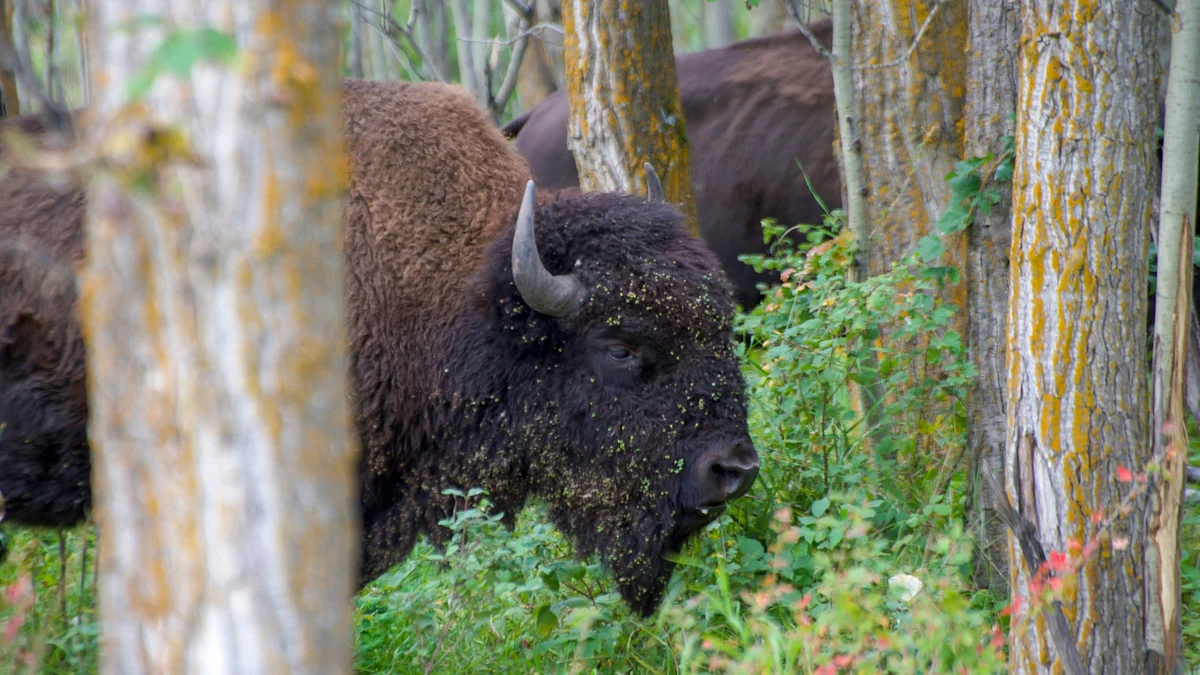
A fully fenced national park roughly 35 minutes east of Edmonton, established in 1906 to protect free-roaming herds of plains and wood bison. It's also a Dark Sky Preserve, making it a real, accessible spot for stargazing close to the city.
Visitor guide
Elk Island National Park lies about 48 kilometres east of Edmonton's city centre along the Yellowhead Highway, in the aspen-and-lake country of the Beaver Hills. It covers about 194 square kilometres and is described by Parks Canada as Canada's only completely fenced national park, a feature tied to its bison conservation role.
Fur-trade hunting nearly eliminated beaver by the 1830s and had largely depleted large animals such as bison by the late 1860s. The area became the Cooking Lake Forest Reserve in 1899. In 1906 a group of five men from the Fort Saskatchewan area persuaded Ottawa to create a wildlife sanctuary for elk, which Parks Canada calls the first wildlife refuge in Canada; it was established with a fence in 1906 and renamed Elk Island Park in 1908, became a Dominion Park in 1913, and was re-designated a national park under the National Parks Act in 1930.
In 1907 the federal government bought the Pablo-Allard herd from Montana, and hundreds of animals were shipped to Elk Island to be held before onward movement to Buffalo National Park near Wainwright. Some escaped the roundup; about forty plains bison remained by 1909, and the park's herd descends from them. In the 1940s superintendent B.I. Love led testing and translocation of disease-free bison, and Parks Canada reports the herds were declared disease-free in 1972.
Wood bison, a larger and darker subspecies, had been reduced to a few hundred animals in Wood Buffalo National Park. A small isolated herd was found there in the late 1950s (sources give 1957 or 1958). In 1965 a group of wood bison, reported as 22 or 23 depending on source, was moved to Elk Island to start a disease-free herd. Descendants have since been sent to herds across Canada, Alaska and beyond, and Parks Canada has also moved Elk Island bison to Indigenous nations and, in 2017, to Banff National Park.
Plains and wood bison are kept apart. The wood bison live south of Highway 16 in an area added to the park in 1947. Counts vary: Wikipedia cites roughly 400 plains and 300 wood bison, while other sources give higher figures, so check Parks Canada for current numbers.
The park's wetlands, lakes and aspen parkland also hold elk, moose, deer, beaver and many bird species. Trumpeter swans were reintroduced in 1987 and beaver in 1942. The Beaver Hills were designated a UNESCO Biosphere Reserve in 2016, and the Beaver Hills Dark Sky Preserve, which includes the park, was declared in 2006. Astotin Lake is the main recreation hub, and the Ukrainian Pioneer Home, a 1951 replica cabin, recalls local settlers.
Bison are wild animals and can be dangerous; Parks Canada asks visitors to stay well back and in vehicles where advised. Check the Parks Canada Elk Island page for current access, fees, road conditions and any closures, and note that wildlife sightings are never guaranteed.
A private tour fits the park well because the best chances to see animals come at dawn and dusk. Voyzo's private vehicle and driver can pick your group up from your Edmonton door, which leaves everyone free to watch for wildlife.
See every tour and attraction we cover in Edmonton.