TorontoOntario · 36 tours
 Niagara FallsOntario · 25 tours
 New York CityNew York · 30 tours
 Las VegasNevada · 8 tours
 San FranciscoCalifornia · 16 tours
 VancouverBritish Columbia · 17 tours
 DubaiUAE · 54 tours
 Abu DhabiUAE · 5 tours
 Buenos AiresArgentina · 23 tours
 AthensGreece · 31 tours
 AucklandNew Zealand · 38 tours
 CancunMexico · 54 tours
No destinations match “”. Try searching all tours instead — that search understands full questions, not just place names.
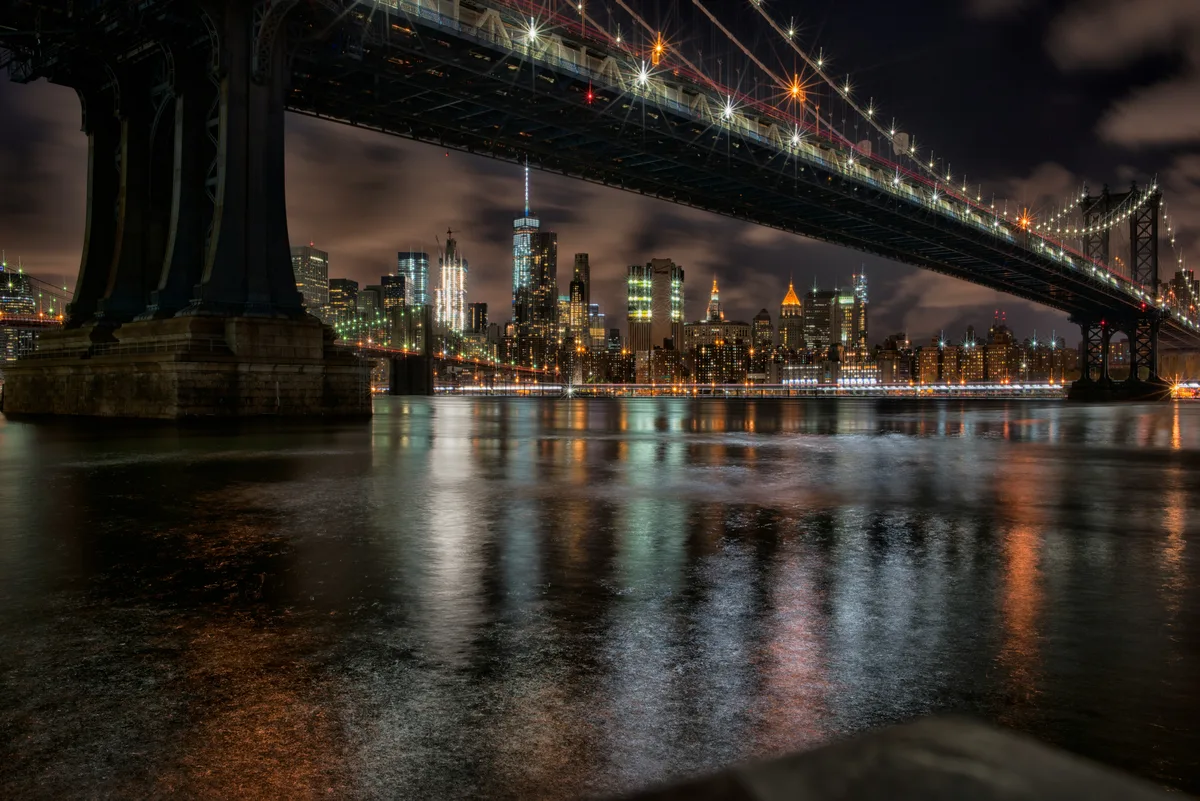
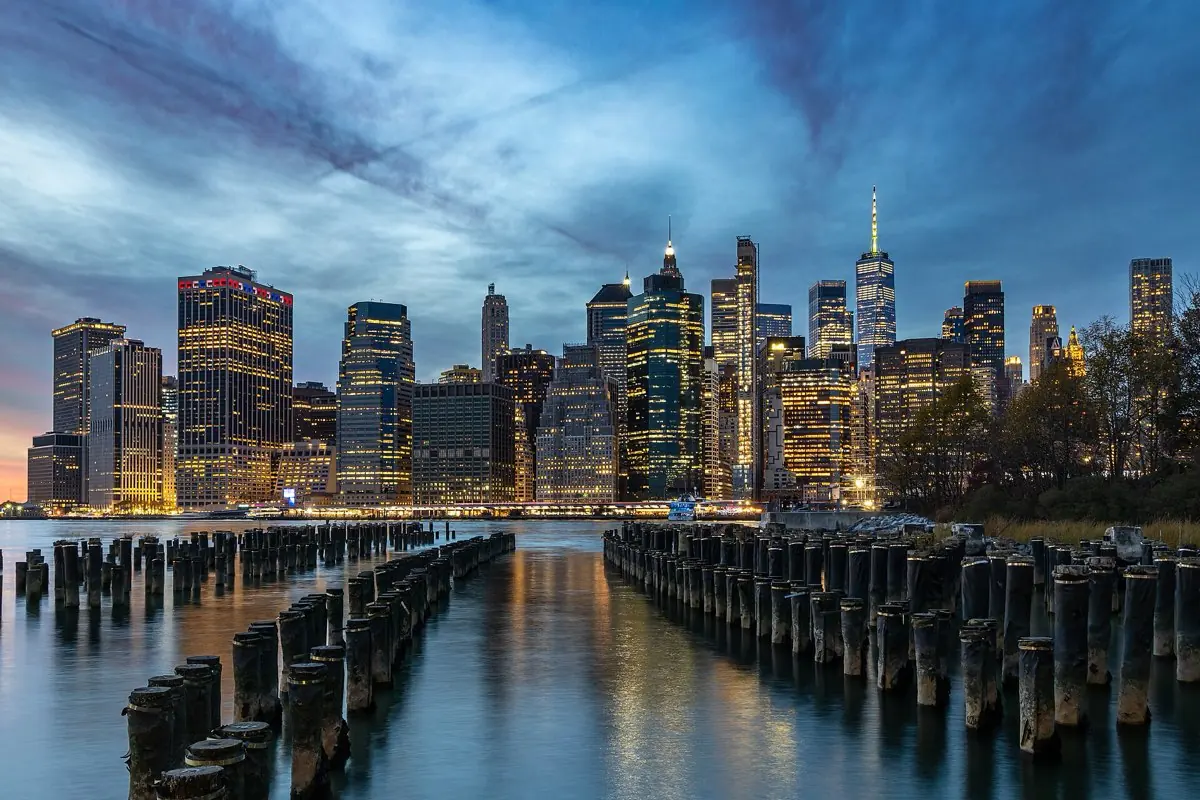
A cobblestoned Brooklyn waterfront neighborhood beneath the Manhattan Bridge overpass, known for the postcard view of the Manhattan skyline framed between its converted warehouse buildings.
Visitor guide
DUMBO is a Brooklyn waterfront neighborhood on the East River between the Manhattan Bridge and the Brooklyn Bridge. Its name stands for 'Down Under the Manhattan Bridge Overpass,' and its cobblestone streets, brick and concrete factory buildings and bridge views make it one of the most photographed districts in New York.
The acronym dates to about 1978, when newer residents reportedly chose an unglamorous name in the hope of discouraging developers. The area had earlier names, including Olympia, linked to a community that Comfort and Joshua Sands laid out, with the street grid surveyed in 1788 according to the LPC, and Gairville, after Robert Gair. In the 1890s the western end was known as Fulton Landing, after the ferry stop that served Manhattan before the Brooklyn Bridge opened.
The waterfront became a manufacturing district that produced machinery, paper boxes, spices and Brillo pads. Robert Gair, a Scottish emigrant, is credited with inventing the folding cardboard box in a building on Washington Street. The Jay Street Connecting Railroad, incorporated in 1909, served the area's factories, and some abandoned tracks are still visible in the streets. The New York City Landmarks Preservation Commission notes that most surviving buildings date from roughly 1880 to 1920, including 1 Main Street, a 1914 reinforced-concrete factory designed by William Higginson and developed by Gair.
Artists and young residents arrived in the late 1970s for inexpensive loft space. Developer David Walentas and Two Trees Management later bought many buildings and converted them into the residential, commercial and tech spaces that dominate today. The DUMBO Industrial District was listed on the National Register of Historic Places on September 22, 2000, covering 95 contributing buildings, and the city designated the DUMBO Historic District on December 18, 2007, the 90th in the city, by a unanimous vote.
The best-known view looks toward the Manhattan Bridge from the corner of Washington and Water Streets, a scene that appears on the poster for Sergio Leone's film Once Upon a Time in America. The neighborhood's streets are lined with converted warehouses, and parts of the district have cobblestone paving. A city rehabilitation of the streets in Dumbo and Vinegar Hill, reported at $108 million, was completed in 2025.
Down at the water, Fulton Ferry was the neighborhood's first public space, followed by Empire-Fulton Ferry State Park, and the first six acres of Brooklyn Bridge Park opened on March 22, 2010. The Empire Stores warehouses were renovated and reopened in 2017. Wikipedia describes the district as having two sections, one between the two bridges and another extending east from the Manhattan Bridge toward Vinegar Hill.
Photographs from Washington Street draw many visitors, so consider timing and weather when you plan. Check Brooklyn Bridge Park and any individual venues for current hours and access before you go.
For a private tour, Voyzo's private vehicle and driver can collect you door to door and pair DUMBO with the Brooklyn Bridge and Manhattan stops, so you spend your time at the waterfront rather than on transit.
See every tour and attraction we cover in New York City.