TorontoOntario · 36 tours
 Niagara FallsOntario · 25 tours
 New York CityNew York · 30 tours
 Las VegasNevada · 8 tours
 San FranciscoCalifornia · 16 tours
 VancouverBritish Columbia · 17 tours
 DubaiUAE · 54 tours
 Abu DhabiUAE · 5 tours
 Buenos AiresArgentina · 23 tours
 AthensGreece · 31 tours
 AucklandNew Zealand · 38 tours
 CancunMexico · 54 tours
No destinations match “”. Try searching all tours instead — that search understands full questions, not just place names.
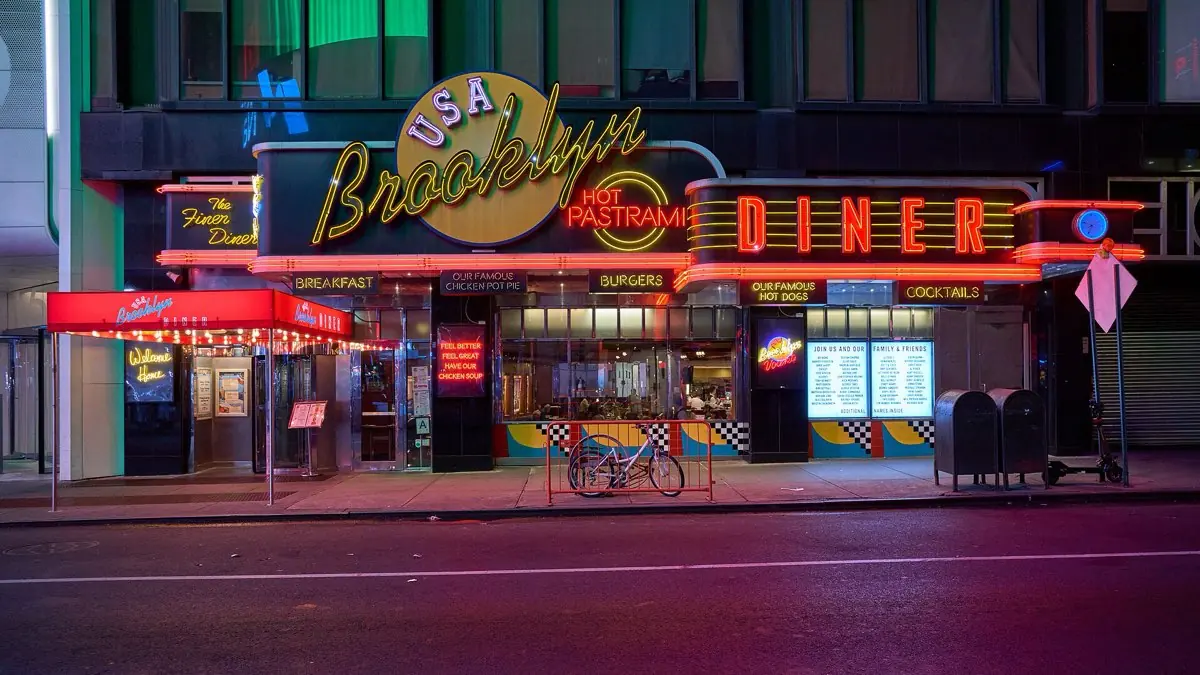
The neon-lit, always-crowded heart of Midtown Manhattan.
Visitor guide
Times Square is the bowtie-shaped junction of Broadway, Seventh Avenue and 42nd Street in Midtown Manhattan, stretching about five blocks between 42nd and 47th Streets. It is the physical hub of New York's Theater District and is known by nicknames such as the Crossroads of the World and the heart of the Great White Way.
The area was called Longacre Square, after London's Long Acre, a center of the carriage trade, and it was home to the American Horse Exchange. John Jacob Astor owned much of the land and sold lots to hotel and real estate developers as the city moved north. Oscar Hammerstein I built the first theater on the square, the Olympia, and the former Horse Exchange later became the Winter Garden Theatre (around 1910-11).
The square was renamed Times Square on April 8, 1904, as The New York Times prepared to move into its new headquarters, now known as One Times Square (the paper moved in during January 1905, according to the Times Square Alliance), and a subway station opened there. Wikipedia notes that the first electrified advertisement appeared weeks later. Fireworks marked New Year's Eve at the tower from 1904 to 1906; officials halted them over fire risk, and the New Year's Eve ball drop began on December 31, 1907. It was suspended for New Year's Eve 1942 and 1943 because of World War II lighting restrictions, with a moment of silence and church chimes in its place.
In 1913 the square was named the eastern terminus of the Lincoln Highway, and advertising grew sharply in the 1920s. On the night Japan's surrender was announced in August 1945, Wikipedia estimates the crowd reached about two million people.
By the 1960s through the 1980s the district was widely seen as in decline. It changed substantially in the late twentieth century. A 1987 city planning regulation required large new developments to include entertainment uses and large, bright signs, which is why illuminated signage is mandated in the district today. In 1990 New York State took possession of six of the nine historic 42nd Street theaters, and the Times Square Alliance, a business improvement district, began operating in 1992. Disney's restoration of the New Amsterdam Theatre was a major part of the mid-1990s changes.
In 2009 Mayor Michael Bloomberg closed Broadway's traffic lanes between 42nd and 47th Streets to cars as a trial, and he made the pedestrian plazas permanent on February 11, 2010. The full project, with design by the firm Snohetta, was completed just before New Year's Eve 2016.
The southern triangle below 45th Street is officially Times Square, while the northern triangle is Duffy Square, named by local law in 1939 for Father Francis P. Duffy, a World War I chaplain. A statue of Duffy by Charles Keck was unveiled on May 2, 1937, and a bronze statue of George M. Cohan was dedicated in 1959. The TKTS discount ticket booth opened there on June 25, 1973, and since 2008 it has been backed by a set of red, sloped steps that visitors use as a place to sit. Around you are Broadway theaters, about 35 of which are listed in current directories, and the large, lit advertising screens that define the square.
Wikipedia notes the first wind- and solar-powered billboard in the district was lit in December 2008. The square also cuts diagonally across the street grid laid out by the 1811 Commissioners' Plan, which is why Broadway meets the avenues at an angle here. A confetti tradition for the New Year's Eve countdown began in 1992, and an LED ball debuted for 2008.
Visitor counts vary widely by source and method, with published estimates ranging from roughly 50 million to over 120 million visitors a year, and New Year's Eve draws about a million people, so treat any single figure as approximate.
Check official sources such as the Times Square Alliance for current events, street closures and New Year's Eve arrangements, and theater box offices for performance schedules.
On a Voyzo private tour, your private vehicle and driver provide door-to-door pickup in Manhattan, so you can see the square by day or after dark and be dropped back at your hotel when you choose. We do not prescribe the stops; your plan is built around you.
See every tour and attraction we cover in New York City.