TorontoOntario · 36 tours
 Niagara FallsOntario · 25 tours
 New York CityNew York · 30 tours
 Las VegasNevada · 8 tours
 San FranciscoCalifornia · 16 tours
 VancouverBritish Columbia · 17 tours
 DubaiUAE · 54 tours
 Abu DhabiUAE · 5 tours
 Buenos AiresArgentina · 23 tours
 AthensGreece · 31 tours
 AucklandNew Zealand · 38 tours
 CancunMexico · 54 tours
No destinations match “”. Try searching all tours instead — that search understands full questions, not just place names.
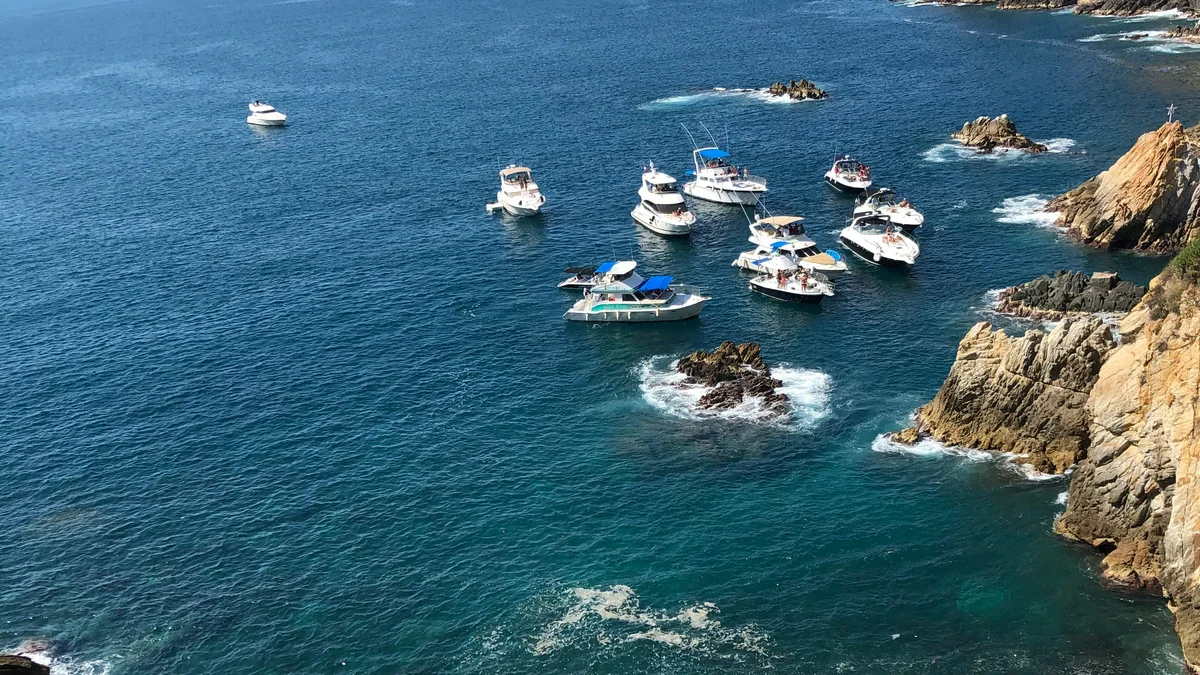
A coastal lagoon spreading across roughly 72 square kilometers just outside Acapulco, its lush jungle shoreline home to over 30 bird species and a real filming location for movies including Rambo and Tarzan.
Visitor guide
Coyuca Lagoon, or Laguna de Coyuca, is a large coastal lagoon in the municipality of Coyuca de Benitez, west of Acapulco in the state of Guerrero, Mexico. Edged by mangroves and coconut palms and separated from the Pacific by a narrow sandbar, it is a wetland refuge for birds and a quiet contrast to Acapulco's busy bay.
Travel guides give the lagoon an area of about 72 square kilometres, or roughly 28 square miles. The Barra de Coyuca, a narrow strip of sand, separates it from the Pacific Ocean, and the lagoon lies near the seaside community of Pie de la Cuesta. Distances from central Acapulco are given inconsistently by tourism sources, so travel time is best confirmed locally. Wikipedia's Acapulco article names Coyuca as one of two lagoons near the bay, with Tres Palos lying to the southeast.
Academic sources describe the Guerrero lagoons as coastal lagoons associated with the shoreline, and place Coyuca in a system of three water bodies with Mitla and Chautengo. Studies cited in a Guerrero thesis describe the lagoon as oligohaline, meaning only slightly brackish, which conflicts with tourism guides that call it freshwater. Research on plankton notes that coastal marine water influences the lagoon, and that the Rio Coyuca enters it. These studies date from the 1980s and 1990s, so current conditions may differ.
A 2018 forestry study of mangroves beside the communities of El Carrizal and Playa Azul in Coyuca de Benitez identified nine forest species associated with the mangrove ecosystem. That study covered a local wetland of about 21 hectares, about 50 kilometres west of Acapulco, and found white mangrove contributed the largest timber volume. Other sources name the dominant mangroves as red, white and black mangrove and buttonwood. Travel sources note that the mangroves serve as nursery grounds for marine life, which is typical of tropical coastal lagoons.
The lagoon is best known for its birdlife. One travel guide mentions more than 30 species, including pelicans, gray herons and roseate spoonbills, with migratory birds visiting through the year, while Spanish-language tourism pages cite around 250 species in the wider area. No authoritative count was found, so figures are approximate. Small islands, including Isla de los Pajaros and Isla Montosa, are described as bird habitats. Coyuca falls within a wider BirdLife Important Bird Area called Lagunas Costeras de Guerrero, listed at about 39,894 hectares.
Travel guides report that the lagoon's jungle shoreline appeared in films such as Rambo and Tarzan. One source says the area around the Barra de Coyuca was used for Rambo: First Blood Part II because it resembled terrain in Vietnam. The sources consulted do not identify the specific Tarzan production.
A visit often combines a boat trip, time on the Barra de Coyuca sandbar and a seafood meal beside the water. Playa Mitla, just beyond the lagoon, is described as having sea turtle conservation camps. A private guided visit with a driver can handle the road transfer from Acapulco and arrange boat time on the lagoon.
See every tour and attraction we cover in Acapulco.