TorontoOntario · 36 tours
 Niagara FallsOntario · 25 tours
 New York CityNew York · 30 tours
 Las VegasNevada · 8 tours
 San FranciscoCalifornia · 16 tours
 VancouverBritish Columbia · 17 tours
 DubaiUAE · 54 tours
 Abu DhabiUAE · 5 tours
 Buenos AiresArgentina · 23 tours
 AthensGreece · 31 tours
 AucklandNew Zealand · 38 tours
 CancunMexico · 54 tours
No destinations match “”. Try searching all tours instead — that search understands full questions, not just place names.
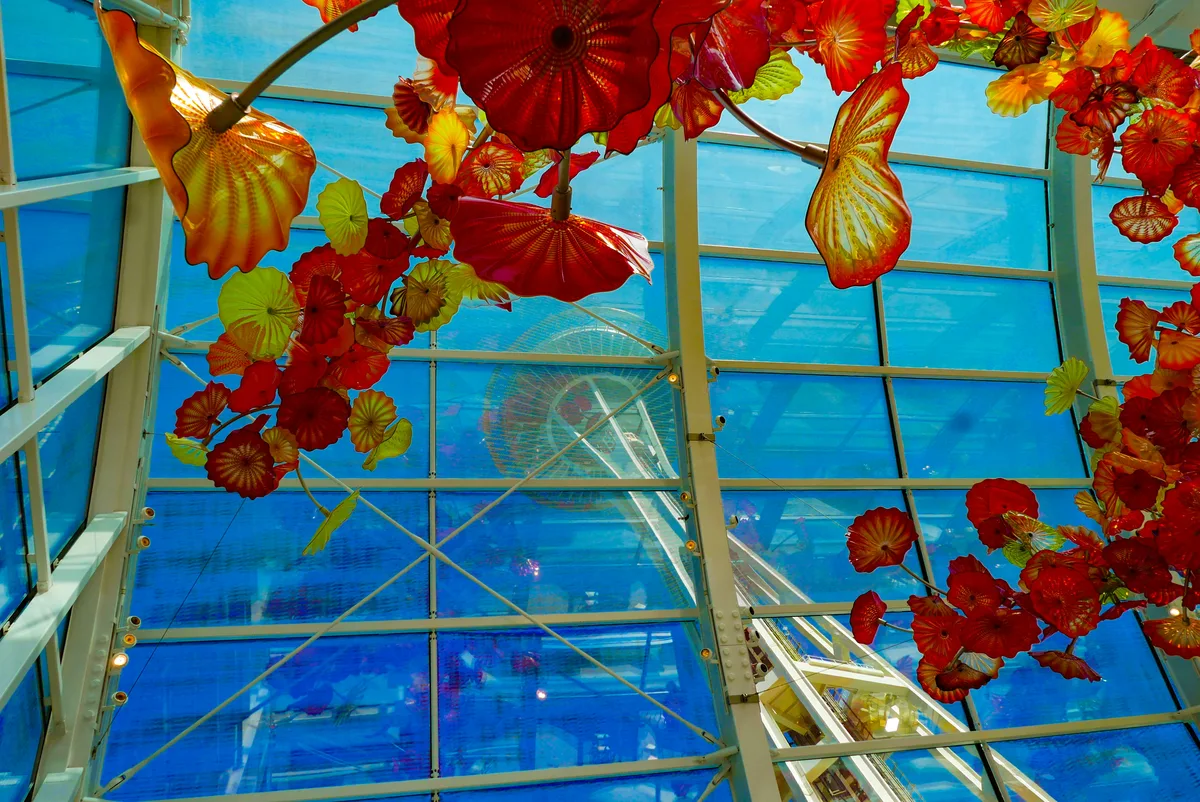
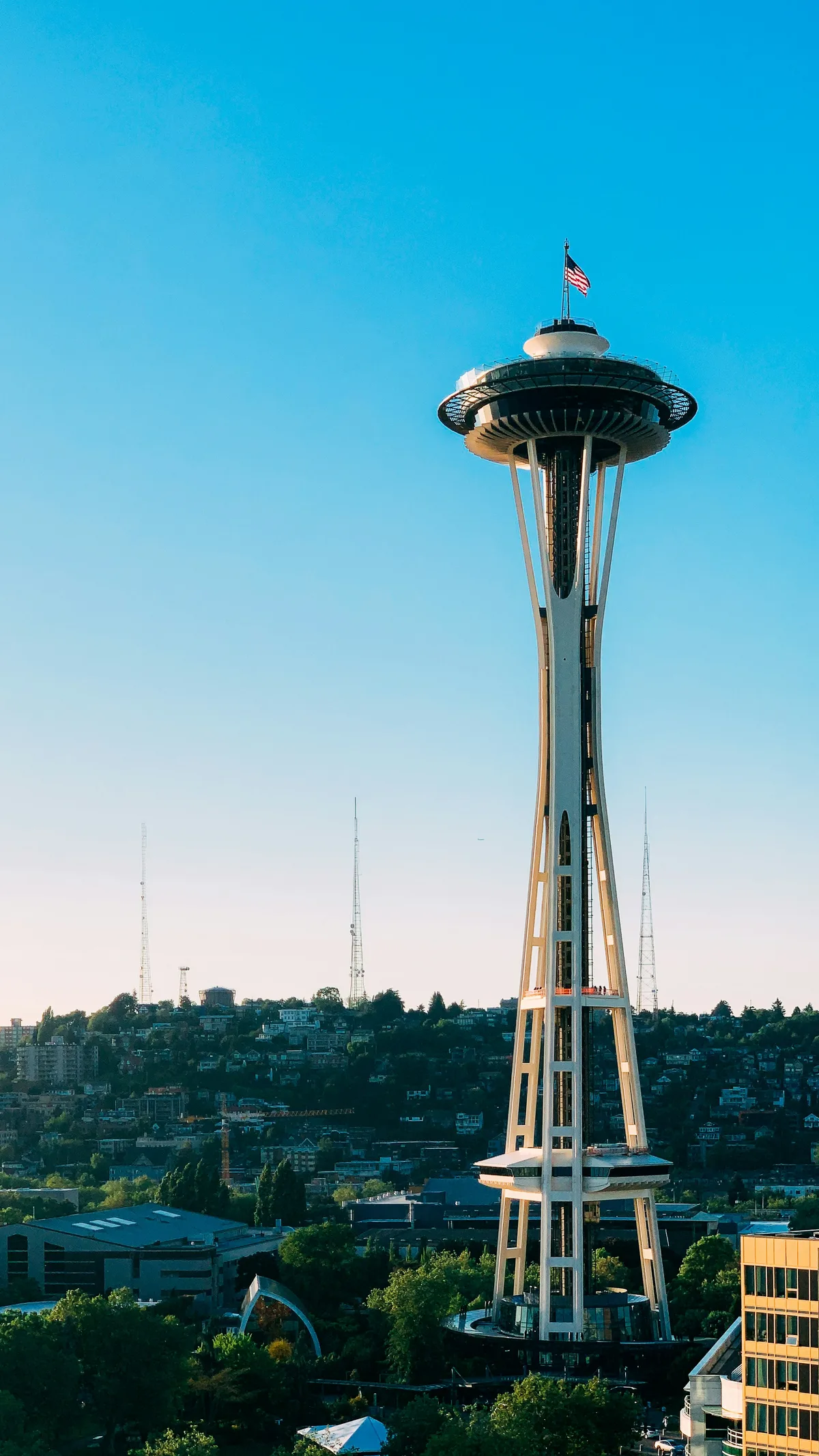
A museum and garden showcasing Dale Chihuly's large-scale blown-glass artwork, next to the Space Needle.
Visitor guide
Chihuly Garden and Glass is a permanent exhibition of the work of glass artist Dale Chihuly, set on 1.5 acres at Seattle Center directly beside the Space Needle. It opened on May 21, 2012, on the site of the former Fun Forest amusement park, and it is organized around three parts: an indoor Exhibition Hall, a glass-and-steel Glasshouse, and an outdoor Garden.
The Fun Forest began as the Gayway, an amusement area with about 20 rides and carnival games at the 1962 World's Fair, and was later renamed. When its concessionaire left at the end of 2010, the city issued a request for proposals for the site. According to Seattle Center's 2012 announcement, a citizen panel that had helped draft the Century 21 Master Plan reviewed nine submissions and recommended the proposal from Center Art, which put forward an exhibition of Chihuly's work, and the City Council unanimously approved the lease on April 25, 2011.
The new buildings were designed by ORA with Chihuly Studio and the Space Needle, and construction finished in May 2012 on an eight-month schedule. The project earned LEED Silver certification from the U.S. Green Building Council, the first Seattle Center facility to do so. The official site describes the Glasshouse as using radiant slab flooring, natural ventilation and recycled materials, and the architects say the old Fun Forest pavilion was rebuilt with green roofs and evergreen trellis walls and that about 30,000 square feet of asphalt became landscaping.
Dale Chihuly was born in Tacoma on September 20, 1941, and studied at the University of Washington, the University of Wisconsin-Madison and the Rhode Island School of Design. He began experimenting with glassblowing in 1965, worked at the Venini factory on Murano in 1968, where he saw the team approach to blowing glass, and co-founded the Pilchuck Glass School near Stanwood, Washington, in 1971. A 1976 car accident in England left him blind in his left eye, and after a 1979 shoulder injury, by 1983 he could no longer hold the glassblowing pipe and hired others to do the blowing. His work is grouped into series, among them Navajo Blanket, Seaform, Macchia, Persian, Venetian, Ikebana, Floats and Chandeliers.
The Exhibition Hall holds eight galleries and two Drawing Walls. According to the exhibition's fact sheet, the galleries are named Glass Forest, Northwest Room, Sealife Room, Persian Ceiling, Mille Fiori, Ikebana and Float Boats, Chandeliers, and Macchia Forest. Together with the Drawing Walls, they present what the official site calls more than 40 years of experimentation with color, form and light. The hall also includes a theater, a bookstore, and a café.
Press and gallery descriptions give a sense of individual rooms. The Sealife Room is built around a tall blue tower surrounded by vessels suggesting sea creatures; the Persian Ceiling is a glass panel overhead with backlit forms that throw colored light onto the walls, a format Chihuly first presented at the Seattle Art Museum in 1992; Mille Fiori takes its name from the Italian for a thousand flowers and sets hundreds of glass blooms on a reflective pond; and the Northwest Room shows Native American baskets and trade blankets with a gallery of Edward Curtis photographs.
The Glasshouse is the dramatic centerpiece: a glass-and-steel structure about 40 feet tall covering roughly 4,500 square feet. Hanging inside is a suspended sculpture about 100 feet long, in a palette of reds, oranges, yellows and amber. The official site describes it as one of Chihuly's largest suspended sculptures. The architects say its asymmetrical shape and shifted placement frame views up to the Space Needle.
The Garden is a landscaped outdoor space of roughly 20,000 square feet, designed by Richard Hartlage with Chihuly Studio, where trees, plants and flowers were chosen to complement glass sculptures placed among them. Here the work is seen in daylight alongside living plants rather than under gallery lighting.
One of the more unusual spaces is The Bar at Chihuly, which the official site says displays over 25 of Chihuly's personal collections, with objects ranging from suspended accordions to ceramic dogs. It is a glimpse of the collector's eye behind the sculptor's work.
The exhibition has partnered with Seattle Public Schools since 2013, and has reported supplying over 17,000 tickets to young students since the program started. Since 2019 it has also hosted Refract: The Seattle Glass Experience, a free festival highlighting Puget Sound-area glass artists and collectors.
Seattle Center's central location makes this an easy stop on a private tour: with a private vehicle and driver, your group can be dropped close to the entrance and picked up again door to door. Check the operator for current hours, tickets and access, and for any special exhibitions.
See every tour and attraction we cover in Seattle.