TorontoOntario · 36 tours
 Niagara FallsOntario · 25 tours
 New York CityNew York · 30 tours
 Las VegasNevada · 8 tours
 San FranciscoCalifornia · 16 tours
 VancouverBritish Columbia · 17 tours
 DubaiUAE · 54 tours
 Abu DhabiUAE · 5 tours
 Buenos AiresArgentina · 23 tours
 AthensGreece · 31 tours
 AucklandNew Zealand · 38 tours
 CancunMexico · 54 tours
No destinations match “”. Try searching all tours instead — that search understands full questions, not just place names.
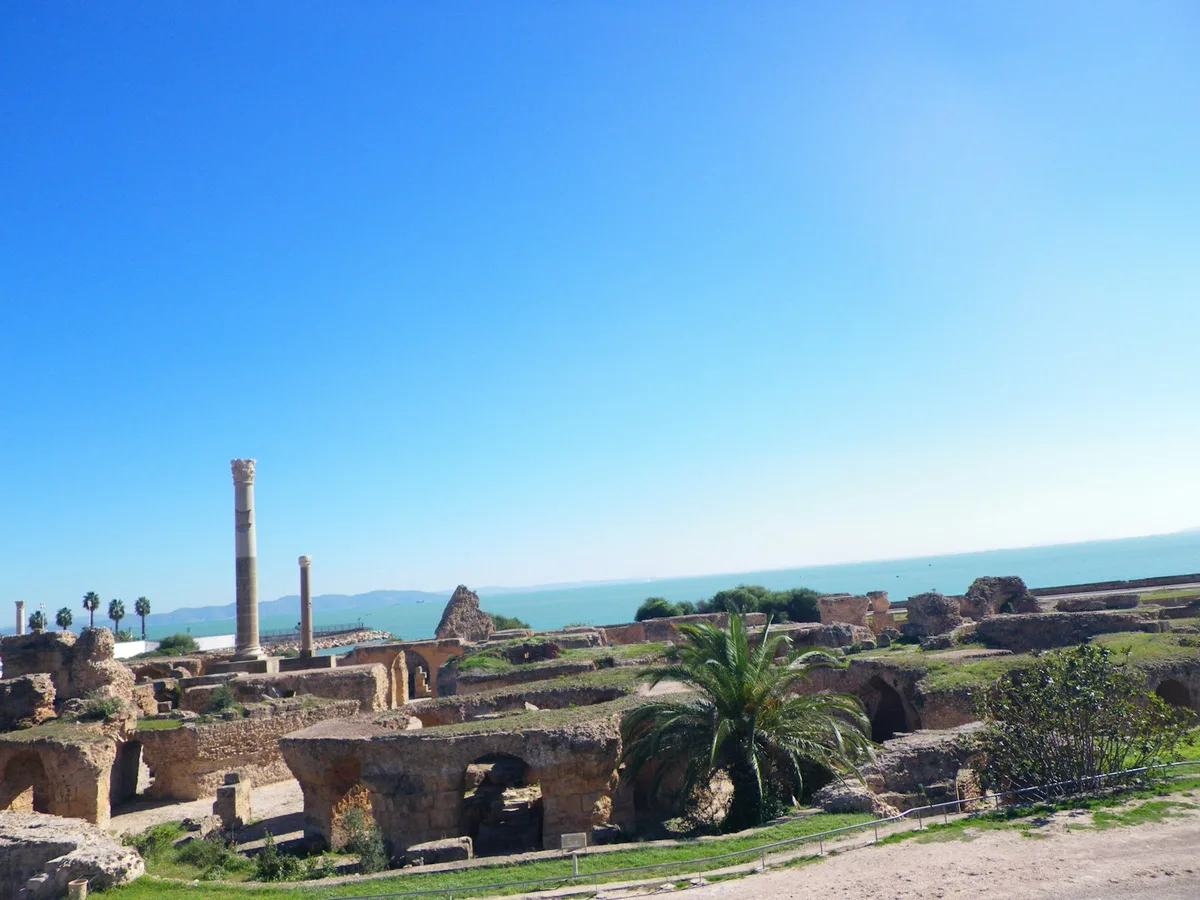
The ruins of the ancient Phoenician city that once rivaled Rome, including the Antonine Baths overlooking the Mediterranean, spread across a UNESCO World Heritage Site near Tunis.
Visitor guide
Carthage was an ancient Phoenician and Punic city on the Bay of Tunis, in what is now a suburb of Tunis, Tunisia. Its scattered ruins form a UNESCO World Heritage Site designated in 1979, and they include Punic harbours, the Byrsa hill and the Roman Antonine Baths beside the Mediterranean.
According to tradition Carthage was founded by the Phoenician queen Dido, also called Elissa, who came from Tyre, although Wikipedia notes her historicity is questioned. The name derives from the Punic qrt-hdsht, meaning 'new city'. The city became the capital of a Punic empire that dominated much of the southwestern Mediterranean in the first millennium BC.
Two artificial inner harbours, called the cothon, lay in the southeast, one for commerce and one for the navy. The Byrsa hill was a central citadel, and a Punic residential quarter of the early 2nd century BC has been excavated there since 1982. The tophet, an old cemetery with stone stelae, lay near the harbour, and scholars still disagree on whether it shows child sacrifice.
Rome fought three wars against Carthage, the Punic Wars. Hannibal occupied much of Roman Italy for about 15 years during the Second. The siege in the Third Punic War lasted nearly three years, and in 146 BC Rome burned the fleet, enslaved about 50,000 people and razed the city.
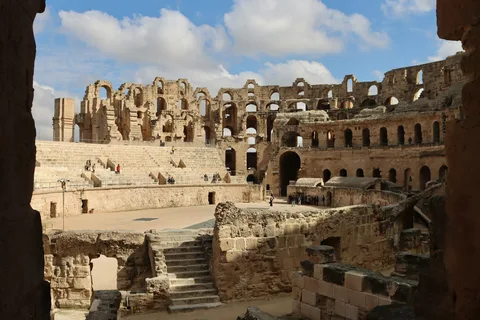
Gaius Gracchus founded a short-lived colony around 122 BC, which the Senate later abolished. Julius Caesar founded a new city on the site between 49 and 44 BC. By the 1st century it was the second-largest city in the western empire and the centre of the province of Africa. Among its monuments was an amphitheatre. The Baths of Antoninus kept functioning into the Arab period, and the 11th-century historian al-Bakri said they were still in good condition.
The Vandals under Gaiseric seized Carthage in 429, and the Eastern Roman Empire defeated them in 533 to 534, making Carthage the capital of Byzantine North Africa. In 698 the Umayyads sacked the city to keep it from being retaken. The Crusaders took the fortress in the Eighth Crusade.
The site was first surveyed in 1830 by the Danish consul Christian Tuxen Falbe. The Carthage National Museum was founded in 1875 by Cardinal Charles Lavigerie, and the Acropolium, or Saint Louis Cathedral, was built on Byrsa hill in 1884.
Hannibal was elected suffet in 196 BC after the Second Punic War and pushed reforms, including a one-year term for the 104 judges, but his opponents took charges to Rome and he was eventually forced to leave. Wikipedia notes that the Byrsa hill was levelled around 25 BC to prepare for new Roman construction, and that a Roman temple to Juno Caelestis was reportedly built on the ruined site of the Tanit temple. A 1992 UNESCO project, To Save Carthage, covered exploration and conservation of the Punic, Roman and Byzantine city.
The remains are dispersed across a residential area, so a private guide helps connect the pieces, and a private vehicle and driver can move between the baths, Byrsa hill, harbours and museum, often combined with Sidi Bou Saïd.
See every tour and attraction we cover in Tunisia.