TorontoOntario · 36 tours
 Niagara FallsOntario · 25 tours
 New York CityNew York · 30 tours
 Las VegasNevada · 8 tours
 San FranciscoCalifornia · 16 tours
 VancouverBritish Columbia · 17 tours
 DubaiUAE · 54 tours
 Abu DhabiUAE · 5 tours
 Buenos AiresArgentina · 23 tours
 AthensGreece · 31 tours
 AucklandNew Zealand · 38 tours
 CancunMexico · 54 tours
No destinations match “”. Try searching all tours instead — that search understands full questions, not just place names.
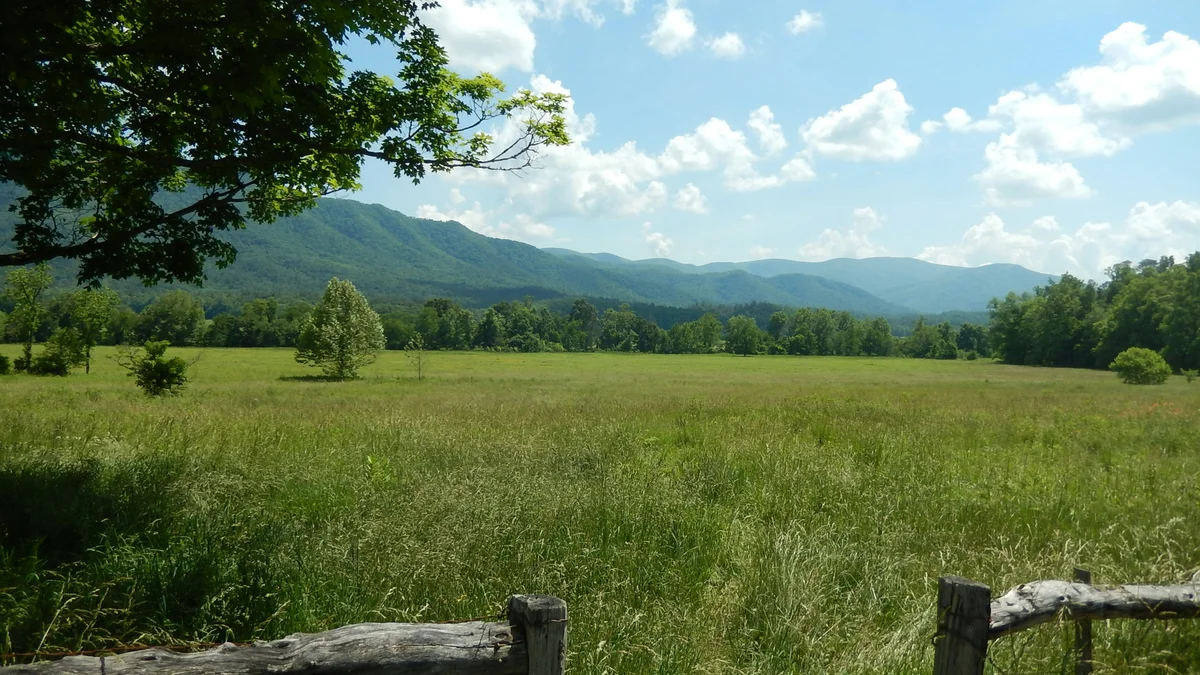
This broad, historic valley ringed by the Smokies' forested peaks is one of the busiest areas of Great Smoky Mountains National Park, drawn by both its wildlife and its history. An 11-mile one-way loop road winds past open meadows where white-tailed deer, black bears, and wild turkeys are regularly spotted, alongside preserved 19th-century log cabins, churches, and a working gristmill left from the valley's early settler community.
Visitor guide
Cades Cove is an isolated, mountain-ringed valley on the Tennessee side of Great Smoky Mountains National Park, known for its historic log buildings and for frequent deer and black bear sightings. A one-way loop road of about 11 miles circles the valley, and the cove was listed on the National Register of Historic Places as a historic district on July 13, 1977.
The cove is a "limestone window," where erosion stripped away older sandstone and exposed the limestone beneath. The weathered limestone produced deep, fertile soil, one reason settlers prized the valley. The National Park Service says the name likely came from a Cherokee chief called Kade or Cade of the area, and that the Cherokee name for the cove is Tsiyahi, 'Otter Place'; Abrams Creek, which drains the cove, honors another chief, Abraham of Chilhowee. The National Park Service notes that Cherokee hunted here for centuries but that archaeologists have found no evidence of major settlements.
The first European settlers arrived between 1818 and 1821, and the population had reached 271 by 1830. A post office opened in 1833. Farms were established across the cove, and the community built churches, mills and homes, several of which survive today.
When the national park was being assembled, much of the land was sold to Tennessee and then transferred to the federal government. Some residents accepted lower payments to stay in the cove for the rest of their lives, and a Primitive Baptist congregation continued to meet in the cove into the 1960s. Congress chartered the park in 1934 and President Roosevelt dedicated it in 1940; the cove school closed in 1944 and the post office in 1947.
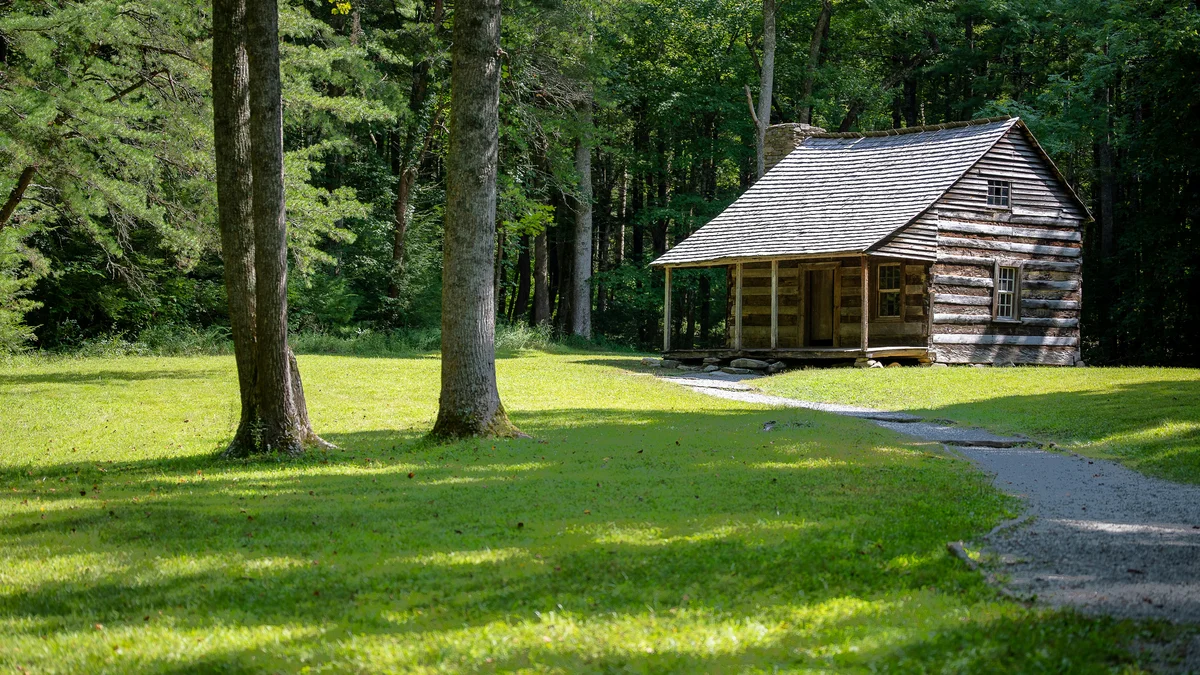
The National Park Service says Cades Cove has the widest variety of historic buildings of any area in the park, including three churches, a working gristmill, barns, log houses and other restored 18th- and 19th-century structures. Named stops include the John Oliver Cabin, the Primitive Baptist Church, the Cable Grist Mill and the Becky Cable House. A self-guiding tour booklet at the loop road entrance describes the buildings and the people who lived there.
The open fields are among the best places in the park for wildlife. The park asks visitors to keep their distance using the arm's-length rule, to stop only at paved pullouts, and to remember that wild turkeys have been known to attack people in the Smokies.
The park suggests allowing at least two to four hours for the drive, longer if you hike, with heavy traffic in summer and fall and on weekends year-round. Check the National Park Service for current access, any vehicle-free days and seasonal conditions.
Voyzo runs this as a private tour, with your own vehicle and driver and door-to-door pickup, so you can set the pace and spend as long as you like at each stop. With a driver at the wheel, everyone in your group can watch the meadows rather than the road.
See every tour and attraction we cover in Great Smoky Mountains National Park.