TorontoOntario · 36 tours
 Niagara FallsOntario · 25 tours
 New York CityNew York · 30 tours
 Las VegasNevada · 8 tours
 San FranciscoCalifornia · 16 tours
 VancouverBritish Columbia · 17 tours
 DubaiUAE · 54 tours
 Abu DhabiUAE · 5 tours
 Buenos AiresArgentina · 23 tours
 AthensGreece · 31 tours
 AucklandNew Zealand · 38 tours
 CancunMexico · 54 tours
No destinations match “”. Try searching all tours instead — that search understands full questions, not just place names.
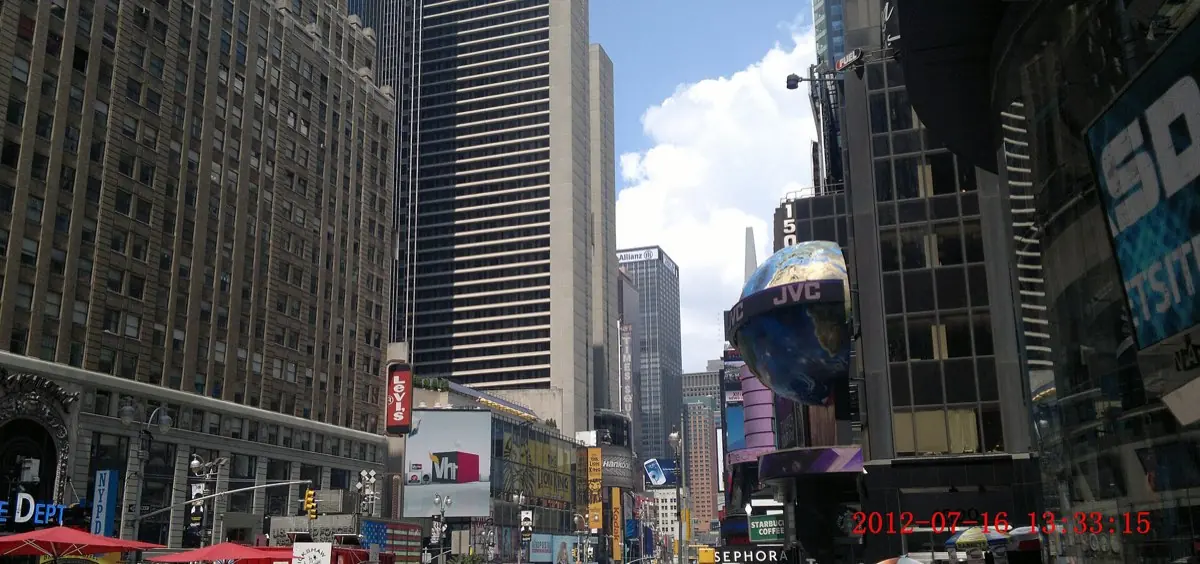
The Theater District, home to the world's most famous live theatre productions.
Visitor guide
Broadway means two things in New York: a long street that runs the length of Manhattan, and the theatre industry clustered around Times Square. The street is the older of the two. The theatre district takes its name from it, even though most Broadway theatres actually sit on side streets.
Broadway runs about 13 miles through Manhattan and continues through the Bronx and Westchester County. Much of it follows the Wickquasgeck trail, used by the Lenape before Europeans arrived, and it is generally described as the oldest north-south thoroughfare in the city. The Dutch called it Heeren Straat, roughly Gentlemen's Street, and the British renamed it Broadway for its unusual width. It begins near Bowling Green in Lower Manhattan, and the stretch from Bowling Green to City Hall Park is nicknamed the Canyon of Heroes for the city's ticker-tape parades.
Wikipedia defines Broadway theatre as productions in 41 professional theatres with 500 or more seats, mainly in the Theater District around Times Square, plus Lincoln Center. The Broadway League lists 41 active houses. The 500-seat threshold goes back to a 1949 agreement between Actors' Equity and smaller New York theatres. Venues with fewer seats are off-Broadway, and those under 100 seats are off-off-Broadway. Only a handful of Broadway theatres are physically on Broadway itself; sources say two or three.
The nickname refers to the Theater District, roughly between 42nd and 53rd Streets, and traces to a 1902 newspaper headline. An 1880 installation of arc lamps between Union Square and Madison Square is part of the story, and electric signs later lit the theatre blocks; because coloured bulbs burned out quickly, white lights became the norm.
In 1919 Actors' Equity demanded a standard contract for professional productions, and a strike closed the theatres until producers agreed. The Tony Awards, presented by the American Theatre Wing and the Broadway League, were first given in 1947 and are the industry's best-known honour. The Broadway League reports a gross of about $1.58 billion and attendance of about 12.3 million for the 2022-23 season. In the 1970s and 1980s, a Save the Theatres campaign led by Joe Papp pushed for protection, and efforts shifted toward historic status for the theatres; the Shubert Theatre, built 1912-13 and designed by Henry B. Herts, was designated a New York City landmark in 1987.
Shubert Alley is a short pedestrian lane connecting 44th and 45th Streets, often described as the geographic center of Broadway theatre because several major houses sit nearby.
Programming changes constantly, so check the Broadway League or each theatre for current shows, performance times and ticketing.
For a private Voyzo tour, a private vehicle and driver can take you door to door to the Theater District before an evening performance, and bring you back after the curtain without a late-night search for a ride. We do not sell show tickets.
See every tour and attraction we cover in New York City.