TorontoOntario · 36 tours
 Niagara FallsOntario · 25 tours
 New York CityNew York · 30 tours
 Las VegasNevada · 8 tours
 San FranciscoCalifornia · 16 tours
 VancouverBritish Columbia · 17 tours
 DubaiUAE · 54 tours
 Abu DhabiUAE · 5 tours
 Buenos AiresArgentina · 23 tours
 AthensGreece · 31 tours
 AucklandNew Zealand · 38 tours
 CancunMexico · 54 tours
No destinations match “”. Try searching all tours instead — that search understands full questions, not just place names.
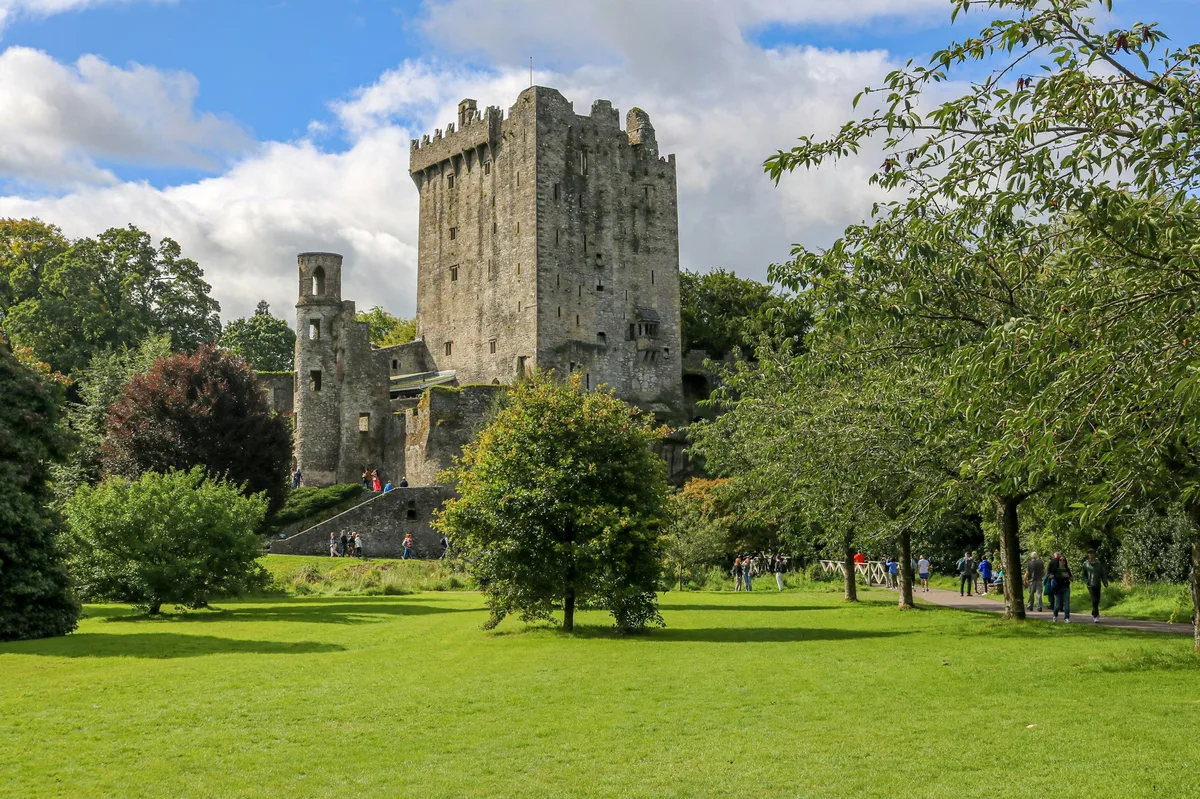
A medieval stronghold near Cork famous for the Blarney Stone at its summit, set in extensive gardens and parkland.
Visitor guide
Blarney Castle is a medieval stronghold in the village of Blarney, near Cork in the south of Ireland. Now a partial ruin standing about 27 metres high, it is best known as the home of the Blarney Stone, which tradition says gives the gift of eloquence to anyone who kisses it.
According to Wikipedia, a timber house may have stood on the site before 1200, though no evidence remains, and a stone fortification replaced it around 1210. The castle was destroyed in 1446 and rebuilt in the 15th century by the MacCarthy lords of Muskerry (Wikipedia names Cormac Laidir MacCarthy; the castle's own site credits Dermot McCarthy for the 1446 build), whose family were a cadet branch of the Kings of Desmond. A machicolation inscription reputedly visible in the 19th century recorded his name and the date 1446, though Wikipedia notes this without independent confirmation.
During the Irish Confederate Wars the castle was besieged and seized in 1646 by Parliamentarian forces under Lord Broghill. It was returned to Donough MacCarty, who became 1st Earl of Clancarty, after the Restoration, but in the 1690s, during the Williamite War, the 4th Earl was captured and his lands, including the castle, were confiscated. The castle then changed hands several times. Sir James Jeffreys, governor of Cork City, bought it in the early 18th century. The Jefferyes family later built a house near the keep, which burned, and in 1874 a replacement, Blarney House, was built in Scottish baronial style by John Lanyon. The Colthurst family, linked to the Jefferyes by marriage, still occupy the demesne.
The Blarney Stone, formally the Stone of Eloquence, sits near the top of the castle among the machicolations. Visitors traditionally lean backward over a sheer drop to kiss it. Wikipedia notes there are many competing accounts of its origin, including a claim that it is the Lia Fail, the stone on which Irish kings were reportedly crowned, and these accounts are tradition rather than established fact.
Extensive gardens surround the castle, with paths and signs marking natural rock formations given whimsical names such as the Druid's Circle, the Witch's Cave and the Wishing Steps. The Poison Garden contains toxic plants including wolfsbane, mandrake, ricinus and opium poppies. Blarney House is also open to the public.
Wikipedia describes the castle as a partial ruin in which some rooms and the battlements can still be reached. The Blarney Stone lies close to the parapet, so reaching it involves a climb up the tower's stairs before the backward lean over the drop. The surrounding demesne is a mix of woodland, lawns and rocky outcrops that the gardens' signposted paths wind through, and the formations the paths pass, from the Druid's Circle to the Wishing Steps, carry names that blend folklore with Victorian garden taste.
The Blarney estate has stayed in the same extended family for generations. The Jefferyes and Colthurst families intermarried in the mid-19th century, and the Colthurst family still occupy the demesne today. The result is a site where a 15th-century tower, a 19th-century baronial house and cultivated gardens sit within a single walk, giving a layered view of Irish castle history from the MacCarthy lords of Muskerry through the confiscations of the 17th century to the present.
The castle has some accessible rooms and battlements, with narrow stairs to the top. It lies a short drive from Cork, so a private guided visit with a vehicle and driver fits easily into a day that also takes in the wider region.
See every tour and attraction we cover in Ireland.