TorontoOntario · 36 tours
 Niagara FallsOntario · 25 tours
 New York CityNew York · 30 tours
 Las VegasNevada · 8 tours
 San FranciscoCalifornia · 16 tours
 VancouverBritish Columbia · 17 tours
 DubaiUAE · 54 tours
 Abu DhabiUAE · 5 tours
 Buenos AiresArgentina · 23 tours
 AthensGreece · 31 tours
 AucklandNew Zealand · 38 tours
 CancunMexico · 54 tours
No destinations match “”. Try searching all tours instead — that search understands full questions, not just place names.
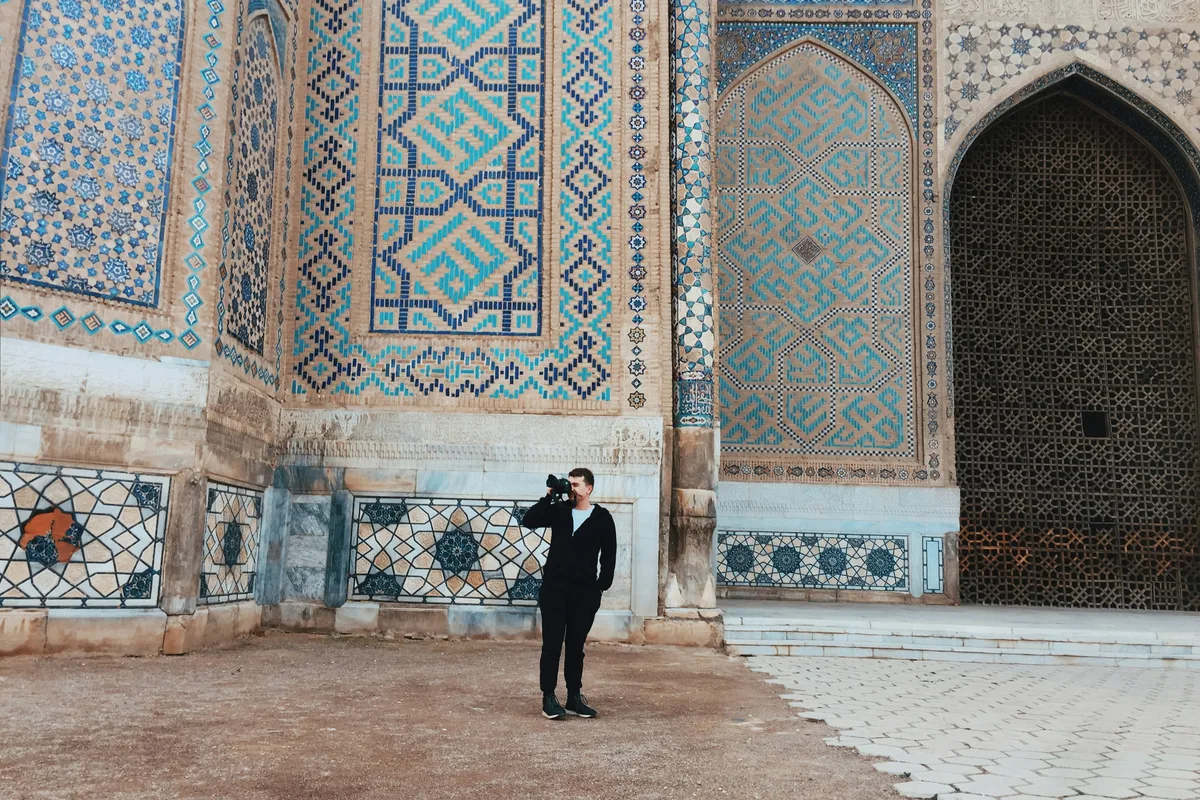
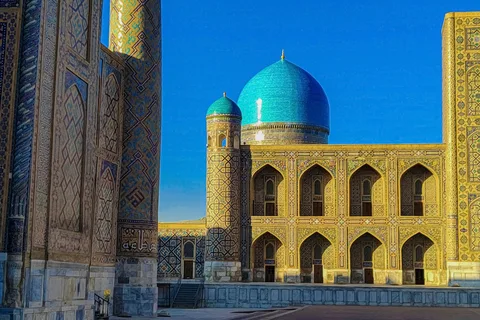
Once one of the Islamic world's largest mosques, built by Timur in the early 1400s on a scale that reportedly outgrew what its foundations could bear — partially restored, its turquoise-tiled portal still dominates central Samarkand.
 Multi-Day Tours
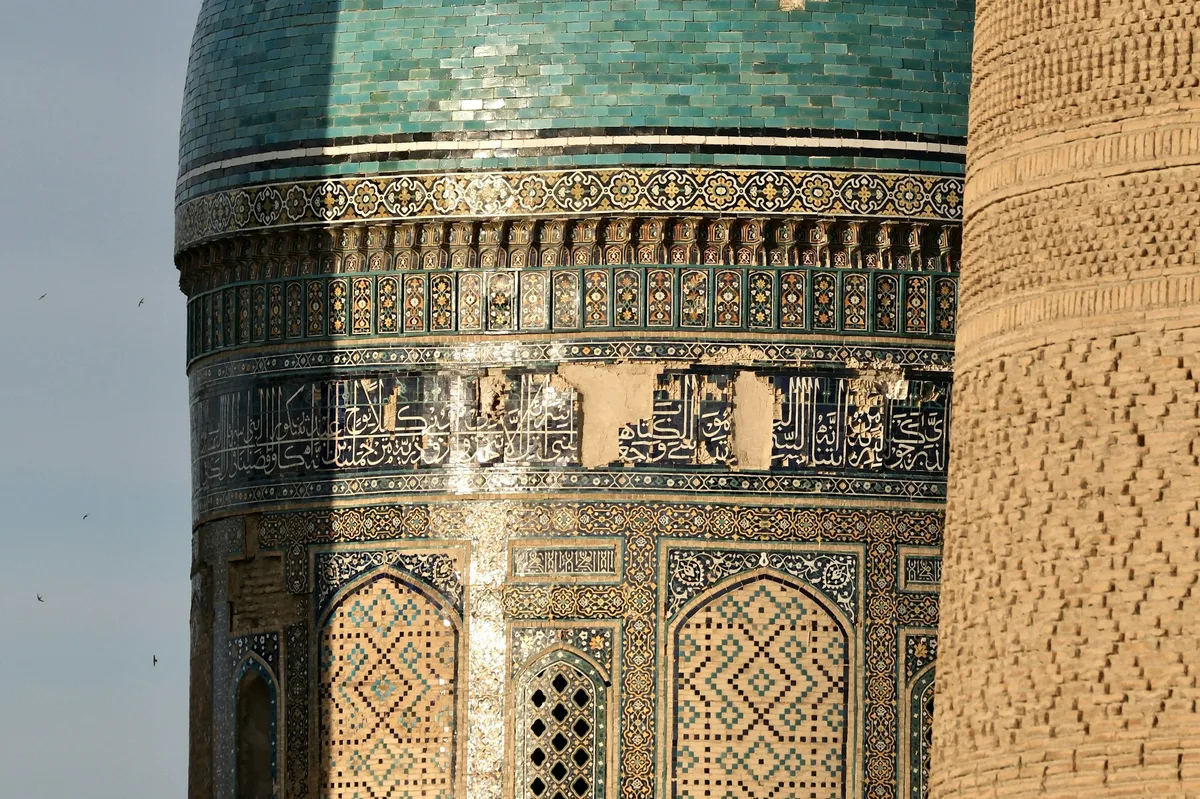
A 7-day private trip through Tashkent, Bukhara, and Samarkand by private car and train — the Hazrati Imom Complex, the Ark Fortress, the Registan, and the 15th-century Ulugbek Observatory.
 Multi-Day Tours
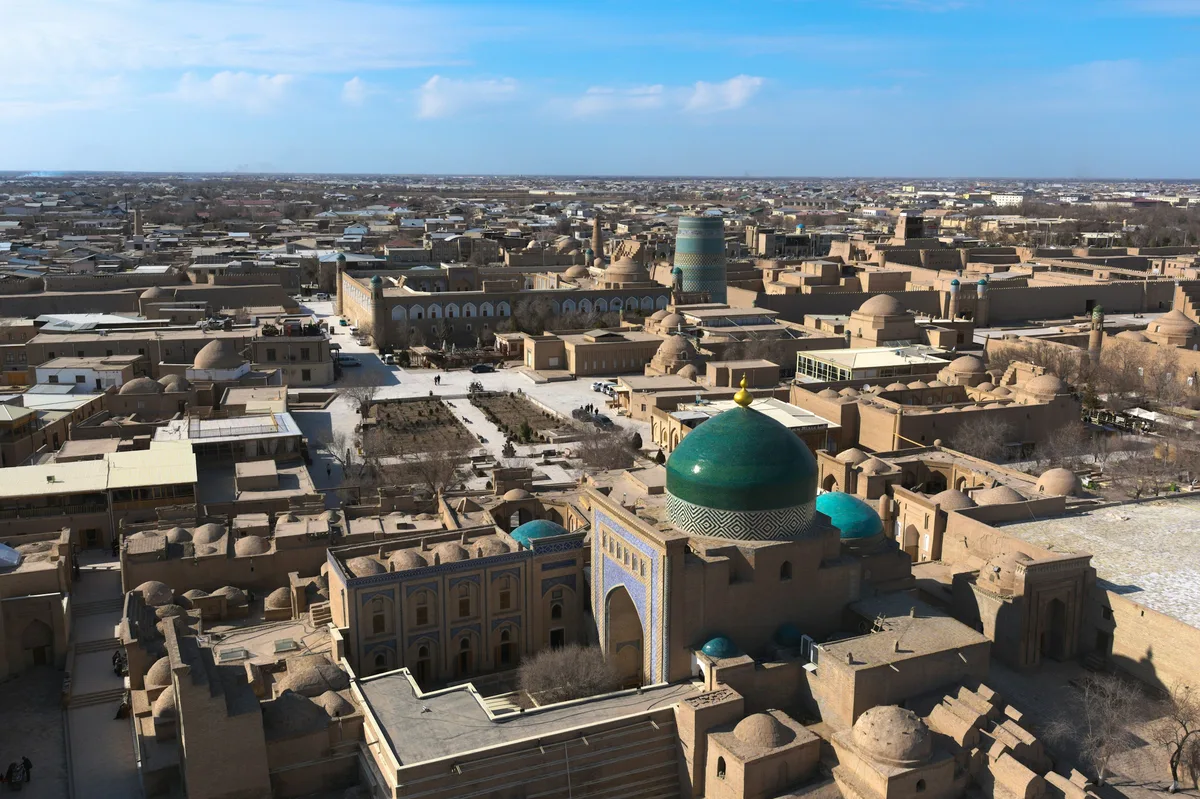
A 12-day private circuit from Tashkent through Khiva, Bukhara, a night in a desert yurt camp, Samarkand, and Shakhrisabz — the Registan, Khiva's walled old town, and Timur's birthplace.
Visitor guide
The Bibi-Khanym Mosque is a Timurid-era congregational mosque in Samarkand, Uzbekistan, built at the turn of the 15th century by Timur. Wikipedia describes it as one of the most important monuments in the city and, in its day, among the largest and most magnificent mosques in the Islamic world.
After his campaign in India in 1399, Timur decided to build a huge mosque in his capital, Samarkand. The design may have been inspired by the Friday Mosque at Sultaniyeh, built about a century earlier. When Timur returned in 1404 the mosque was nearly finished, but he was dissatisfied and ordered major changes, especially to the main dome. According to the manuscripts cited, construction took place between 1399 and 1405.
The name honours Timur's wife, Saray Mulk Khanum. Wikipedia states that she was the one who commissioned the building, although sources differ on details. Popular stories about the mosque's origins are folk tradition rather than established history.
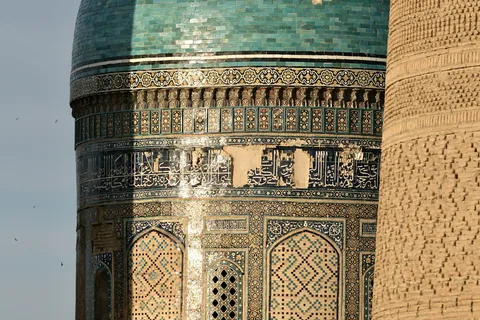
The mosque is a four-iwan courtyard design. Its outer walls enclose roughly 167 by 109 metres, with an entrance portal about 35 metres high. Opposite the entrance stands the main dome, about 40 metres high on the outside, above a pishtaq that frames a deep iwan, and two smaller domes face the long sides of the courtyard. A two-layer dome was used, with a hollow space between the inner ceiling and the outer shell so that the exterior could be built for visual impact.
Covered galleries once surrounded the courtyard, supported by more than 400 marble columns, though only traces remain. Four corner minarets have been restored, while larger minarets planned for the portal were never completed. A monumental marble Quran stand from Timur's era stands in the courtyard. The mosque was meant to hold the male population of Samarkand for Friday prayers.
Structural problems appeared early; within a few years bricks were reportedly falling from the great dome over the mihrab, which Wikipedia attributes to the scale of the plans and rushed construction. In the late 16th century Abdullah Khan II, the Shaybanid ruler of Bukhara, halted restoration. The building deteriorated under wind, weather and earthquakes, and the inner arch of the portal collapsed in an earthquake in 1897. Local residents later removed brick and marble columns for building material.
Stabilisation of the ruins began in the Soviet period, and in 1974 the Uzbek SSR started a larger reconstruction that included the domes and facades. Further restoration continued into the 21st century, and in October 2024 the Qatar Fund for Development and the Uzbekistan Art and Culture Development Foundation agreed to fund work through the Aga Khan Trust for Culture.
The mosque stands in central Samarkand. Its scale, turquoise domes and the contrast between restored and ruined sections make it a rewarding stop on a private guided tour of the city, where a guide can explain the story of its ambitious design.
See every tour and attraction we cover in Uzbekistan.