TorontoOntario · 36 tours
 Niagara FallsOntario · 25 tours
 New York CityNew York · 30 tours
 Las VegasNevada · 8 tours
 San FranciscoCalifornia · 16 tours
 VancouverBritish Columbia · 17 tours
 DubaiUAE · 54 tours
 Abu DhabiUAE · 5 tours
 Buenos AiresArgentina · 23 tours
 AthensGreece · 31 tours
 AucklandNew Zealand · 38 tours
 CancunMexico · 54 tours
No destinations match “”. Try searching all tours instead — that search understands full questions, not just place names.
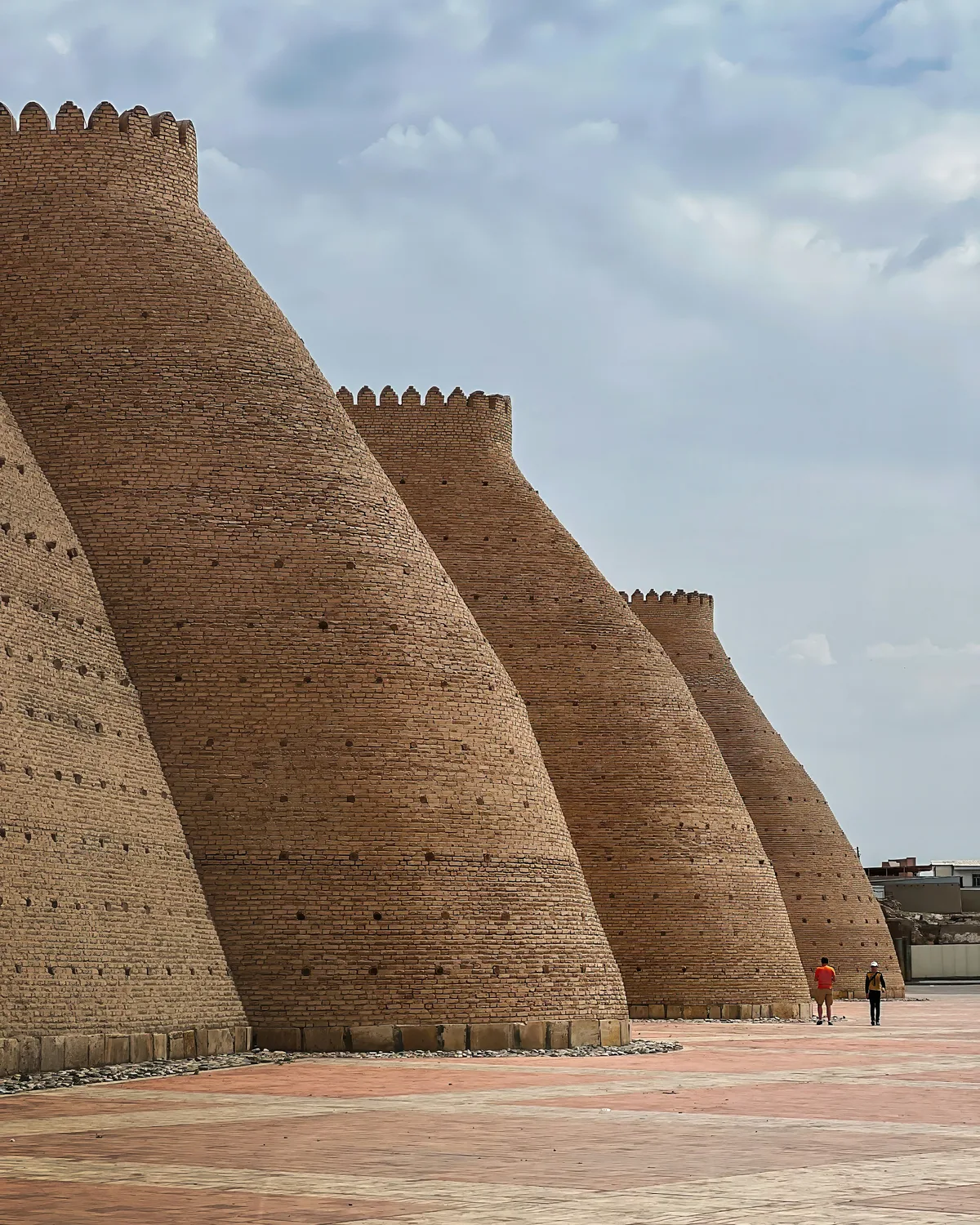
A walled citadel that housed Bukhara's rulers for many centuries, its massive sloped mud-brick walls still dominating the old city's skyline.
Visitor guide
The Ark of Bukhara is a large earthen fortress in the northwest of the old city of Bukhara, Uzbekistan, which served as the seat of the city's rulers until it fell to the Soviet Red Army in 1920. Its sloping walls rise above the surrounding streets, and parts of the interior now house museums.
Wikipedia says the Ark was first built and occupied around the 5th century AD, although the buildings seen today date mostly from the last three centuries. Legend credits the hero Siyavash, a figure from Ferdowsi's Shahnameh, with building it, and another tradition says a later ruler named Budun Bukhar-Khudat rebuilt the citadel. These are legendary accounts. The earliest known written description comes from Narshakhi's History of Bukhara, which describes the fortress being destroyed and rebuilt several times.
Archaeological work gives a more concrete picture. A team led by Ya. G. Gulyamov excavated the upper layers from 1970 to 1974, and a trench dug in 1979 and 1980 revealed deposits more than 20 metres deep, with adobe walls that ceramics suggest date to the 4th to 5th centuries AD and, lower down, the 4th to 3rd centuries BC.
The Ark is a roughly rectangular earthen fortification with a perimeter of about 790 metres, enclosing around 3.96 hectares by Wikipedia's figure (some tourism sources give about 4.2 hectares). The walls range from 16 to 20 metres high. The ceremonial entrance is flanked by two 18th-century towers joined at the top by a gallery, rooms and terraces. A rising ramp leads through a portal and a long covered corridor to the Juma mosque, with storerooms and prison cells opening off the passage.
According to tradition, the layout was influenced by astrology, and the palace reportedly had seven stone pillars corresponding to the stars of Ursa Major. This is presented in sources as legend rather than established fact. The medieval city consisted of the citadel, the madina and the suburbs, with rulers and officials living inside the Ark.
By about 500 AD the Ark was the residence of local rulers, and in the 8th century a temple on the site was converted into a mosque by Qutayba ibn Muslim after the Arab arrival. During the Samanid period the Registan square was created in front of the western facade. Genghis Khan's forces took Bukhara in 1220 and ransacked the fortress. Its present form developed from the 16th century under the Shaybanid Uzbek dynasty.
The Ark was then the seat of the Bukhara emirs until 1920, when Red Army troops under Mikhail Frunze attacked the city. Accounts say the citadel was heavily damaged, though Wikipedia flags some details, including who was responsible, as uncertain. The last emir, Mohammed Alim Khan (1880 to 1944), fled to Afghanistan.
Restored areas include a throne room, a reception and coronation court, the court mosque and several museums, among them an archaeological museum and a local history museum. The court mosque is noted for its cornice and pillar capitals, and the emir's reception courtyard for its mosaic work. The western wall was restored during the Bukharan People's Soviet Republic, and further restoration took place ahead of the city's 2,500th anniversary celebrations.
A private guided visit with a driver works well here, since the Ark sits close to other old-town monuments and its layered history benefits from a guide's explanation.
See every tour and attraction we cover in Uzbekistan.