
 TorontoOntario · 36 tours
 Niagara FallsOntario · 25 tours
 New York CityNew York · 30 tours
 Las VegasNevada · 8 tours
 San FranciscoCalifornia · 16 tours
 VancouverBritish Columbia · 17 tours
 DubaiUAE · 54 tours
 Abu DhabiUAE · 5 tours
 Buenos AiresArgentina · 23 tours
 AthensGreece · 31 tours
 AucklandNew Zealand · 38 tours
 CancunMexico · 54 tours
No destinations match “”. Try searching all tours instead — that search understands full questions, not just place names.
San Diego's coastal highlights in a private Tesla, from Coronado to La Jolla.
A private, fully customizable tour of San Diego's best spots — Coronado, Balboa Park, La Jolla Cove, Sunset Cliffs, Cabrillo National Monument, and Old Town — with a dedicated local driver-guide in an all-electric Tesla.
Coronado, Balboa Park, and La Jolla each reward unhurried time, so let us know which matters most and we'll pace the day's six stops around it.
A popular starting point — every Voyzo itinerary is fully customizable, so we'll shape the order and stops around your group.
Anywhere across San Diego — your hotel, home, or the airport.
Home to the historic Hotel del Coronado and some of San Diego's most photogenic beaches.
One of the country's largest urban cultural parks, filled with gardens, museums, and Spanish Colonial Revival architecture.
Clear blue water, sea lions, and dramatic cliffs make this one of San Diego's most photographed coastlines.
Sweeping Pacific views from Point Loma's historic lighthouse, with admission included on this tour.
The birthplace of California, with adobe buildings along the streets of the state historic park.
Back to your hotel, home, or the airport — whenever your day wraps up.
Every group size is covered — from an intimate private ride to large multi-coach groups.
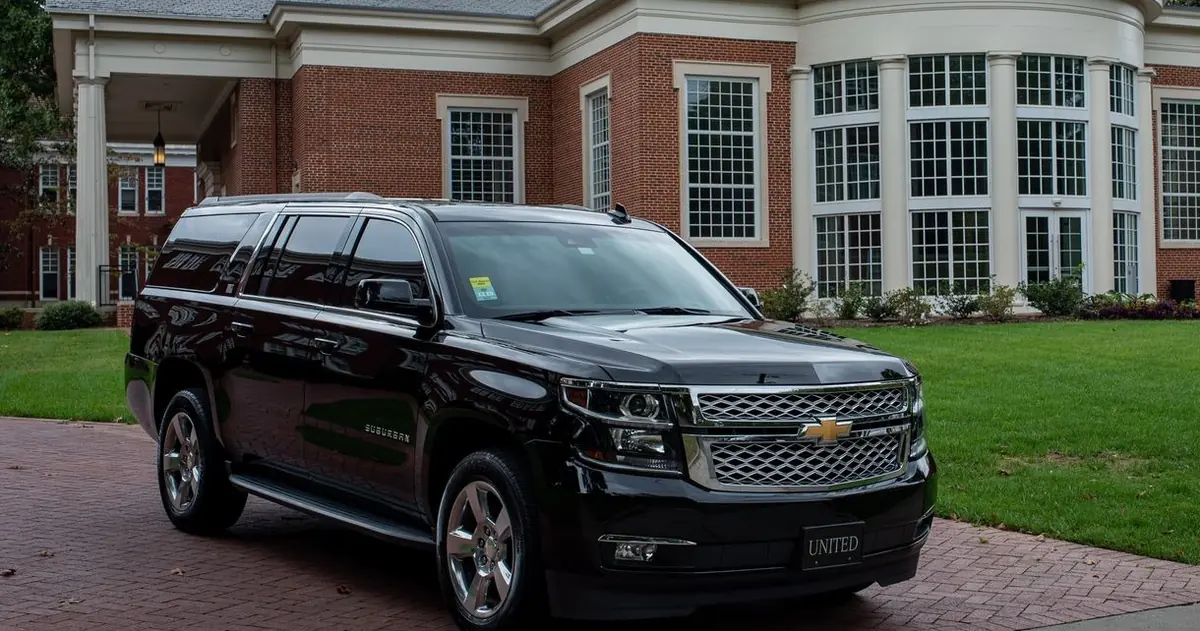 Up to 6
A fast, private ride for couples, small families, or business travelers — plenty of luggage room and a smooth, quiet cabin.
 Up to 14
Comfortable, air-conditioned seating for small and mid-size groups — our most popular option for families and friend groups traveling together.
 Up to 56
Our largest single vehicle — a full-size luxury motorcoach for large groups, conventions, and corporate events that still want one private tour, one vehicle.
A private, fully customizable tour of San Diego's best spots — Coronado, Balboa Park, La Jolla Cove, Sunset Cliffs, Cabrillo National Monument, and Old Town — with a dedicated local driver-guide in an all-electric Tesla. Coronado, Balboa Park, and La Jolla each reward unhurried time, so let us know which matters most and we'll pace the day's six stops around it.
Balboa Park didn't start out as a cultural showpiece — in 1868, when San Diego had barely 2,300 residents, city leaders set aside 1,400 acres of scrub-covered mesa for a future park, making San Diego only the second American city after New York to reserve that much land for public green space. The park wasn't actually named for the explorer Vasco Núñez de Balboa until 1910, and its signature Spanish Colonial Revival buildings — the ones most visitors photograph today — only appeared in 1915, built for the Panama-California Exposition. That fair was meant to run a single year; it proved so popular it was extended into 1916 and drew more than 3.7 million visitors. The surviving 1915 and 1935 Exposition buildings were later declared a National Historic Landmark District, and the park itself is now considered the largest urban cultural park in the country, home to 15 museums and the San Diego Zoo.
Coronado's own landmark, the Hotel del Coronado, dates to February 1888, when it opened as the largest resort hotel in the world. Developers Elisha Babcock Jr. and Hampton Story had no hotel experience — they were simply convinced Coronado's setting deserved a grand destination — and hired roughly 250 workers who raised the 399-room hotel in just 11 months. Its scalloped wood shingles and steep red roofline make it one of the last surviving examples of a wooden Victorian beach resort anywhere in the country, and it earned National Historic Landmark status in 1977.
La Jolla Cove's name is older and murkier than most visitors assume. The Kumeyaay people's name for the area, mat kulaaxuuy, roughly translates to "land of holes" — likely a reference to the sea caves that still riddle the coastline — and some historians believe the Spanish "La Jolla" grew out of that original name, while others trace it instead to la joya, "the jewel." Either way, the cove's protected waters, which first received marine-reserve status in 1929, are exactly why hundreds of California sea lions now haul out on its rocks and cliffs, especially around the southern point known as Point La Jolla.
Cabrillo National Monument marks the spot where Juan Rodríguez Cabrillo became the first European to set foot on what's now the West Coast of the United States, landing in San Diego Bay in 1542. The monument itself wasn't created until 1913, when President Woodrow Wilson set aside the historic Old Point Loma Lighthouse and the half-acre of land around it. That lighthouse guided ships into San Diego Bay from 1855 until 1891, when its 400-foot clifftop perch — constantly swallowed by fog and low clouds — forced its replacement with a new lighthouse built much closer to sea level. During World War II, the Army even camouflage-painted the old lighthouse and converted it into a signal station before handing it back to the National Park Service, which restored it to its 1880s appearance.
Every Voyzo tour is a starting point — tell us what you have in mind and we'll build it.