 TorontoOntario · 36 tours
 Niagara FallsOntario · 25 tours
 New York CityNew York · 30 tours
 Las VegasNevada · 8 tours
 San FranciscoCalifornia · 16 tours
 VancouverBritish Columbia · 17 tours
 DubaiUAE · 54 tours
 Abu DhabiUAE · 5 tours
 Buenos AiresArgentina · 23 tours
 AthensGreece · 31 tours
 AucklandNew Zealand · 38 tours
 CancunMexico · 54 tours
No destinations match “”. Try searching all tours instead — that search understands full questions, not just place names.
A real meteor impact site, ancient cliff dwellings, and a stop on old Route 66, all in one private day.
Venture north of Phoenix to Walnut Canyon's ancient Sinagua cliff dwellings, the best-preserved meteor impact site on Earth at Meteor Crater, and a Route 66 lunch stop in Winslow.
A genuinely distinct northern-Arizona day trip, honest and specific: you'll walk the upper trail at Walnut Canyon National Monument to see real ancient Sinagua cliff dwellings, visit Meteor Crater's Space Museum to learn about the intact impact site, then stop in Winslow on old Route 66 for lunch and a short guided tour.
A popular starting point — every Voyzo itinerary is fully customizable, so we'll shape the order and stops around your group.
Private pickup from your hotel in the Phoenix area.
Walk the upper trail past real ancient dwellings built by the Sinagua people.
Visit the best-preserved meteorite impact site on Earth and its Space Museum.
Stop for lunch and a short guided tour in this classic Route 66 town.
Back to your hotel, home, or the airport — whenever your day wraps up.
Every group size is covered — from an intimate private ride to large multi-coach groups.
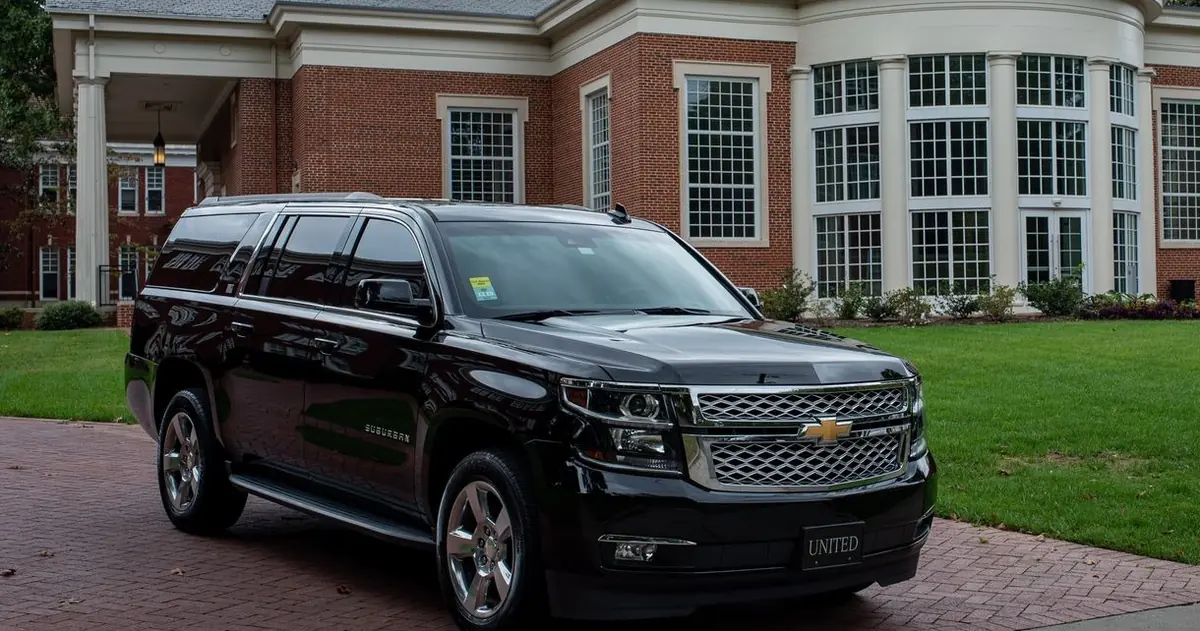 Up to 6
A fast, private ride for couples, small families, or business travelers — plenty of luggage room and a smooth, quiet cabin.
 Up to 14
Comfortable, air-conditioned seating for small and mid-size groups — our most popular option for families and friend groups traveling together.
 Up to 56
Our largest single vehicle — a full-size luxury motorcoach for large groups, conventions, and corporate events that still want one private tour, one vehicle.
Venture north of Phoenix to Walnut Canyon's ancient Sinagua cliff dwellings, the best-preserved meteor impact site on Earth at Meteor Crater, and a Route 66 lunch stop in Winslow. A genuinely distinct northern-Arizona day trip, honest and specific: you'll walk the upper trail at Walnut Canyon National Monument to see real ancient Sinagua cliff dwellings, visit Meteor Crater's Space Museum to learn about the intact impact site, then stop in Winslow on old Route 66 for lunch and a short guided tour.
Walnut Canyon National Monument preserves one of the most accessible windows into the ancestral Sinagua world north of Phoenix. Between roughly 1125 and 1250 CE, the Sinagua built dwellings directly into natural limestone alcoves lining the canyon's walls — recesses carved out over millions of years by water working through the rock. More than 80 individual dwelling rooms survive in the canyon today, and the monument's Island Trail, a roughly 0.9-mile loop descending about 185 feet from the rim, passes within view of around 25 of them. The Sinagua occupied these cliff homes for barely a century before leaving the canyon around 1250 CE; researchers still debate whether drought, resource pressure, or conflict with neighboring groups drove the move, since no single cause has been definitively established.
From there, the drive east toward Winslow leads to Meteor Crater, widely regarded as the best-preserved meteorite impact site on Earth. About 50,000 years ago, an iron-nickel meteorite roughly 150 feet across slammed into the Colorado Plateau at tremendous speed, blasting out a bowl nearly 3,900 feet (about three-quarters of a mile) across and 560 feet deep, with a rim that still rises close to 150 feet above the surrounding plain. The crater's relatively young age and Arizona's arid climate have kept it from eroding away the way most ancient impact sites eventually do, which is part of why geologists still use it as a reference site for studying crater formation — and why, decades ago, it became a literal practice ground for astronauts.
Between 1963 and 1972, NASA sent its astronaut corps through roughly 200 separate geological field-training exercises across northern Arizona, and Meteor Crater was central to that program — its stark, cratered terrain was one of the closest approximations on Earth to what astronauts would encounter walking on the Moon. Apollo 11's Neil Armstrong, Buzz Aldrin, and Michael Collins all trained in the area before their 1969 landing, guided in large part by geologist Eugene Shoemaker, whose work helped convince NASA that astronauts needed real field-geology skills, not just piloting experience, to make full use of their time on the lunar surface. Every astronaut who eventually flew to the Moon passed through this kind of northern Arizona training.
The day wraps up in Winslow, a small Route 66 town whose own slice of American pop culture comes from a single line in the Eagles' 1972 hit "Take It Easy" — "standin' on a corner in Winslow, Arizona" — now marked by a dedicated downtown park with a life-sized bronze statue and a two-story mural. It's a low-key, fitting close to a day built around two very different kinds of deep time: a few hundred years of Sinagua history and roughly 50,000 years of geology, both still visible on the ground within a few hours' drive of each other.
Every Voyzo tour is a starting point — tell us what you have in mind and we'll build it.
