TorontoOntario · 36 tours
 Niagara FallsOntario · 25 tours
 New York CityNew York · 30 tours
 Las VegasNevada · 8 tours
 San FranciscoCalifornia · 16 tours
 VancouverBritish Columbia · 17 tours
 DubaiUAE · 54 tours
 Abu DhabiUAE · 5 tours
 Buenos AiresArgentina · 23 tours
 AthensGreece · 31 tours
 AucklandNew Zealand · 38 tours
 CancunMexico · 54 tours
No destinations match “”. Try searching all tours instead — that search understands full questions, not just place names.
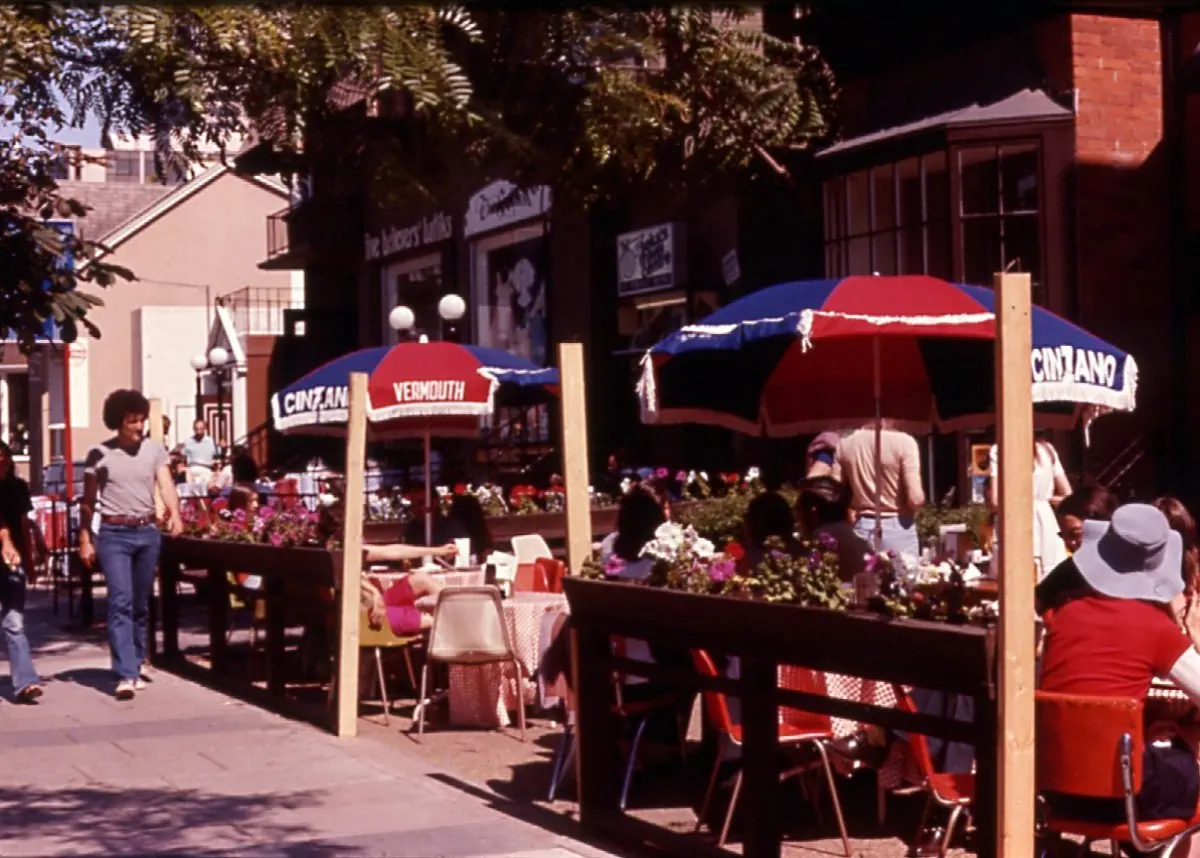
An upscale downtown neighbourhood of boutiques, galleries, and patio cafes.
Visitor guide
Yorkville is a compact neighbourhood just north of Bloor Street in downtown Toronto, bounded roughly by Bloor Street, Davenport Road, Yonge Street and Avenue Road. It has been a village, a hippie haven and one of Canada's best-known luxury shopping districts, and traces of each era remain in its parks, Victorian houses and street names.
Yorkville grew as a separate community from 1836, when brewer Joseph Bloor and Sheriff William Botsford Jarvis laid out village lots for people seeking cleaner air outside the Town of York. The Red Lion Hotel became its political centre and a polling place, and William Lyon Mackenzie was elected there in the early 1830s. An omnibus connected the village to Toronto from 1849, and Yorkville was incorporated as a village in 1853 once it reached a population of 1,000. It was annexed by Toronto on February 1, 1883, and its town hall was later renamed St. Paul's Hall.
For most of the following century Yorkville was a modest residential area of brick row houses, with institutions such as the Toronto Hebrew Maternity and Convalescent Hospital, which opened on Yorkville Avenue in 1923 and became Mount Sinai Hospital a year later.
In the 1960s, cheap rents and old houses drew musicians, artists and students, and Yorkville became the centre of Canada's hippie movement. Folk and rock coffee houses launched or hosted performers who later became major names, among them Joni Mitchell, Neil Young and Gordon Lightfoot, and the scene also fed writers such as Margaret Atwood and Dennis Lee. The experiment in alternative education and living at Rochdale College opened on Bloor Street in 1968. The scene attracted political and police pushback; at least one provincial politician publicly called for it to be eradicated. By the early 1970s the bohemian crowd had thinned as rents climbed.
The arrival of the Bloor subway raised land values, and small shops gave way to boutiques, galleries and restaurants, then to hotels, offices and condominiums. Bloor Street's stretch through the neighbourhood is nicknamed the Mink Mile; it has been described in the press as among the most expensive shopping streets in the world, though rankings vary by year and source. Residential population has grown, with the 2021 census counting about 5,300 people according to Wikipedia's summary of census data.
Village of Yorkville Park, designed to evoke the Canadian landscape, is the neighbourhood's best-known public space, with Scots pines rising from circular benches, a wetland, and a large granite outcrop moved into the park (reported to weigh about 650 tonnes; treat the figure as approximate). Town Hall Square marks the site of the former Yorkville Town Hall and sits beside the library branch, and Jesse Ketchum Park and Frank Stollery Parkette are small green pockets nearby. Several Victorian houses survive on Cumberland Street and Hazelton Avenue, now housing galleries, restaurants and shops. The historic Fire Station 312 and the old village streets are worth a look on foot.
Plaques around the area mark some of the former coffee house sites, although little of the bohemian era is visible today. For art lovers, Yorkville has a cluster of commercial galleries, and the Royal Ontario Museum is a short walk south across Bloor Street.
Yorkville is best explored on foot, and parking is expensive and limited, which makes it an easy match for a private vehicle and driver: you can be dropped on Bloor or Cumberland and picked up at the other end of your walk. Stores and restaurants keep their own hours, so check each business directly.
The Royal Ontario Museum, the University of Toronto's St. George campus and the Bloor-Yonge subway interchange are all within a short walk, and Yonge Street shopping is a few blocks east.
See every tour and attraction we cover in Toronto.