TorontoOntario · 36 tours
 Niagara FallsOntario · 25 tours
 New York CityNew York · 30 tours
 Las VegasNevada · 8 tours
 San FranciscoCalifornia · 16 tours
 VancouverBritish Columbia · 17 tours
 DubaiUAE · 54 tours
 Abu DhabiUAE · 5 tours
 Buenos AiresArgentina · 23 tours
 AthensGreece · 31 tours
 AucklandNew Zealand · 38 tours
 CancunMexico · 54 tours
No destinations match “”. Try searching all tours instead — that search understands full questions, not just place names.
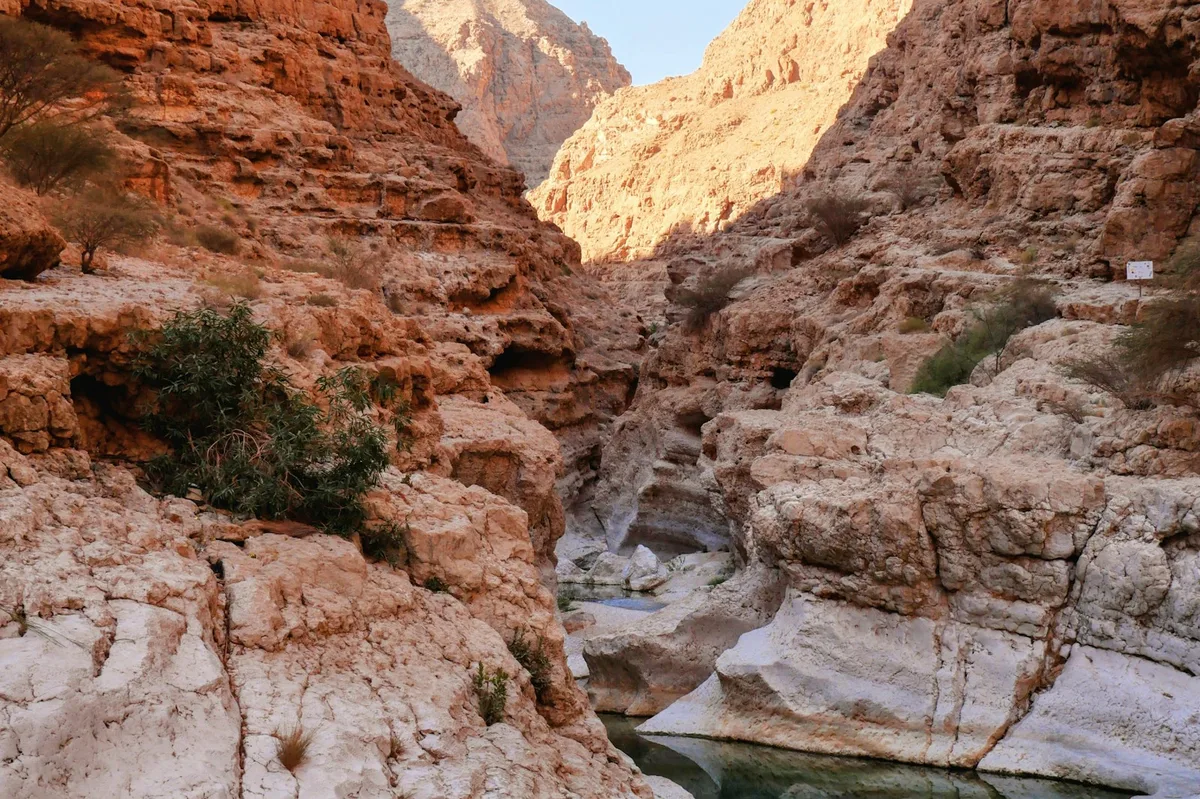
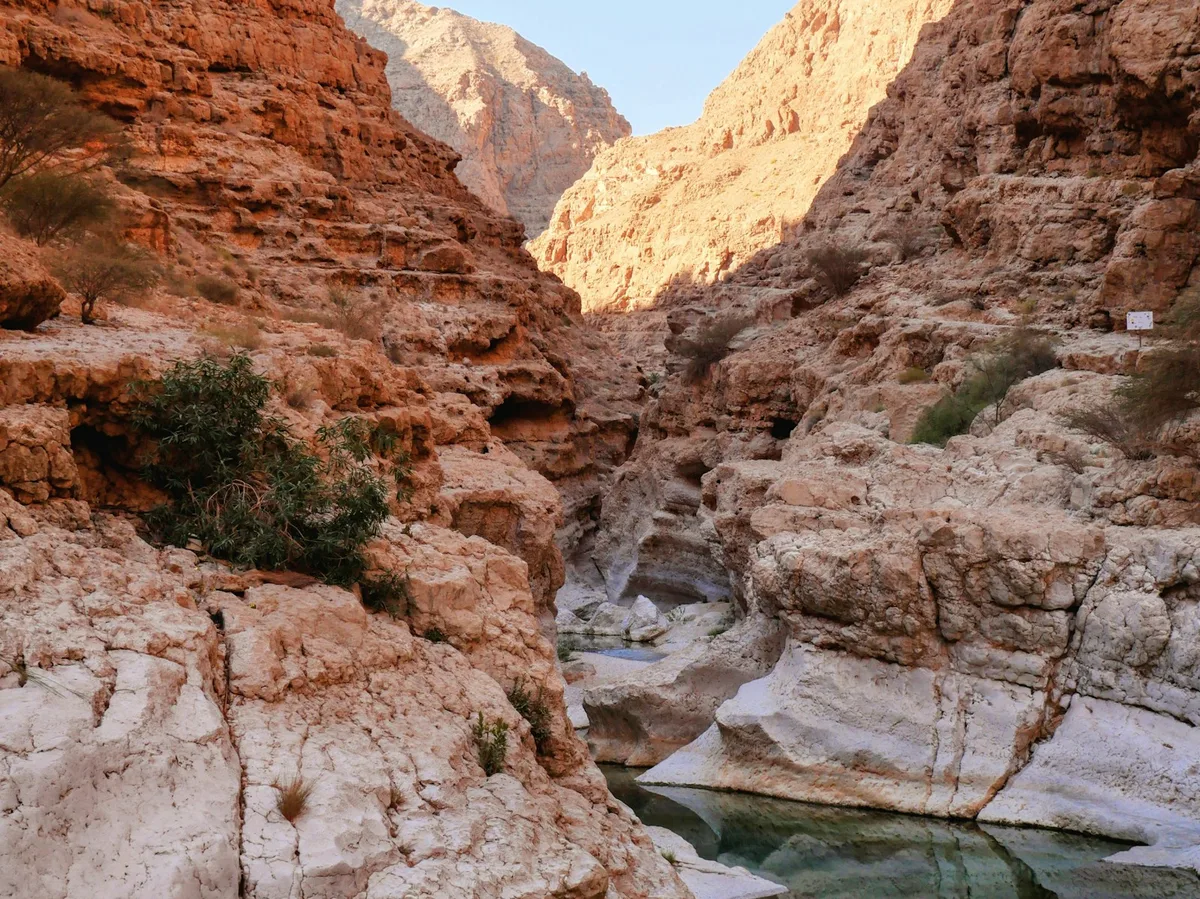
A dramatic canyon in the Ash Sharqiyah region with emerald pools and a hidden waterfall, reached by a hike and a short swim through the narrows.
Visitor guide
Wadi Shab is a limestone canyon on Oman's Gulf of Oman coast, near the village of Tiwi in the Ash Sharqiyah region. It is known for a chain of emerald pools and a hidden cave waterfall, reached by a short boat crossing, a walk beside an irrigation channel and a swim through the narrows.
The wadi mouth lies just off the coastal highway south of Muscat, a few kilometres before the turn-off for the neighbouring Wadi Tiwi. Wikipedia's entry on Tiwi places the town between Wadi Shab and Wadi Tiwi on the coast, and describes an archaeological site there that was inhabited in the Samad Late Iron Age and in Islamic times. The canyon belongs to the limestone Al Hajar range, and travel guides describe walls rising roughly 200 metres on either side of the gorge, with perennial water supplied by springs.
The route usually starts at a car park under the highway bridge, where a small boat crosses the water at the wadi mouth; one guide says the crossing is run by a local cooperative. From the landing, a path stays above the water for roughly 45 minutes, passing through a date-palm plantation beside a falaj, the traditional gravity-fed irrigation channel. Guides describe the walk as moderate, with light scrambling over boulders, though distances quoted vary between sources from about 1.5 km to 2.5 km each way.
Along the way, papaya trees and date palms grow in the canyon, and some papaya plants even cling to the walls, according to one traveller's account. The path then drops into the canyon proper, where the first large emerald pool appears. Shallow stretches have a gravel bottom, while the deeper water runs dark blue.
Beyond a ledge where many visitors leave bags, the route becomes a swim through a series of narrowing pools. Guides describe a swim of roughly 200 metres to a flooded slot and a small waterfall, and a further squeeze through a narrow corridor into a chamber beneath a large fallen block, where a waterfall drops inside the cave. Sources note that this final stretch requires comfort in deep water, and strong swimmers sometimes continue while others turn back at the first pools. Crowds tend to thin out past the first two pools.
Cooler months, roughly October to April, are described as the more comfortable period, while summer is extremely hot. Wadis can rise quickly after rain, even when the rain falls far upstream, so guides advise checking conditions and leaving if water levels climb. The water is not for drinking, and grippy footwear is recommended for wet, polished rock.
Wadi Shab is popular enough to be called one of Oman's most photographed canyons. A private tour with a driver suits the trip because the wadi sits on the coastal highway between Muscat and Sur, and it pairs naturally with the nearby Bimmah Sinkhole.
See every tour and attraction we cover in Oman.