TorontoOntario · 36 tours
 Niagara FallsOntario · 25 tours
 New York CityNew York · 30 tours
 Las VegasNevada · 8 tours
 San FranciscoCalifornia · 16 tours
 VancouverBritish Columbia · 17 tours
 DubaiUAE · 54 tours
 Abu DhabiUAE · 5 tours
 Buenos AiresArgentina · 23 tours
 AthensGreece · 31 tours
 AucklandNew Zealand · 38 tours
 CancunMexico · 54 tours
No destinations match “”. Try searching all tours instead — that search understands full questions, not just place names.
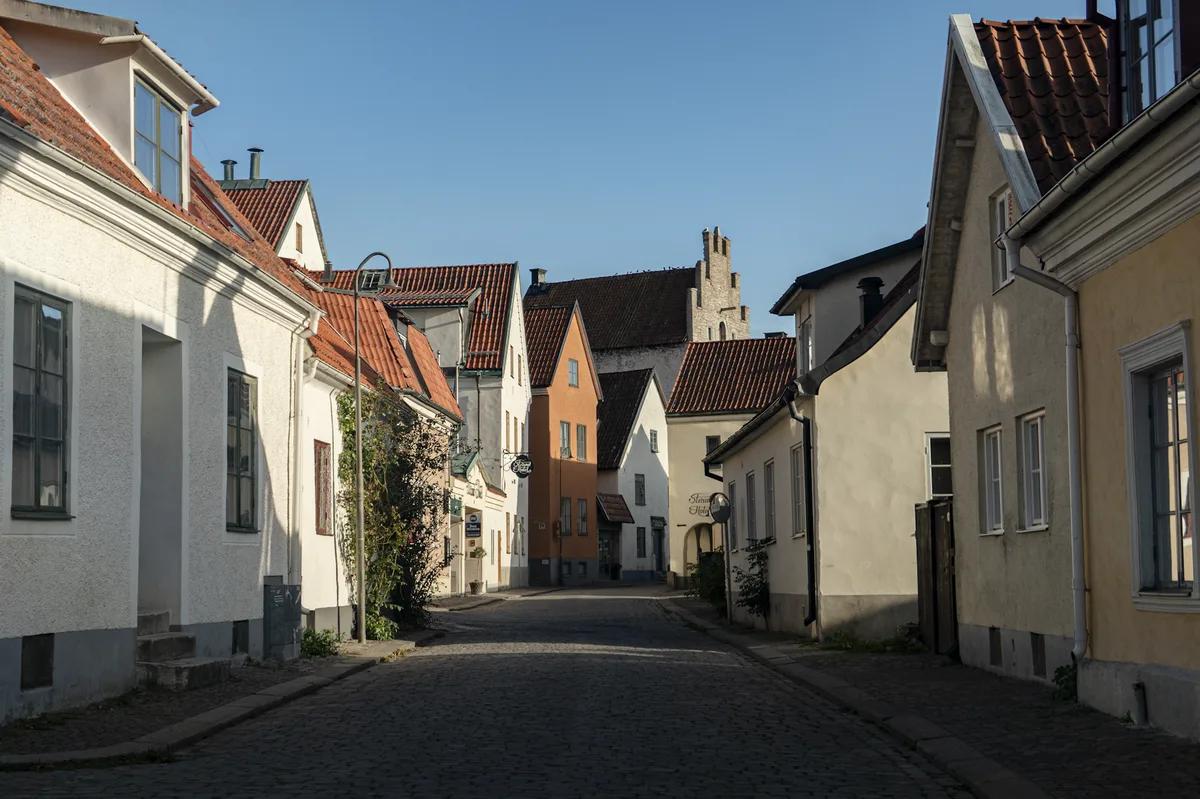
Gotland's medieval walled town, a UNESCO World Heritage site of cobbled lanes, church ruins, and a nearly complete ring of 13th-century town walls.
Visitor guide
Visby is the main town of Gotland, a Swedish island in the Baltic Sea, and is listed by UNESCO as the Hanseatic Town of Visby. It is known for a nearly intact medieval ring wall, cobbled lanes, stone merchants' houses and a scattering of church ruins that recall its wealth as a Hanseatic trading centre.
Visby flourished thanks to the German Hanseatic League and is described by Wikipedia as one of the best-preserved medieval cities in Scandinavia. Its later decline as a Hanseatic city left many stone houses in their original medieval style rather than being rebuilt. The maritime Laws of Wisbuy, which had broad influence around the Baltic, were probably promulgated in the first half of the 14th century. By 1470 the Hanseatic League had rescinded Visby's status as a Hanseatic town.
Conflict marked its history. In 1361 King Valdemar IV of Denmark conquered Gotland, and about 1,800 Gotlanders were killed in battle in front of the city. Valdemar then added King of Gotland to his titles. Gotland returned to Swedish possession under the Treaty of Brömsebro in 1645, after about 300 years of Danish rule. In 1525 troops from Lübeck attacked Visby and set the city on fire from four sites.
The town wall is 3.4 kilometres long and encircles the town centre. Work likely began in the 12th century, and around 1300 it was rebuilt to its present height and given its characteristic towers, although some towers were not added until the 15th century. The wall is still largely intact, which is a large part of why the town is recognised internationally.
Several medieval churches in Visby are now ruins, including St. Nicholas and St. Drotten, the Church of Our Lord. Wikipedia records that Lübeck's army sacked St. James, St. Nicholas and St. Gertrude, and that in 1528 citizens sacked the Church of the Holy Trinity, St. Drotten, in revenge for the plundering of their town. In 1533 to 1534 the Danish governor Henrik Nielsen Rosenkrantz demolished St. John's and St. Peter's churches to strengthen the defences of his castle.
Visby Cathedral, dedicated to Saint Mary, was built in the 12th century and reshaped in the 13th. It was officially opened in 1225 by the bishop of Linköping, was the last functional church after the Reformation-era closures, and became the city parish. Visby is the seat of the Diocese of Visby.
UNESCO inscribed the Hanseatic Town of Visby in 1995 at the 19th session of the World Heritage Committee, under cultural criteria iv and v, reference number 731.
Medieval Week, held in August in week 32 from Sunday to Sunday, began in 1984 and brings music, jesters, theatre, a medieval market and jousting. Almedalen, a park built on the medieval harbour, hosts Almedalen Week in the first week of July, a political forum where representatives of Sweden's major parties give speeches.
Visby is compact, but the story of Hanseatic trade, Danish conquest and Reformation damage is easy to miss without context. A private guide can connect the walls, ruins and cathedral into a single story, and a private vehicle and driver can handle transfers on the island.
See every tour and attraction we cover in Sweden.