TorontoOntario · 36 tours
 Niagara FallsOntario · 25 tours
 New York CityNew York · 30 tours
 Las VegasNevada · 8 tours
 San FranciscoCalifornia · 16 tours
 VancouverBritish Columbia · 17 tours
 DubaiUAE · 54 tours
 Abu DhabiUAE · 5 tours
 Buenos AiresArgentina · 23 tours
 AthensGreece · 31 tours
 AucklandNew Zealand · 38 tours
 CancunMexico · 54 tours
No destinations match “”. Try searching all tours instead — that search understands full questions, not just place names.
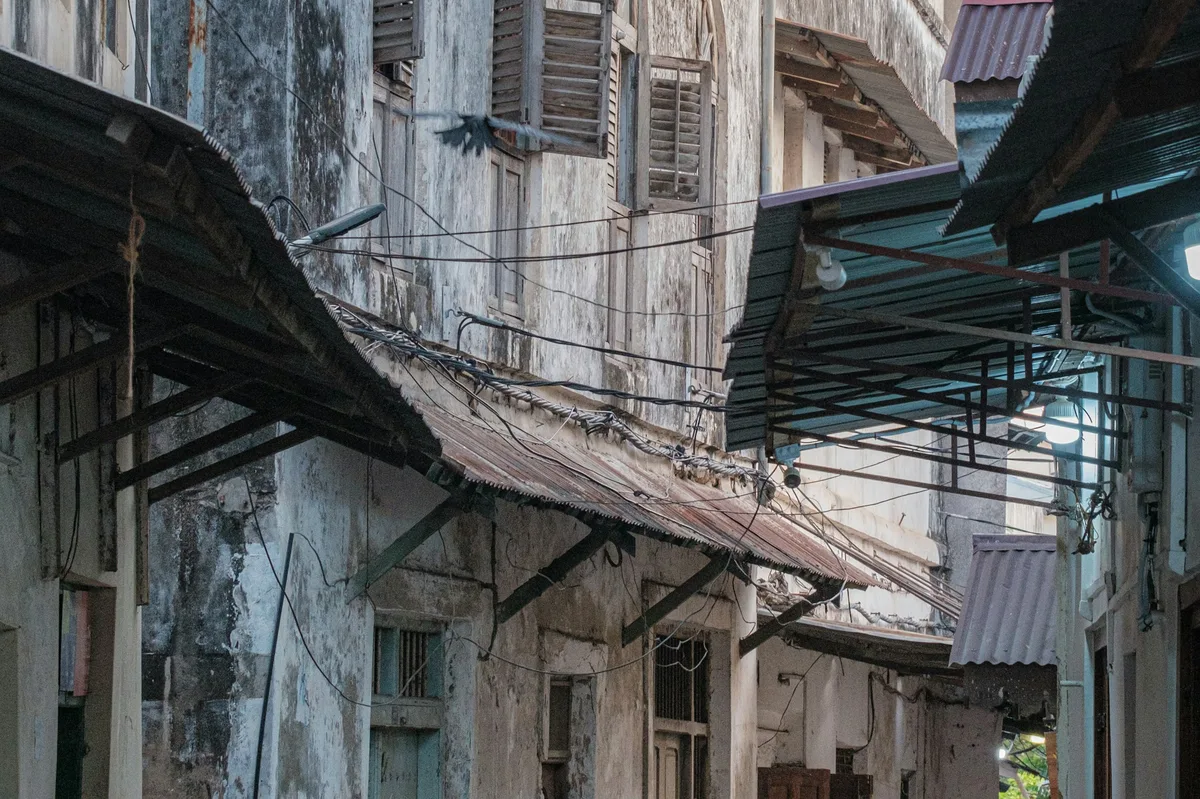
The UNESCO-listed old quarter of Zanzibar City, a maze of narrow coral-stone alleys, carved wooden doors, and rooftop cafés dating from the island's Omani and Swahili trading past.
Visitor guide
Stone Town, known in Swahili as Mji Mkongwe or the old town, is the historic heart of Zanzibar City on the western coast of Unguja island in Tanzania. A UNESCO World Heritage Site since 2000, it is a dense maze of coral-stone buildings, carved doors and narrow lanes shaped by centuries of Swahili, Omani, Indian, Persian and European influence.
According to Wikipedia, Stone Town grew from Shangani, a small fishing settlement founded around the eleventh century. The Portuguese built a church at Shangani in the early sixteenth century and held the island for over two hundred years. Omani Arabs then took control, building the Old Fort in 1699, which Wikipedia describes as the oldest building in the town. In 1840 Sultan Said bin Sultan moved his capital from Muscat to Zanzibar, with Stone Town as its centre, and the city grew rapidly as a trading hub for cloves, spices and, sadly, enslaved people. Zanzibar became a British protectorate in 1890, the sultanate was overthrown in the 1964 revolution, and Zanzibar joined Tanganyika to form Tanzania later that year.
The town takes its name from the coral stone used to build its houses, which gives the walls a warm colour. Most buildings date from the nineteenth century and blend Arab, Persian, Indian, European and African styles. Typical features include barazas, long stone benches along the outside walls, shaded verandas with carved wooden balustrades and the town's famous wooden doors. Indian-style doors tend to have rounded tops and sometimes brass studs, while Omani-style doors are rectangular, and carvings often include verses from the Qur'an or lotus motifs. The centre is a maze of narrow alleys, while the seafront has wider streets and more regular buildings.
The House of Wonders (Beit al-Ajaib), built in 1883, was reportedly the first building in Zanzibar with electricity and the first in East Africa with a lift, and houses a museum of Swahili and Zanzibari culture. The Old Fort now serves as a cultural centre and venue for events such as the Zanzibar International Film Festival. The Old Dispensary is known for its carved balconies and stained glass, and the Palace Museum on the seafront displays items from the sultans' household, including material relating to Princess Salme.
Christ Church Anglican Cathedral stands on the site of the former main slave market, and a monument and museum nearby document that history. St Joseph's Cathedral, built by French missionaries between 1893 and 1897, is modelled on Marseille Cathedral. Forodhani Gardens on the seafront is a park known for its evening food market. Freddie Mercury of Queen was born in Stone Town, and the Nobel laureate Abdulrazak Gurnah is also associated with the island.
UNESCO inscribed Stone Town under cultural criteria ii, iii and vi, with a core area of about 96 hectares. Wikipedia notes that coral stone is fragile and that many buildings need constant upkeep, with restoration work led in part by the Aga Khan Trust for Culture along the seafront. The lanes are best explored on foot, and a private local guide helps with the town's layered history, particularly the difficult story of the slave trade.
See every tour and attraction we cover in Tanzania.