TorontoOntario · 36 tours
 Niagara FallsOntario · 25 tours
 New York CityNew York · 30 tours
 Las VegasNevada · 8 tours
 San FranciscoCalifornia · 16 tours
 VancouverBritish Columbia · 17 tours
 DubaiUAE · 54 tours
 Abu DhabiUAE · 5 tours
 Buenos AiresArgentina · 23 tours
 AthensGreece · 31 tours
 AucklandNew Zealand · 38 tours
 CancunMexico · 54 tours
No destinations match “”. Try searching all tours instead — that search understands full questions, not just place names.
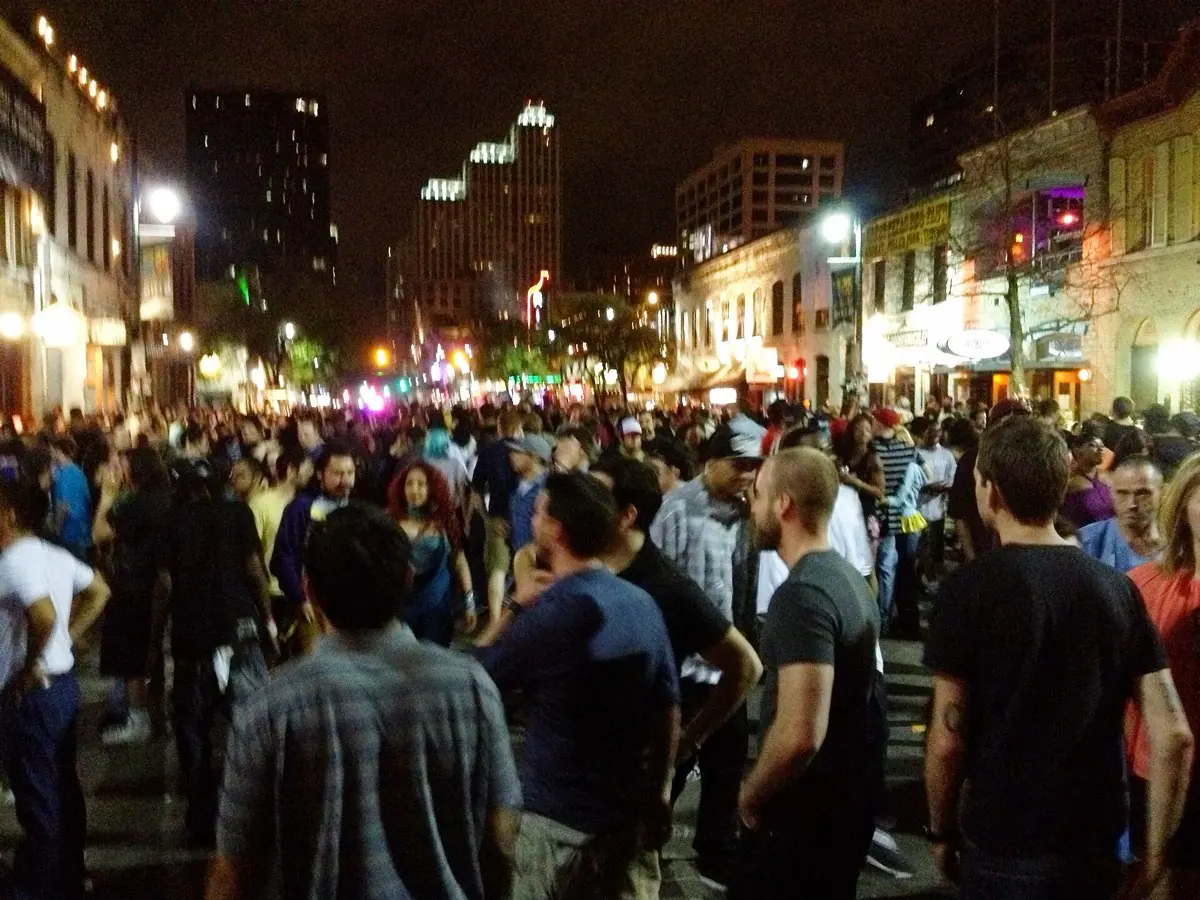
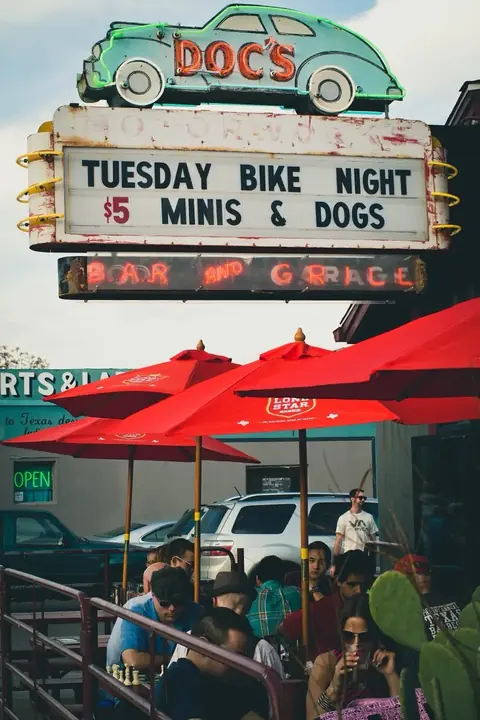
Austin's historic entertainment district, packed with live music venues and bars.
Visitor guide
Sixth Street is Austin's historic entertainment corridor, a downtown strip of late-nineteenth-century commercial buildings now filled with live-music bars, clubs, theaters and restaurants. It began as Pecan Street, one of the original east-west streets of Edwin Waller's 1839 city plan. East Sixth is locally nicknamed Dirty Sixth, and the street is a central stage for South by Southwest each spring.
Austin's early east-west streets were named for trees and its north-south streets for Texas rivers, so Sixth Street was originally Pecan Street. One account dates the rename to 1884. The Bastrop Highway was charted along Pecan Street in 1839, and Richard Bullock built a hotel at Pecan Street and Congress Avenue that became a stagecoach stop in 1840. The railroad arrived in 1871 and boosted the street's commercial importance, and flat ground well away from the flood-prone Colorado River made it a natural place to build.
The Driskill Hotel, built by cattleman Jesse Driskill, opened at 122 East Sixth in 1886. By the late 1880s Congress Avenue had overtaken Sixth as the city's fashionable shopping street, and E.M. Scarbrough and Sons, founded in 1893, built its eight-story building at Sixth and Congress in 1909. Business owners of Lebanese, Syrian, Black, Jewish, German, Chinese and Mexican-American backgrounds shaped the street from the 1890s onward, according to Wikipedia.
The street declined from the 1940s through the 1960s, and by mid-century had a skid-row character. Restoration began in the 1960s, and from the late 1960s and early 1970s music venues such as Antone's, the Black Cat and the Cannibal Club helped turn it into a music hub. By the 1980s and 1990s it was Austin's primary entertainment district. Esther's Follies, a vaudeville-style comedy theater, opened in 1977, and the Ritz theater, which opened in 1929 at 320 East Sixth, has since been reused as a comedy venue.
Most buildings are two- and three-story masonry Victorian commercial structures built by the 1880s, with Early Commercial, Classical Revival and Late Victorian influences. The Texas Historical Commission describes Sixth Street as holding Austin's largest concentration of Victorian commercial architecture. A stretch of Sixth Street roughly between Lavaca Street and Interstate 35 is the Sixth Street Historic District. The National Park Service record and the Texas Historical Commission Atlas both give its National Register listing as December 30, 1975 (a marker record gives 1979).
Beyond SXSW, East Sixth hosts the Republic of Texas Biker Rally. Traffic has generally been blocked on East Sixth between Interstate 35 and Brazos Street on weekend evenings and during special events, but the city has been revising traffic arrangements, so check current rules before you plan a drop-off.
A Voyzo private driver can leave you at one end and meet you at the other, which makes the walk practical without you arranging a ride home after an evening out.
See every tour and attraction we cover in Austin.