TorontoOntario · 36 tours
 Niagara FallsOntario · 25 tours
 New York CityNew York · 30 tours
 Las VegasNevada · 8 tours
 San FranciscoCalifornia · 16 tours
 VancouverBritish Columbia · 17 tours
 DubaiUAE · 54 tours
 Abu DhabiUAE · 5 tours
 Buenos AiresArgentina · 23 tours
 AthensGreece · 31 tours
 AucklandNew Zealand · 38 tours
 CancunMexico · 54 tours
No destinations match “”. Try searching all tours instead — that search understands full questions, not just place names.
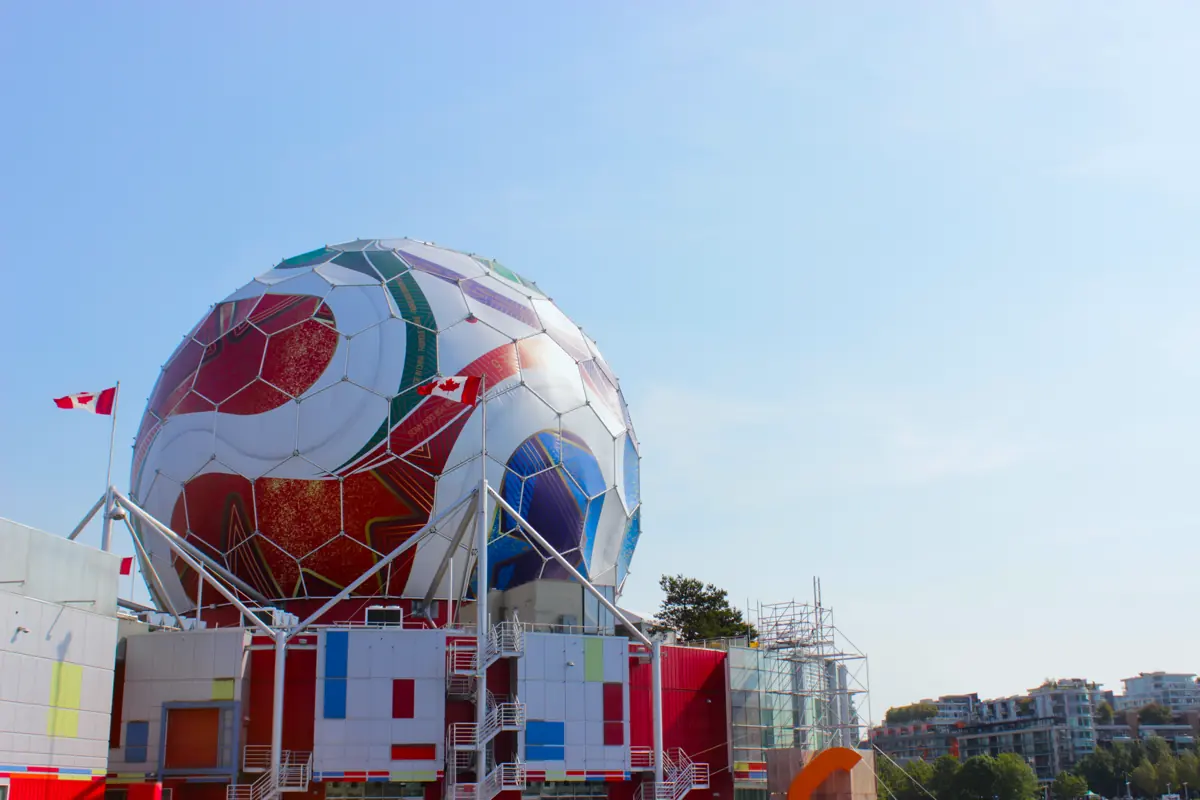
A geodesic-dome science centre on False Creek, a Vancouver landmark since Expo 86.
Visitor guide
Science World is the silver geodesic dome at the eastern end of False Creek in Vancouver, an interactive science centre run by a charitable non-profit. The building began life as the Expo Centre for Expo 86, and the science centre opened to the public on May 6, 1989. It sits beside the Main Street-Science World SkyTrain station.
The idea of a hands-on science centre in Vancouver predates the building. In 1977 Barbara Brink ran mobile hands-on exhibits, called the Extended I, around the Lower Mainland, and a temporary Arts, Sciences and Technology Centre opened downtown in January 1982, reportedly drawing more than 600,000 visitors. That popularity helped build the case for a permanent home.
The dome was designed by Expo's chief architect, Bruno Freschi, with a design inspired by Buckminster Fuller's geodesic forms. Construction ran from 1984 to early 1985. After the fair closed, the structure was obtained from the province and converted; Wikipedia reports donations of $19.1 million paid for an addition, interior redesign and exhibits. A four-month preview in 1988 drew more than 310,000 visitors before the 1989 public opening. One Expo 86 account instead says the former Expo Centre reopened as Science World in 1990 after expansion, so treat the exact opening year as worth confirming with the centre.
Bruno Freschi was born in 1937 in Trail, British Columbia, studied architecture at the University of British Columbia, graduating in 1961, and worked with Arthur Erickson and Geoffrey Massey before founding his own Vancouver practice in 1970. He served as master planner and chief architect of Expo 86 and was made an Officer of the Order of Canada in 1985. The geodesic idea itself was not Fuller's alone: German engineer Walther Bauersfeld built the first geodesic dome for a planetarium projector at Carl Zeiss in Jena after the First World War, and Fuller received a US patent for his version in 1954. The structure is a shell of rigid triangles that spreads stress across the whole frame, which is why such domes can be light for their size. Fuller's American Pavilion for Expo 67 in Montreal is the best-known sibling to Vancouver's dome.
Expo 86, the World Exposition on Transportation and Communication, ran from May 2 to October 13, 1986, under the motto World in Motion, World in Touch, and coincided with Vancouver's centennial. It drew about 22.1 million visits on roughly 70 hectares of former railway yard and industrial land on the north shore of False Creek. The SkyTrain Expo Line was built partly to serve the fair; the station beside the dome opened on December 11, 1985 as Main Street, and was renamed Main Street-Science World on September 21, 1990.
A 400-seat Omnimax theatre opened in the dome's upper section in 1989; it followed a 3D IMAX theatre built for Expo in 1986. Alcan sponsored the theatre from 1996. In 2005 Telus paid $9 million for naming rights, and the building was briefly called Telusphere, a name Wikipedia says proved unpopular, before the centre became Science World at Telus World of Science. That agreement ended in 2020. The theatre later reverted to its Omnimax name.
Science World is run by the ASTC Science World Society, a registered charity. Its own site says it focuses on STEAM (science, technology, engineering, art and design, and maths) and runs outreach programmes for students and teachers across British Columbia, including virtual scientist visits and livestreamed shows. Programmes described on Wikipedia include Scientists and Innovators in the Schools, which pairs volunteer mentors with students, On the Road, which takes staff to communities without a local science centre, and an after-school Super Science Club. It acknowledges that it is on the traditional, unceded territory of the Musqueam, Squamish and Tsleil-Waututh peoples. Wikipedia reports annual attendance of 1,009,583 in 2019.
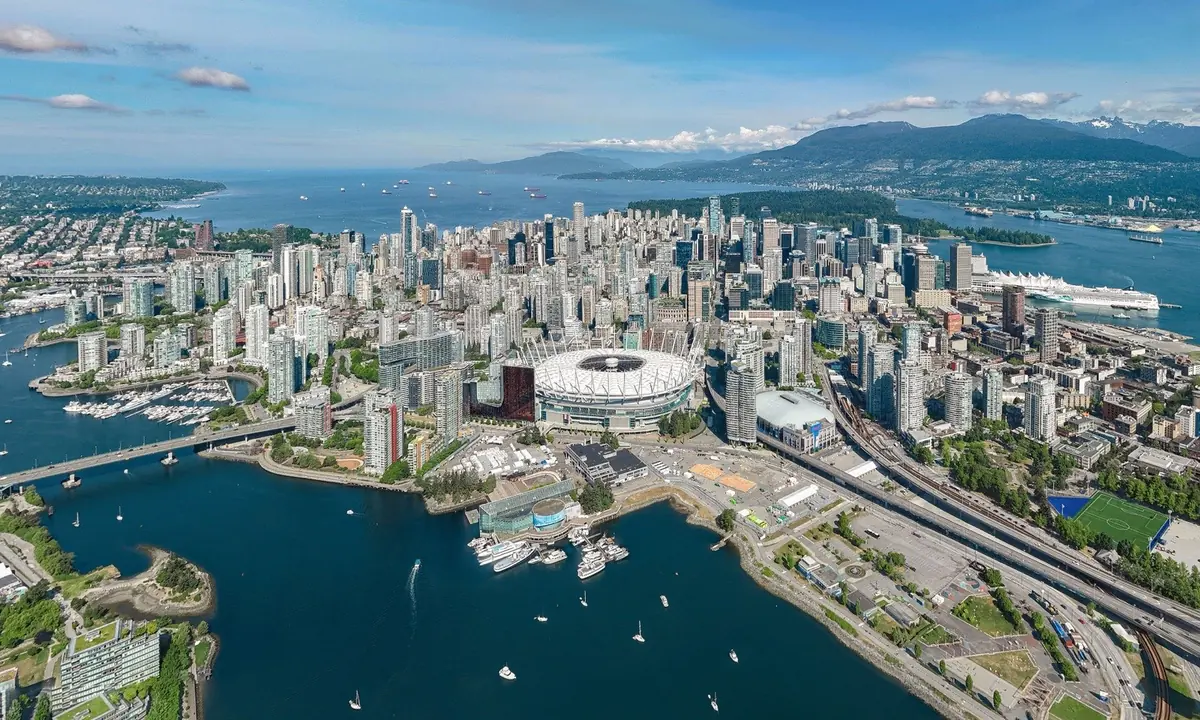
False Creek was named by Captain George Henry Richards during his 1856-1863 survey, after he realised that what he had taken for a creek was an inlet. Coast Salish peoples, including the Squamish and Tsleil-Waututh, used the area for thousands of years before European contact, and sawmills, port activity and land reclamation dominated it into the 1950s. A 1972 development plan led to a public seawall and mixed housing, and the south-east shore later became the 2010 Olympic Village. After Expo the province sold the north shore site to a developer, which led to the high-rise neighbourhoods now around the inlet.
Indoor renovations after the 2010 Winter Olympics were completed by mid-2012, and the Ken Spencer Science Park opened in late 2012. Exhibits and special programmes change often, so check Science World for current galleries, hours, tickets and access.
See every tour and attraction we cover in Vancouver.