TorontoOntario · 36 tours
 Niagara FallsOntario · 25 tours
 New York CityNew York · 30 tours
 Las VegasNevada · 8 tours
 San FranciscoCalifornia · 16 tours
 VancouverBritish Columbia · 17 tours
 DubaiUAE · 54 tours
 Abu DhabiUAE · 5 tours
 Buenos AiresArgentina · 23 tours
 AthensGreece · 31 tours
 AucklandNew Zealand · 38 tours
 CancunMexico · 54 tours
No destinations match “”. Try searching all tours instead — that search understands full questions, not just place names.
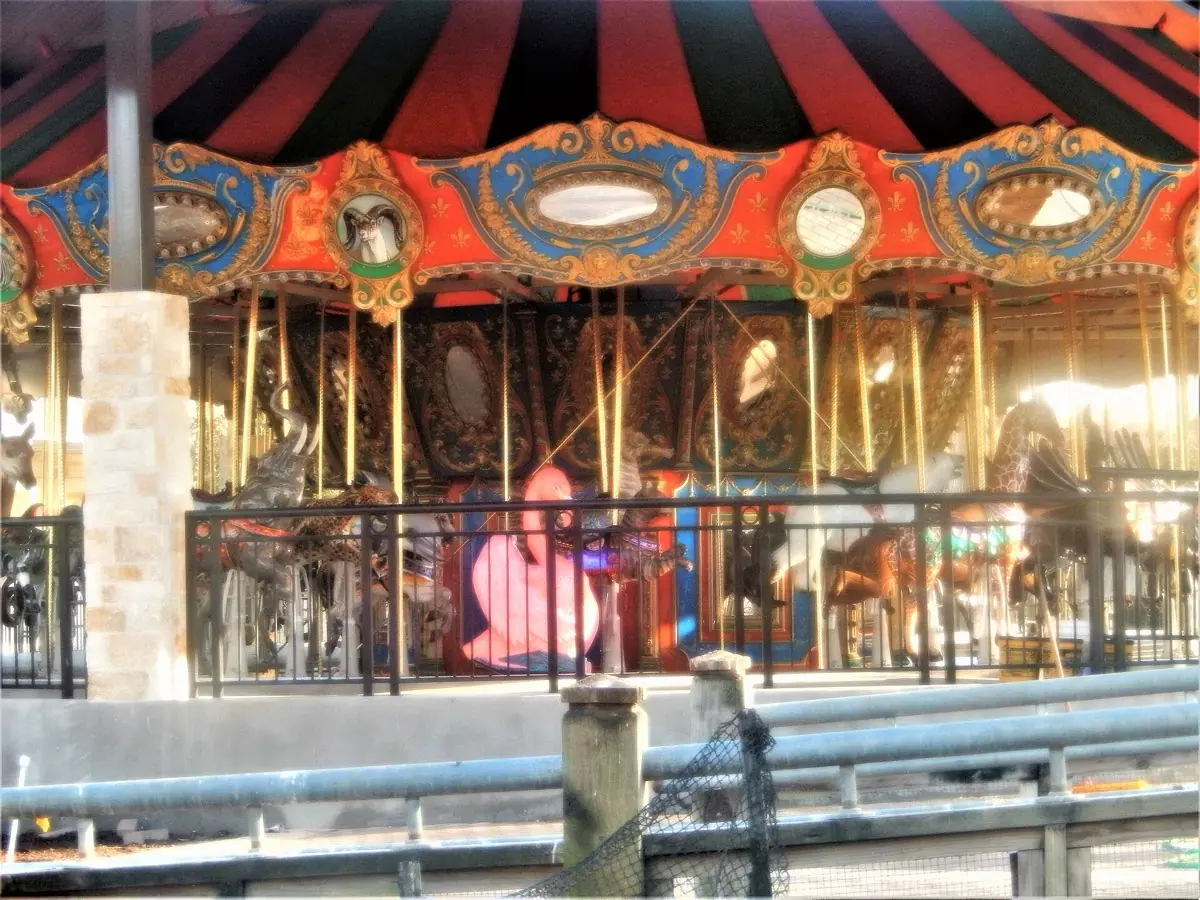
A large zoo inside Brackenridge Park, home to more than 700 species.
Visitor guide
The San Antonio Zoo is a nonprofit zoo of roughly 50 to 57 acres inside Brackenridge Park, just north of downtown. Founded in 1914, it is accredited by the Association of Zoos and Aquariums and the Zoological Association of America, and it welcomes more than a million visitors a year.
The zoo's own history notes that San Antonio's first zoo was a collection of animals in San Pedro Park in the 1800s. The current zoo began in 1914, when Colonel George W. Brackenridge, who had deeded the land that became Brackenridge Park to the city, donated animals that included buffalo, elk, deer, monkeys, lions and bears. Its opening is generally listed as May 3, 1914.
According to the National Register nomination for the zoo's Monkey House, Brackenridge had fenced a small herd south of the park in 1912, and city parks commissioner Ray Lambert then pointed to a former limestone quarry north of the park, with terraces and overhanging caves, as a natural place for animal enclosures. The herd was moved into the quarry in 1914, and Lambert and Brackenridge began a partnership to expand it.
The quarry setting shaped the zoo's character. The nomination describes how Lambert and Brackenridge were drawn to the new idea of a barless, cageless zoo pioneered in Germany by Carl Hagenbeck, who used moats, hedges and artificial rock to let visitors view animals in open-air settings. In 1925 a newspaper reported that the San Antonio zoo had grown to 10 acres with 100 steel cages, and a few years later Hagenbeck's son Heinrich, who advised on barless zoos across the United States, reportedly called the site's natural possibilities the finest he had seen.
In November 1929 the zoo opened the Barless Bear Terraces and Primate Paradise, which are described as among the first cageless exhibits in the United States. The San Antonio Zoological Society had been formed in 1928 and took over operation of the zoo from the city in 1931, and it remains the operator today.
During the Depression the zoo drew on Works Progress Administration funds. By 1935 zoo director Fred Stark was overseeing more than 100 WPA workers, and the nomination reports that between 1934 and 1940 the zoo obtained $183,483 in federal funds plus $54,119 from the city. The projects included bird of prey aviaries, hippopotamus, elephant and reptile houses, a sea lion pool, moats and masonry walls. Much of the work used limestone from the quarry itself, which the nomination says gave the zoo a rustic look different from other New Deal zoo projects built mainly in concrete. San Antonio firm Adams & Adams designed many of the buildings.
One surviving example is the Monkey House and Commissary, built between 1935 and 1937 of rubble limestone with arched entrances and red clay roof tiles in a modest Spanish Revival style. It was designed to prepare meals for the zoo's animals, house primates and provide heated winter quarters for birds and small animals. It was listed on the National Register of Historic Places on April 4, 2024.
The Richard Friedrich Aquarium was dedicated in 1948, the zoo train, now the San Antonio Zoo Train, opened in 1956, and the Hixon Bird House, with a simulated tropical rainforest and free-flying birds, opened in 1966. Wikipedia lists the Africa Live! habitats, which opened in two phases in 2008 and 2010, as later additions featuring hippos and Nile crocodiles, then okapi, African hunting dogs and an aviary.
The zoo reports more than 700 species, some endangered or extinct in the wild, and Wikipedia gives about 750 species and more than 3,500 animals; acreage and species figures vary between sources. Its bird collection is described by the zoo as one of the largest in the world. The zoo is operated by the San Antonio Zoological Society and is also Humane Certified by American Humane.
The zoo's Center for Conservation and Research runs projects including the Texas Horned Lizard Reintroduction Project, which had released 258 lizards by 2024, Project Selva supporting artisan crafts in the Peruvian Amazon, and Mexican Blindcat research. The horned lizard, the Texas state reptile, has declined since the late 1960s because of habitat loss, invasive fire ants and exotic grasses, and pesticides. The zoo hatches lizards for release on private land, with partners that include Texas Parks and Wildlife and Texas Christian University, and the project is funded by private grants and donations.
The Mexican blindcat is a rare underground catfish known from sites in Coahuila, Mexico. In 2014 zoo staff documented a population in Val Verde County, Texas, described as the first confirmed occurrence in the United States, and the zoo manages the only known captive colony while working toward breeding. Other work includes cave research and environmental DNA studies.
Wikipedia reports the Naylor Savanna African habitat opened in October 2024 with a new giraffe barn, and that the Spekboom Lodge, offering overnight stays in the giraffe habitat, opened in November 2024. Check the zoo for current habitats and tickets.
Voyzo runs this as a private tour, with your own vehicle and driver and door-to-door pickup, so the zoo can fit a San Antonio day with other stops. Check the zoo for current hours, habitats and tickets.
See every tour and attraction we cover in San Antonio.