TorontoOntario · 36 tours
 Niagara FallsOntario · 25 tours
 New York CityNew York · 30 tours
 Las VegasNevada · 8 tours
 San FranciscoCalifornia · 16 tours
 VancouverBritish Columbia · 17 tours
 DubaiUAE · 54 tours
 Abu DhabiUAE · 5 tours
 Buenos AiresArgentina · 23 tours
 AthensGreece · 31 tours
 AucklandNew Zealand · 38 tours
 CancunMexico · 54 tours
No destinations match “”. Try searching all tours instead — that search understands full questions, not just place names.
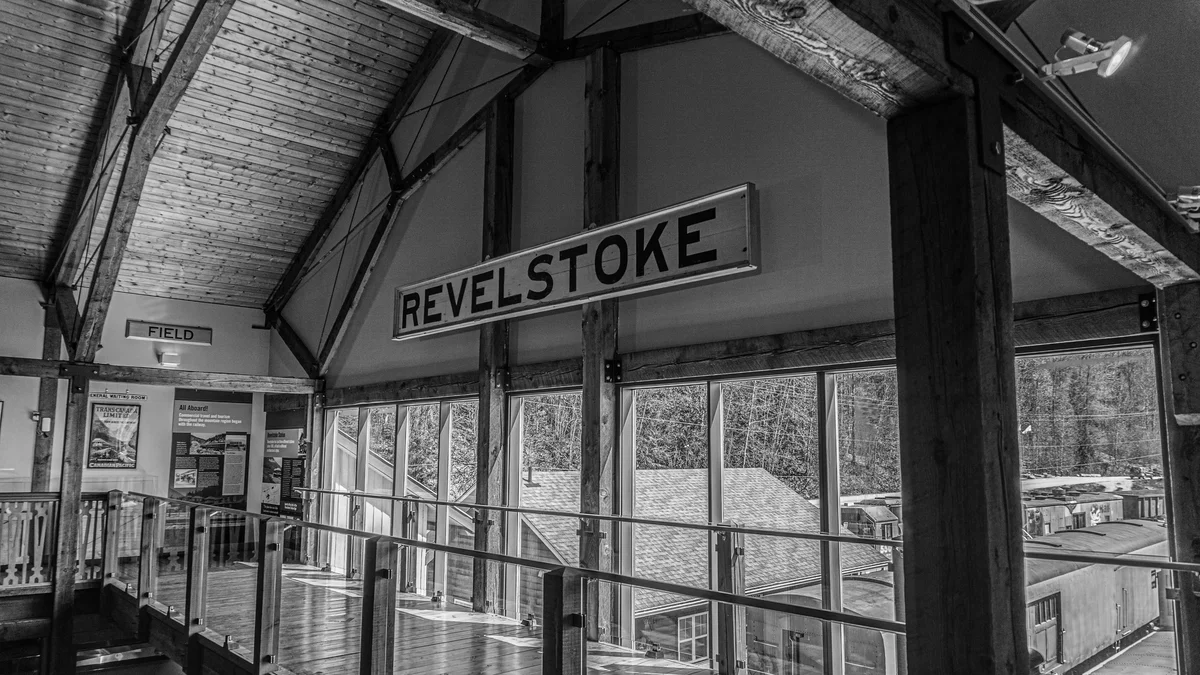
A museum dedicated to the Canadian Pacific Railway's history through the Selkirk Mountains, built around a preserved steam locomotive and rail cars. Exhibits cover the engineering challenges of routing a transcontinental railway through some of Canada's most rugged terrain.
Visitor guide
The Revelstoke Railway Museum, in Revelstoke, British Columbia, collects and interprets the history of the Canadian Pacific Railway through the mountains of western Canada. It is run by the Revelstoke Heritage Railway Society, incorporated in 1988, and its best-known exhibit is CPR steam locomotive 5468.
Revelstoke began in the 1880s as the Canadian Pacific Railway was built through the Columbia and Selkirk mountains. The site was first known as the Second Crossing, to distinguish it from the railway's first Columbia River crossing at Donald, and the settlement was then called Farwell, after a local landowner and surveyor. It was renamed after Lord Revelstoke, head of Baring Brothers, whose bank, with Glyn, Mills & Co., bought the railway's unsold bonds in the summer of 1885 and helped keep the CPR from bankruptcy. The post office dates from 1886. The Trans-Canada Highway arrived in 1962, and tourism, especially skiing, grew in importance, but the town still has a close relationship with the railway: a CPR line, now Canadian Pacific Kansas City, runs through it. An exhibit titled Revelstoke is a Railway Town opened in 2022.
A local news article on the museum's 30th anniversary says the idea started around Expo 86, when railway enthusiasts wanted to bring back a steam locomotive that had worked in Revelstoke and build a museum around it. A group led by Ernie Ottewell retrieved the engine from Montreal in a journey that took about a year. The museum's own history says construction began in 1992 and that it opened in the summer of 1993; the anniversary article gives a grand opening on 16 June 1993, though some sources give slightly different dates. It was designed by architect Paul Hughes, said to resemble an old railway backshop, and built by local craftsmen using timber sawn at local mills. Funding came from the federal and provincial governments and local private and corporate donors.
CP 5468 is a 2-8-2 Mikado built in 1948 by Montreal Locomotive Works. It was displayed at Exporail in Delson, Quebec before it moved west, hauled to Revelstoke by CP, with volunteers accompanying it. The museum describes it as on long-term loan from Exporail. Ownership details vary by source, so treat that as the museum's own wording. The anniversary article calls it the crown jewel of the collection and says it is displayed indoors.
The Main Hall covers the people, places and machines of Canada's railways and life aboard them. Gallery 1 focuses on exploration and nation-building, and Gallery 3 on human connections and technological advances. A diesel simulator lets visitors drive a locomotive through the Rockies using a real control stand, and a model railway depicts parts of the CPR's Revelstoke Division. A Virtual Railfan partnership offers live views of passing trains. The anniversary article also mentions the original Revelstoke station sign, on which the city's current branding is modelled.
The outdoor rolling stock collection is described on the museum's site car by car. It includes SD40 diesel No. 5500, built in 1966 by General Motors in London, Ontario, the first SD40 the CPR bought and chosen for the steep, snowy Revelstoke Division. A silk car built in 1927 recalls the fast, guarded trains that carried raw silk from Asia to Vancouver until the 1930s. A tank car built in 1953 carried Bunker C fuel oil, which powered Revelstoke Division steam locomotives after 1912. A snow plow built in 1926 was designed for wet, packed mountain snow, and a spreader worked like a road grader for railway ballast. A caboose built in 1954 is among the first CPR cabooses with a centrally placed cupola, and a flat car from 1924 is one of the oldest pieces. Check the museum for which cars can be entered.
The Last Spike Monument and gift shop, on Highway 1 at Craigellachie, is operated separately from the museum in town and is part of the Revelstoke Railway Museum organization. Craigellachie is about 45 kilometres west of Revelstoke, and it is where Donald Smith hammered in the CPR's ceremonial last spike on 7 November 1885.
Revelstoke's historic downtown is walkable from the museum, and Mount Revelstoke National Park and the mountain resort are a short drive away. The museum acknowledges that it stands on the traditional territory of the Sinixt, Ktunaxa, Secwepemc and Syilx nations.
See every tour and attraction we cover in Revelstoke.