TorontoOntario · 36 tours
 Niagara FallsOntario · 25 tours
 New York CityNew York · 30 tours
 Las VegasNevada · 8 tours
 San FranciscoCalifornia · 16 tours
 VancouverBritish Columbia · 17 tours
 DubaiUAE · 54 tours
 Abu DhabiUAE · 5 tours
 Buenos AiresArgentina · 23 tours
 AthensGreece · 31 tours
 AucklandNew Zealand · 38 tours
 CancunMexico · 54 tours
No destinations match “”. Try searching all tours instead — that search understands full questions, not just place names.
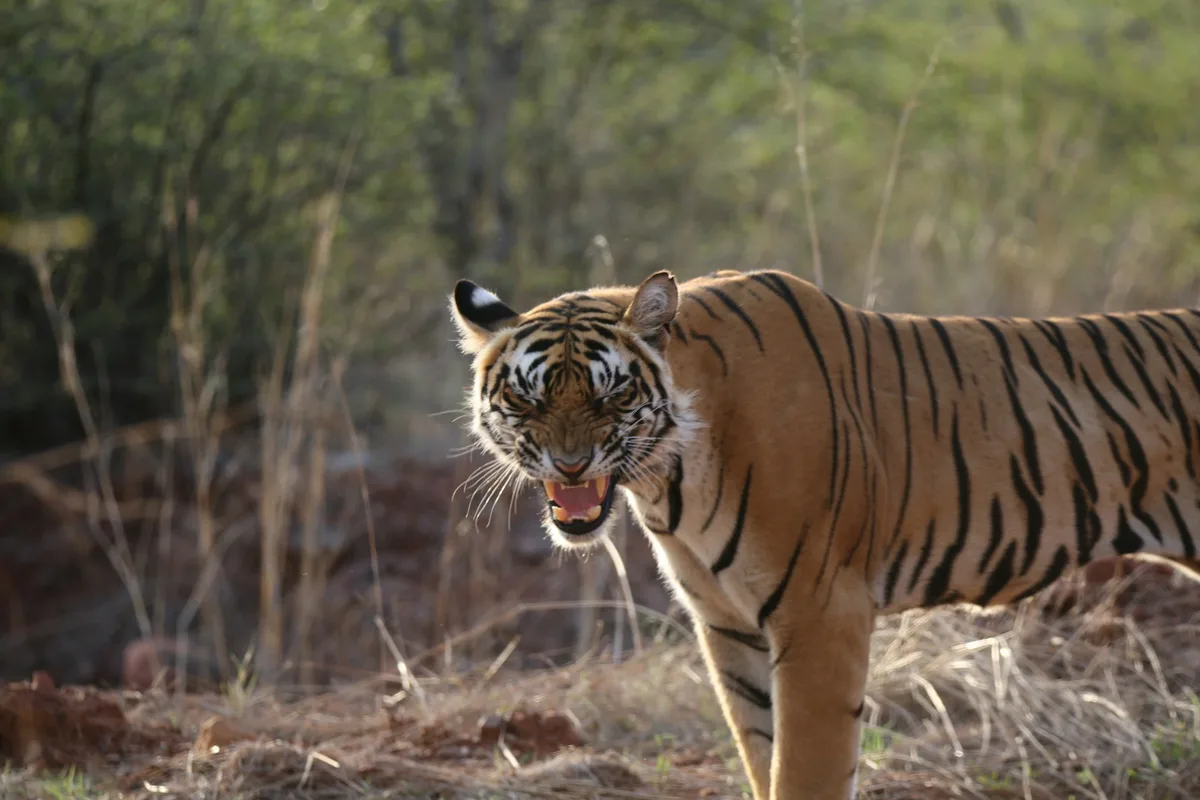
A former royal hunting ground turned tiger reserve in Rajasthan, among the best places in India for a daytime sighting of a wild Bengal tiger.
Visitor guide
Ranthambore National Park is a protected area in Sawai Madhopur district, Rajasthan, India, covering 1,334 square kilometres between the Banas and Chambal rivers. A former hunting ground of the Maharajas of Jaipur, it is a tiger reserve of dry forest, lakes and rocky hills, and it contains the historic Ranthambore Fort, a UNESCO World Heritage Site.
Wikipedia notes that in 1754 the Mughal emperor Shah Alam II granted the area to Maharaja Sawai Madho Singh I of Jaipur, who made it the Maharaja's exclusive hunting retreat, a tradition that continued until Indian independence. The area was constituted as the Sawai Madhopur Game Sanctuary in 1955, covering 282 square kilometres. It became one of the first Project Tiger reserves in the early 1970s, with sources giving 1973 or 1974 and was declared a national park in 1980. The present park includes the Kailadevi Wildlife Sanctuary and Sawai Man Singh Sanctuary within its 1,334 square kilometres, with a core area of about 275 square kilometres.
The park lies between the Aravalli and Vindhya hill ranges, at elevations of about 215 to 505 metres. Its landscape is made up of dry deciduous forest, open grassy meadows, rocky terrain and a number of lakes and streams. Wikipedia reports more than 300 tree species, including more than 100 with medicinal importance, and names the dhonk tree as characteristic, brown in summer and quick to turn green with a few drops of rain. Padam Talao is the largest of the park's lakes, and a historic rest house stands on its edge.
Ranthambore is best known for its Bengal tigers. Wikipedia says numbers fell to about 15 in the early 2000s because of poaching and other pressures, and that there were 69 tigers in the park as of 2022. The park also supports leopards, sloth bears, striped hyenas, caracals, jungle cats, golden jackals, and herbivores including chital, sambar, nilgai, chinkara and blackbuck. More than 270 bird species have been recorded, including peafowl, crested serpent eagle and Indian paradise flycatcher, along with reptiles such as mugger crocodile and Indian rock python. Sightings are never guaranteed in any wild reserve, and animal numbers change over time.
The fort sits on a hill about 210 metres above the surrounding plain and gives the park its name. Wikipedia credits Rajput king Sapaldaksha of the Chauhan dynasty with laying its foundation in the mid-10th century, though another section of the same article gives different early attributions, so the origins are uncertain. Its medieval history includes sieges by the Delhi Sultanate and rule by the Chauhans, rulers of Mewar and the Hada Rajputs before Akbar captured it in 1568. It later passed to the Kachwaha Maharajas of Jaipur in the 17th century. Inside are red-stone temples devoted to Ganesh, Shiva and Ramlalaji, and Jain temples built in the 12th and 13th centuries. The fort was inscribed in 2013 with five other Rajasthan forts as the Hill Forts of Rajasthan.
The park is based around the town of Sawai Madhopur, founded in 1763 and named after Maharaja Sawai Madho Singh I, about 121 kilometres southeast of Jaipur. Safari routes and zones are managed by the forest department and rules change, so arrangements are made locally. A private tour with a driver and naturalist guide is a natural way to combine the wildlife with the fort and nearby heritage stops.
See every tour and attraction we cover in India.