TorontoOntario · 36 tours
 Niagara FallsOntario · 25 tours
 New York CityNew York · 30 tours
 Las VegasNevada · 8 tours
 San FranciscoCalifornia · 16 tours
 VancouverBritish Columbia · 17 tours
 DubaiUAE · 54 tours
 Abu DhabiUAE · 5 tours
 Buenos AiresArgentina · 23 tours
 AthensGreece · 31 tours
 AucklandNew Zealand · 38 tours
 CancunMexico · 54 tours
No destinations match “”. Try searching all tours instead — that search understands full questions, not just place names.
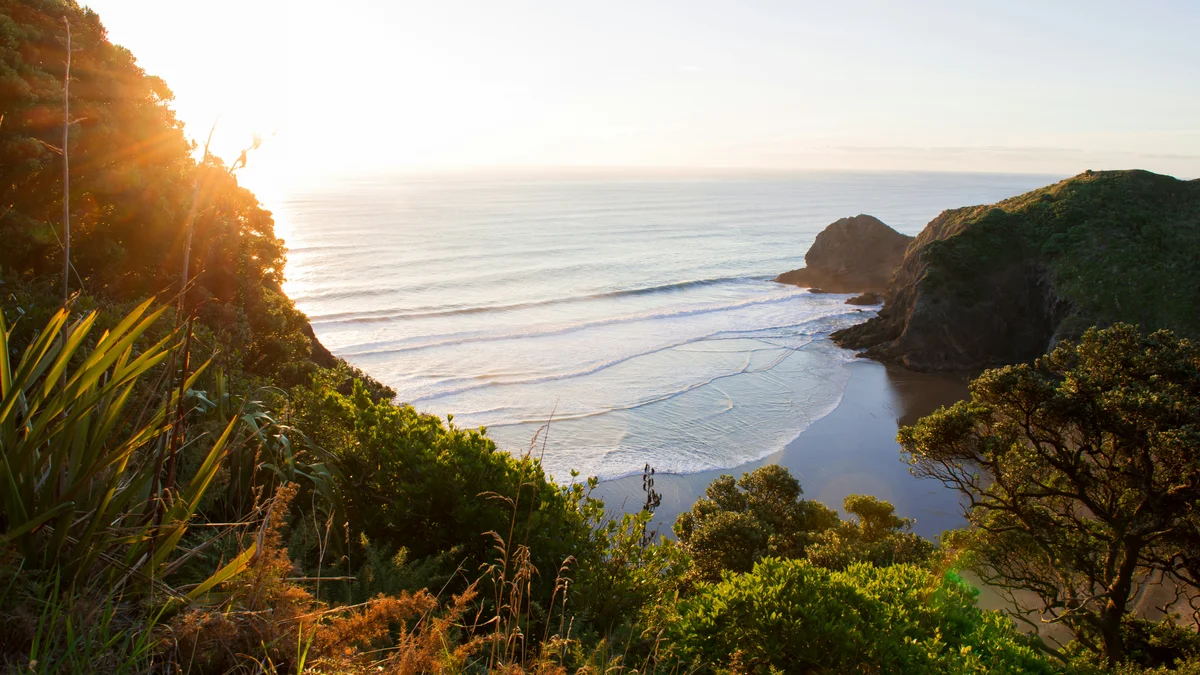
Piha Beach is a dramatic black-sand surf beach on Auckland's rugged West Coast, backed by the dense native bush of the Waitākere Ranges. Its black sand gets its colour from a high iron content and gets noticeably hot underfoot on sunny days. The beach is a popular surfing spot but also has genuinely strong rip currents, so swimming is only advised between the flags when lifeguards are on patrol.
Visitor guide
Piha is a coastal settlement and surf beach on the Tasman Sea coast of West Auckland, New Zealand, about 39 km west of the city centre. Backed by the bush of the Waitakere Ranges and dominated by the rock formation known as Lion Rock, it is one of the best-known beaches on Auckland's wild west coast.
According to Wikipedia, Piha has two surf beaches, a sheltered lagoon and several streams. Its black sand takes its colour from a high iron content, which the article traces back to Mount Taranaki and earlier local volcanoes. Lion Rock is an eroded volcanic neck roughly 16 million years old that divides North and South Piha beaches. It is named for its resemblance to a lying lion when seen from the shore side and has become an emblem of Auckland's west coast.
The area is part of the rohe, or tribal territory, of Te Kawerau a Maki. The name comes from Te Piha, the traditional name of Lion Rock, which was later applied to the wider area and refers to the pattern waves make when they strike the rock. There were many pa and villages here, including Whakaari pa on Lion Rock, and archaeologists have found platforms, middens, terraces and textile fragments there that predate European contact. Erosion has badly damaged the pa earthworks.
Around 1900, holidaymakers travelled by coach from Glen Eden to stay in Piha's guest houses. A timber settlement existed around 1916, and a memorial to local sawmillers who served in the First World War was unveiled on Lion Rock in 1919. Photographer Albert Percy Godber documented the area in the 1910s.
Inland, Kitekite Falls lie about 2 km from the beach on the Glen Esk stream, with a swimming pool above the falls and a picnic area at the base. The Gap, about 1 km south of South Beach, has a lagoon and a blowhole visible at low tide. The Waitakere Ranges offer walks of varying difficulty, though Wikipedia notes large parts of the ranges have been closed since 2018 because of kauri dieback disease, so access to individual tracks varies.
Piha is described as the birthplace of New Zealand board riding in 1958 and has hosted national and international surfing championships. Two clubs patrol the beach in summer, the Piha Surf Life Saving Club south of Lion Rock and the United North Piha Lifeguard Service to the north, each marking patrolled areas with red and yellow flags. Rip currents here are unpredictable, and lifeguards advise swimming between the flags during patrol hours. The beach was also the setting for the reality series Piha Rescue, which followed the surf lifesavers over 12 series.
With a driver handling the winding coastal road, a private visit can combine the beach with the nearby ranges at an easy pace.
See every tour and attraction we cover in Auckland.