TorontoOntario · 36 tours
 Niagara FallsOntario · 25 tours
 New York CityNew York · 30 tours
 Las VegasNevada · 8 tours
 San FranciscoCalifornia · 16 tours
 VancouverBritish Columbia · 17 tours
 DubaiUAE · 54 tours
 Abu DhabiUAE · 5 tours
 Buenos AiresArgentina · 23 tours
 AthensGreece · 31 tours
 AucklandNew Zealand · 38 tours
 CancunMexico · 54 tours
No destinations match “”. Try searching all tours instead — that search understands full questions, not just place names.
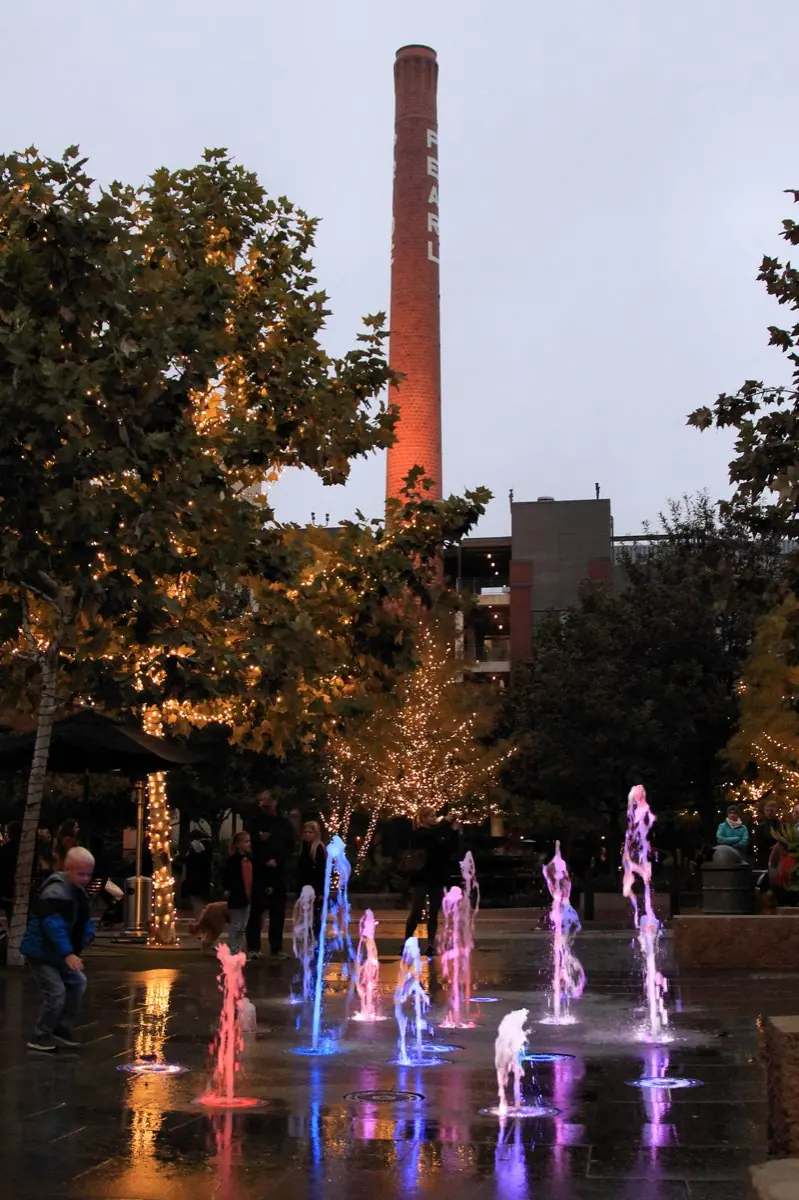
A revitalized former brewery complex turned dining, shopping, and culinary district.
Visitor guide
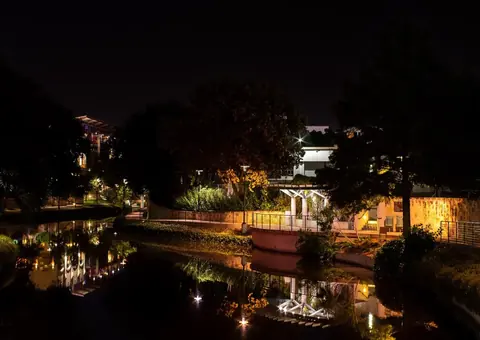
The Pearl is a former brewery complex just north of downtown San Antonio that has been turned into a district of restaurants, shops, a hotel and a culinary school. Its historic stone brewhouse, dated to the 1890s, anchors a campus that traces its brewing history back to the early 1880s.
The site began as the J. B. Behloradsky Brewery, running from 1881 to 1883, then became the City Brewery; investors bought it in 1883 and formed the San Antonio Brewing Company. The Handbook of Texas says Behloradsky began producing lager in 1884 and that by 1887 Oscar Bergstrom, Frederick Hartz and brewer Otto Koehler controlled the business, chartered as the San Antonio Brewing Association. The brewery went through several names, and it has been the Pearl Brewing Company since 1952. The Handbook says the Pearl name reportedly came from a German brewmaster who thought the bubbles in a glass looked like pearls, but it notes that the origin of the beer's formula and name is disputed.
Otto Koehler became president and manager in 1902. After his death in 1914, Emma Koehler became chief executive; she modernized the brewhouse, and annual output rose from about 6,000 barrels to over 110,000 barrels by 1916, when Pearl was the largest brewery in Texas. She led the company through Prohibition and the Depression; sources differ on when she stepped back, with one account giving nearly 26 years at the helm and Wikipedia saying she retired in 1933. She died in the 1940s (one source gives April 26, 1943).
The Volstead Act took effect on January 16, 1920, and the company, the only San Antonio brewery to survive Prohibition, kept going by making La Perla near beer and bottling soft drinks, along with ice, creamery and an advertising-sign business. When Prohibition ended on September 15, 1933, roughly 100 trucks and 25 boxcars of beer reportedly left the grounds within minutes. By 1981 the brewery was distributing 1.8 million barrels across 45 states with 535 San Antonio employees, according to the Handbook of Texas. Pabst took over operations after Paul Kalmanovitz acquired its assets in the 1980s, and the brewery closed in 2001 after 118 years of brewing along the river; sources differ slightly on the date Silver Ventures acquired the 23-acre site.
The brewhouse that now holds Hotel Emma was built in 1894 in the Second Empire style and designed by Chicago architect August Maritzen, according to Metropolis magazine and Wikipedia. Wikipedia says its original tower is 134 feet tall with eight floors and that the building was once the tallest in San Antonio, a description to treat cautiously. The Pearl Stable, which reopened in May 2006, carries an 1894 date on its pediment.
Pearl's own timeline lists the expansion that followed: the Pearl Stable opened in May 2006, the farmers market and the Culinary Institute of America arrived by about 2009, an amphitheater opened in 2010 and brewing returned in 2011. The CIA program began as the Center for Foods of the Americas and became the Culinary Institute of America, San Antonio in January 2008, according to Wikipedia. Local firm Lake Flato converted the surrounding district into a mixed-use development, with the hotel as its centerpiece. Hotel Emma opened in 2015 inside the 19th-century brewhouse and is named for Emma Koehler. The property lists 146 rooms. Later additions listed by Pearl include the Food Hall at Bottling Department, Cellars and Southline.
New York firm Roman and Williams, led by Robin Standefer and Stephen Alesch, designed the interiors, and Wikipedia says construction began on December 10, 2012. Metropolis describes a lobby that was once the brewery's engine room, with brick arches, metal beams, wooden rafters, original exhaust fans and an old ammonia compressor kept in place. The designers left layers of paint on the original brick as part of the building's character. The bar and clubroom, Sternewirth, is named for a 19th-century brewery perk that gave workers free beer during the workday, and three 10,000-gallon fermentation tanks remain, two of them fitted with banquette seating.
Pearl's website describes chef-led restaurants such as Brasserie Mon Chou Chou, music at Stable Hall and Otto's Ice House, locally owned shops such as Dos Carolinas, and sustainability features including solar installations, xeriscaping and more than 660 trees. The restoration of the brewhouse exterior brought back charcoal-colored rooftops and exposed natural stone walls.
Voyzo runs San Antonio tours privately, with your own vehicle and driver and door-to-door pickup, so Pearl can sit alongside downtown stops in one day. Check Pearl and each venue for current hours, events and market days.
See every tour and attraction we cover in San Antonio.