TorontoOntario · 36 tours
 Niagara FallsOntario · 25 tours
 New York CityNew York · 30 tours
 Las VegasNevada · 8 tours
 San FranciscoCalifornia · 16 tours
 VancouverBritish Columbia · 17 tours
 DubaiUAE · 54 tours
 Abu DhabiUAE · 5 tours
 Buenos AiresArgentina · 23 tours
 AthensGreece · 31 tours
 AucklandNew Zealand · 38 tours
 CancunMexico · 54 tours
No destinations match “”. Try searching all tours instead — that search understands full questions, not just place names.
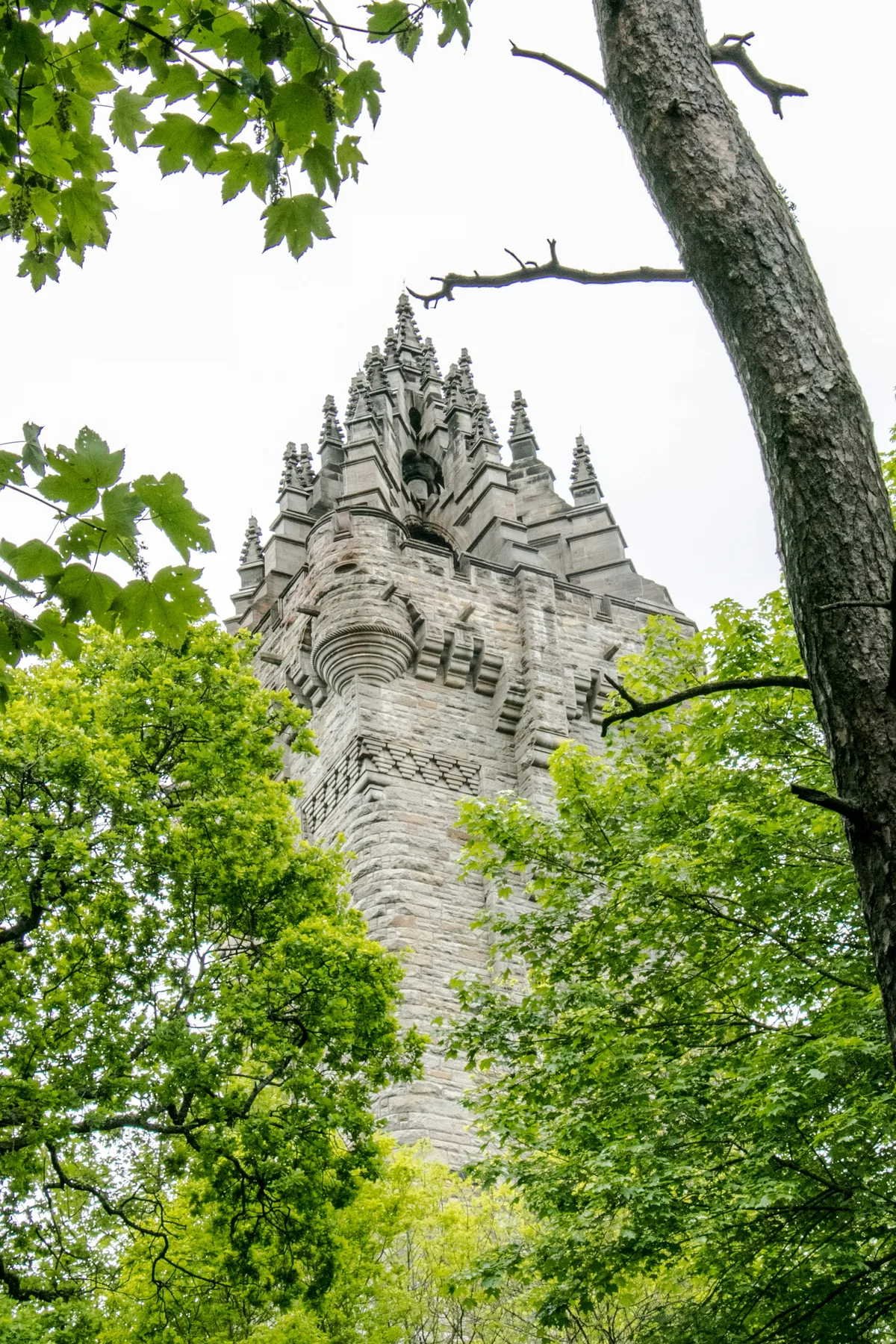
A 67-metre sandstone tower on a hilltop above Stirling, built in the 1860s to commemorate William Wallace's victory at the nearby Battle of Stirling Bridge in 1297.
Visitor guide
The National Wallace Monument is a 67-metre Victorian Gothic sandstone tower on the Abbey Craig, a volcanic hilltop overlooking Stirling in Scotland. It commemorates Sir William Wallace, the thirteenth-century Scottish leader, and is a Category A listed building.
The Rev Charles Rogers, then chaplain to the garrison at Stirling Castle, first proposed a national monument in 1851, and the lawyer William Burns took over the building committee in 1863 after Rogers resigned. Money came from public subscription and from foreign donors, including the Italian leader Giuseppe Garibaldi, in a period when Scottish national identity was resurgent. The foundation stone was laid in 1861 by the Duke of Atholl as Grand Master Mason of Scotland. The monument was completed in 1869 after about eight years of construction.
The monument's own history says it was funded entirely by public contributions totalling more than 15,000 pounds, though other sources give different figures. The architect was John Thomas Rochead.
The crag was chosen because it is said to be where Wallace watched the army of Edward I gather before the Battle of Stirling Bridge in 1297, in which Scottish forces under Wallace and Andrew Murray defeated an English army. The hill sits above Cambuskenneth Abbey, and from the top the monument looks across the River Forth and the carse below to the Ochil Hills.
The tower has four floors, and a spiral staircase of 246 steps leads to the viewing gallery in the crown. Three exhibition rooms display the story of Wallace and Scottish history. The Wallace Sword, a longsword about 1.63 metres long, is displayed inside; the artefacts shown are believed to have belonged to Wallace.
The Hall of Heroes contains busts of famous Scots, including Robert the Bruce, John Knox, Robert Burns, Adam Smith, James Watt and Sir Walter Scott. In 2017 it was announced that Mary Slessor and Maggie Keswick Jencks would be the first women added. A Victorian statue of Wallace by the Edinburgh sculptor David Watson Stevenson stands on the monument's corner.
The monument is reached on foot from the base of the crag, and the climb through woodland is part of the experience. It is not accessible to visitors with mobility needs. Stirling Castle and Bannockburn are also nearby, and many travellers combine the monument with a wider tour of Stirling and the central Scotland heartland.
A separate statue called Freedom, carved by Tom Church in 1996 and inspired by the film Braveheart, once stood in the visitor centre car park. It was removed in 2008 and is not part of the monument today.
The tower is a prominent landmark in the Forth Valley, and its crown-shaped top and Gothic details make it recognisable from the surrounding countryside. Its location, close to the sites of Stirling Castle, Cambuskenneth Abbey and the medieval river crossing, makes it part of a wider landscape of Scottish history.
A private guided visit with a driver makes it easier to combine the monument with Stirling Castle and Bannockburn in one day.
See every tour and attraction we cover in United Kingdom.