TorontoOntario · 36 tours
 Niagara FallsOntario · 25 tours
 New York CityNew York · 30 tours
 Las VegasNevada · 8 tours
 San FranciscoCalifornia · 16 tours
 VancouverBritish Columbia · 17 tours
 DubaiUAE · 54 tours
 Abu DhabiUAE · 5 tours
 Buenos AiresArgentina · 23 tours
 AthensGreece · 31 tours
 AucklandNew Zealand · 38 tours
 CancunMexico · 54 tours
No destinations match “”. Try searching all tours instead — that search understands full questions, not just place names.
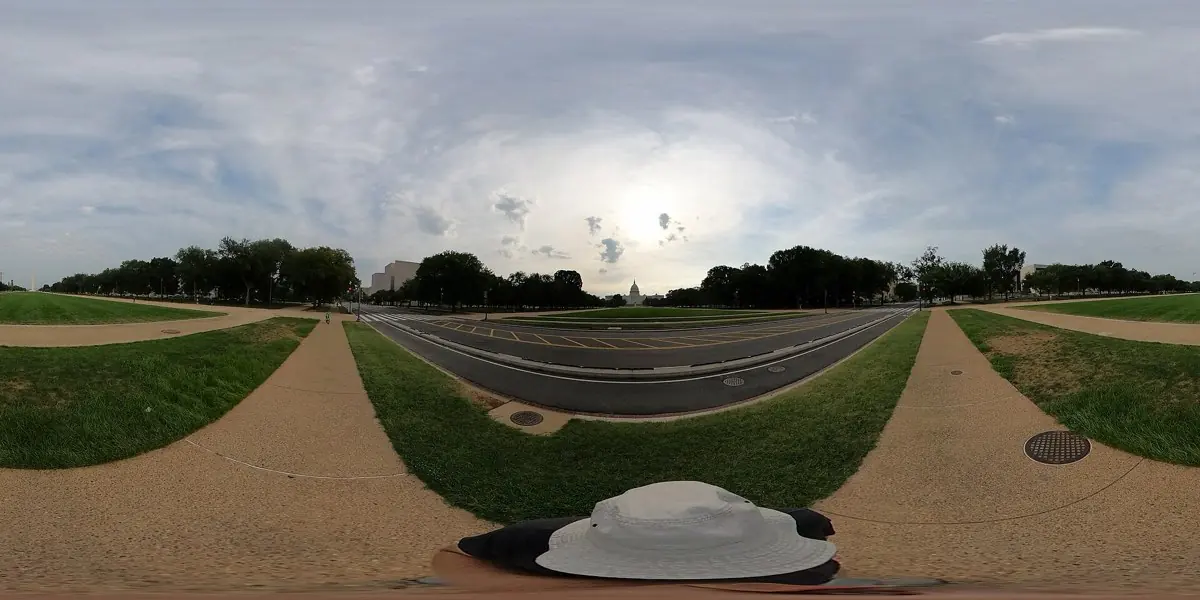
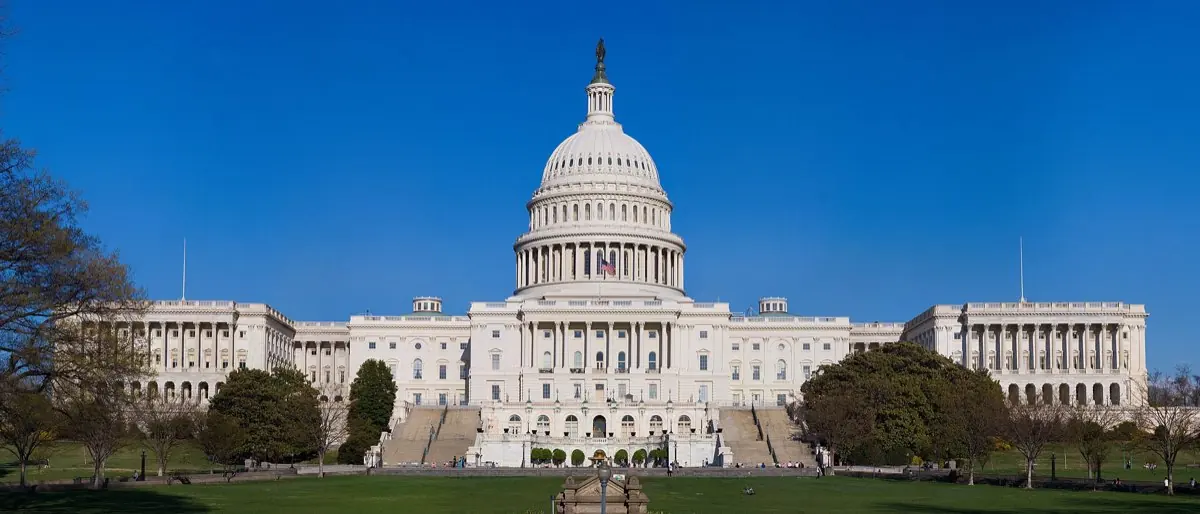
The two-mile national park connecting the Capitol to the Lincoln Memorial, lined with monuments and museums.
Visitor guide
The National Mall is the long, grassy axis at the heart of Washington, D.C., running about 1.9 miles (3 km) from the Capitol steps to the Lincoln Memorial. Museums of the Smithsonian Institution and the National Gallery of Art line its flanks, and the Washington Monument rises near its middle. Today it is the central part of National Mall and Memorial Parks, a National Park Service unit that is often counted among the most visited in the country.
The idea of a grand, garden-lined avenue goes back to Pierre L'Enfant's 1791 plan for the new federal city, which pictured a boulevard roughly a mile long and 400 feet wide. The name 'Mall' appears on maps from the early 1800s. In the early 1850s the landscape designer Andrew Jackson Downing drew up a naturalistic scheme of winding paths and plantings, and the Smithsonian Institution Building, 'the Castle', was built between 1847 and 1855. Through the nineteenth century the space was cut up by a canal, an armory and a railroad station, none of which survive on their original sites.
The look visitors see today comes mainly from the McMillan Plan, drawn up around 1901-02, which swept away that clutter and returned the Mall to a formal composition: a broad lawn about 300 feet wide framed by rows of American elms, with museums and public buildings on either side. Between 1882 and 1911 the Army Corps of Engineers dredged the Potomac, and the fill created West Potomac Park, where the Lincoln Memorial and the Tidal Basin now sit. Temporary World War I and II buildings stood on the Mall for decades; their demolition in 1970 made room for Constitution Gardens, dedicated in 1976.
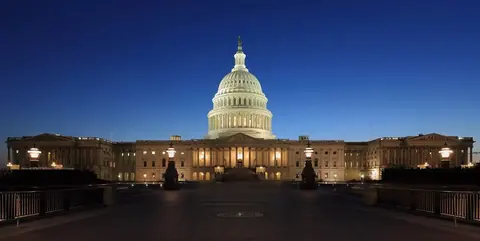
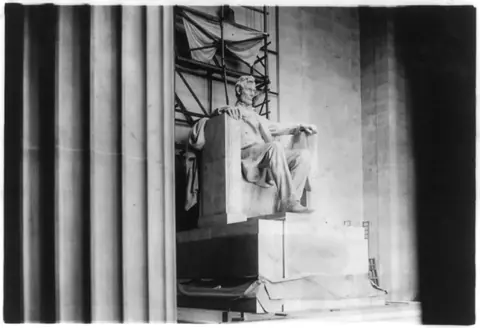
At the eastern end the Capitol Reflecting Pool (1971) and the Ulysses S. Grant Memorial (1922) sit below the Capitol. Moving west, the museum rows include the Smithsonian Castle (1849), the National Museum of Natural History (1910), the National Museum of American History (1964), the National Air and Space Museum (1976) and the National Museum of African American History and Culture (2016), alongside the National Gallery's West Building (1941) and East Building (1978). The Washington Monument anchors the center, and beyond it lie the World War II Memorial, the Reflecting Pool, the Lincoln Memorial, the Vietnam Veterans Memorial and the Korean War Veterans Memorial. The Jefferson Memorial and the Martin Luther King Jr. Memorial stand a short walk away at the Tidal Basin.
The National Park Service says the wider park includes about 2,000 American elms along the Mall and about 3,000 Japanese cherry trees at the Tidal Basin. The Mall was listed on the National Register of Historic Places in 1966. It has long been the capital's stage for national gatherings, including Marian Anderson's 1939 Easter concert at the Lincoln Memorial, the 1976 Bicentennial fireworks, and the annual Fourth of July celebrations.
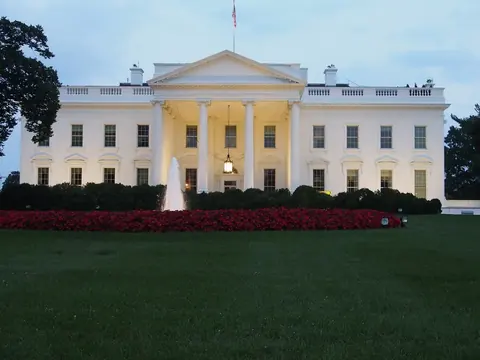
Within a few blocks you can reach the U.S. Capitol, the National Archives, the Tidal Basin and, to the north, the White House area. Arlington National Cemetery lies just across the Potomac from the Lincoln Memorial.
See every tour and attraction we cover in Washington DC.