TorontoOntario · 36 tours
 Niagara FallsOntario · 25 tours
 New York CityNew York · 30 tours
 Las VegasNevada · 8 tours
 San FranciscoCalifornia · 16 tours
 VancouverBritish Columbia · 17 tours
 DubaiUAE · 54 tours
 Abu DhabiUAE · 5 tours
 Buenos AiresArgentina · 23 tours
 AthensGreece · 31 tours
 AucklandNew Zealand · 38 tours
 CancunMexico · 54 tours
No destinations match “”. Try searching all tours instead — that search understands full questions, not just place names.
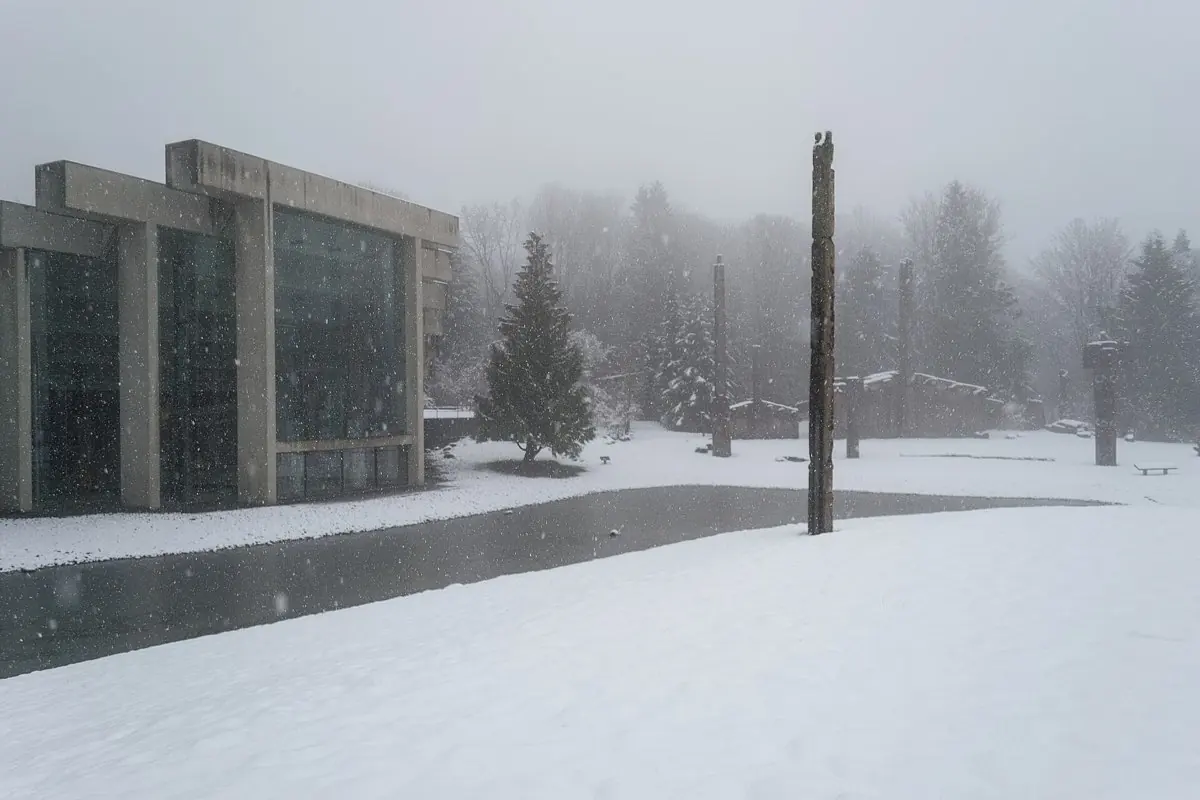
A renowned collection of Pacific Northwest Indigenous art and totem poles at the University of British Columbia.
Visitor guide
The Museum of Anthropology at UBC (MOA) is a teaching and research museum on the university's Point Grey campus, at 6393 NW Marine Drive, famed for its Northwest Coast First Nations art and for its Arthur Erickson building. It stands on the traditional, ancestral and unceded territory of the Musqueam people. The museum's own site describes about 50,000 objects from around the world.
MOA's roots lie in UBC's 1927 acquisition of the Frank Burnett Collection of Pacific objects. Sources give different founding dates: Wikipedia says the museum was officially founded in 1947, with Harry Hawthorn as first director and Audrey Hawthorn as first curator, while MOA's own site says it was established in 1949 as a department of UBC's Faculty of Arts. It moved into its current building on May 30, 1976.
Arthur Erickson designed the concrete-and-glass building, with grounds landscaped by Cornelia Oberlander. It draws on the post-and-beam architecture of northern Northwest Coast peoples, using tall concrete posts and beams and large glass walls around the Great Hall, where monumental carved poles and house posts are displayed. The site incorporates former Second World War gun emplacements, and Bill Reid's cedar sculpture The Raven and the First Men is displayed in the museum; the work appeared on the Canadian twenty-dollar bill from 2004 to 2012, per Wikipedia. Outside, Haida-style houses and poles stand on the grounds, built under Reid's direction with carvers including Doug Cranmer.
MOA says it holds the finest collection of works by Bill Reid, as well as a large Northwest Coast collection including Musqueam pieces and works by contemporary Musqueam artists such as Susan Point. Its Laboratory of Archaeology holds roughly 535,000 additional archaeological objects, and the archives include over 90,000 photographs. The Multiversity Galleries, part of a renewal project completed in 2010, display more than 9,000 objects from around the world in open visible storage. The museum's 2010 expansion increased its size by 50 per cent, and the Gallery of Northwest Coast Masterworks opened in 2017. Wikipedia also notes roughly 6,000 textiles and a significant share of ethnographic holdings from Asia.
MOA closed for a seismic upgrade and reopened on June 13, 2024, according to Wikipedia; sources are inconsistent about exact closure dates. Visitors should check MOA for current hours, tickets, admission policies and access, including any gallery closures.
UBC's Nitobe Memorial Garden, the Chan Centre and the Pacific Spirit Regional Park trails are a short drive away.
See every tour and attraction we cover in Vancouver.