TorontoOntario · 36 tours
 Niagara FallsOntario · 25 tours
 New York CityNew York · 30 tours
 Las VegasNevada · 8 tours
 San FranciscoCalifornia · 16 tours
 VancouverBritish Columbia · 17 tours
 DubaiUAE · 54 tours
 Abu DhabiUAE · 5 tours
 Buenos AiresArgentina · 23 tours
 AthensGreece · 31 tours
 AucklandNew Zealand · 38 tours
 CancunMexico · 54 tours
No destinations match “”. Try searching all tours instead — that search understands full questions, not just place names.

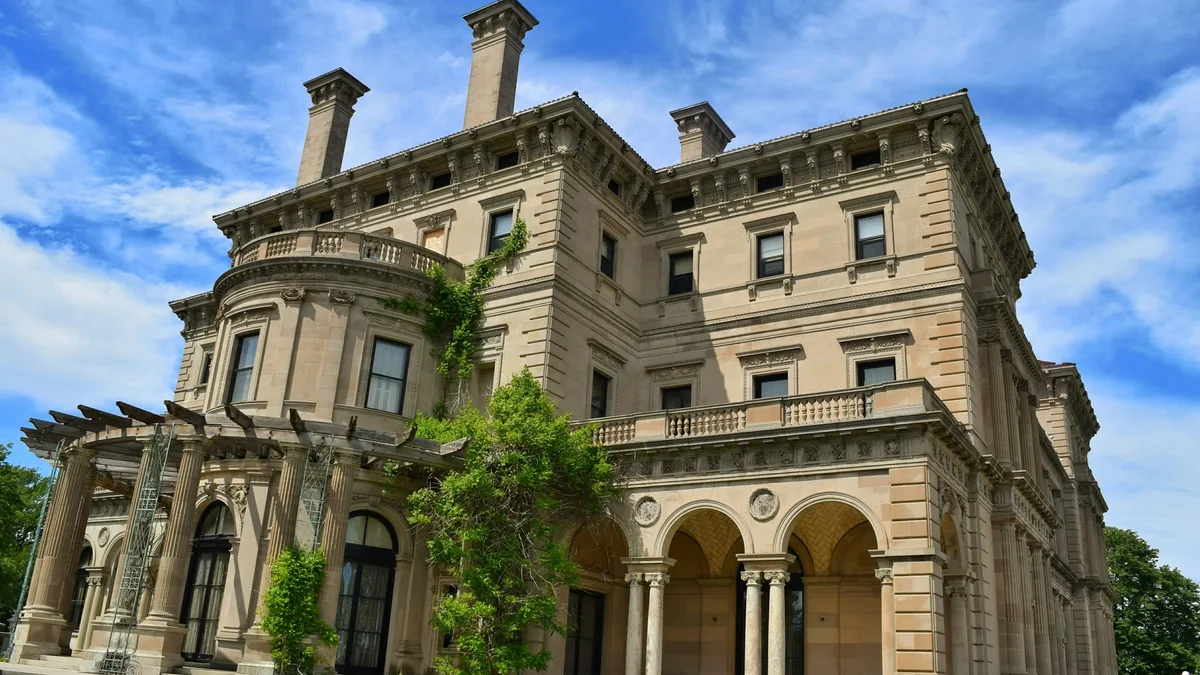
Built in 1892 for William K. Vanderbilt and his wife Alva, Marble House used an enormous quantity of marble in its construction, making it one of the most opulent of Newport's summer cottages. Its design, modeled on the Petit Trianon at Versailles, reflected Alva Vanderbilt's ambitions to establish the family among America's social elite through architecture as much as wealth. Alva later became a prominent suffragist and hosted rallies for women's voting rights on the estate's grounds after her divorce from William.
Visitor guide
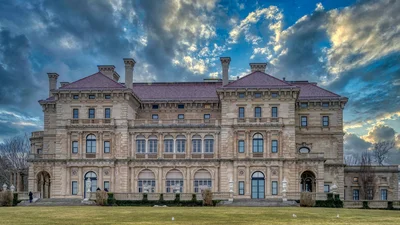
Marble House is a Beaux-Arts mansion on Bellevue Avenue in Newport, Rhode Island, built between 1888 and 1892 for Alva and William Kissam Vanderbilt and designed by Richard Morris Hunt. The Preservation Society of Newport County says William gave it to Alva as a 39th birthday present, and that it helped set Newport's course from a quiet summer colony of wooden houses toward the era of Gilded Age mansions. It is a National Historic Landmark.
Wikipedia describes the house as loosely inspired by the Petit Trianon at Versailles, with French-style interiors by Jules Allard and Sons of Paris. It has fifty rooms and required 36 servants, with servants' quarters on a concealed third floor. Wikipedia gives the cost as $11 million, about $7 million of it spent on roughly 500,000 cubic feet of marble; modern-dollar equivalents vary by source, so treat those as approximate. The Society says Alva described the house as 'like a fourth child' to her.
Notable rooms include the Gothic Room, Grand Salon, library and dining room, and the Preservation Society's photography features the Gold Room.
Alva used the house to build social standing and to arrange her daughter Consuelo's marriage into the British aristocracy. She divorced William in 1895, remarried Oliver Hazard Perry Belmont in 1896 and moved to Belcourt, another Newport house. After Oliver's death she reopened Marble House and hosted rallies for women's suffrage. She closed the house permanently in 1919 and moved to France.
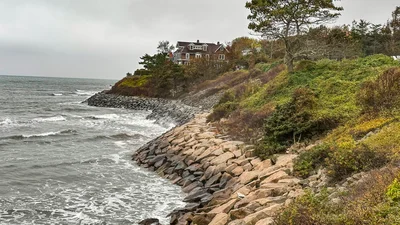
On the cliff at the edge of the property, overlooking the Atlantic, stands the Chinese Tea House, which Alva Belmont built in 1914 as an ornament and place for social events, including suffrage rallies. Wikipedia describes it as modeled on 12th-century Song dynasty temples. The Society says it hosts catered afternoon tea for much of the year, but check for current service.
Alva sold the house to Frederick H. Prince in 1932, less than a year before she died. The Prince family used it during Newport summers for more than 30 years. In 1963 the Preservation Society of Newport County bought it, with funding from Harold Stirling Vanderbilt, and the Prince family donated most of the original furniture. Marble House was added to the National Register of Historic Places in 1971 and designated a National Historic Landmark in 2006, and it lies within the Bellevue Avenue Historic District.
Marble House has appeared on screen in productions including The Great Gatsby (1974), The Buccaneers (1995), Amistad (1997) and 27 Dresses (2008).
Check the Preservation Society for current tours, ticketing and Tea House service. Because Marble House sits on Bellevue Avenue near the Cliff Walk, it pairs naturally with other mansion stops.
For a Voyzo private tour, your driver can move your group between Newport mansions door to door, leaving you free to plan time at Marble House without worrying about parking.
See every tour and attraction we cover in Newport.