TorontoOntario · 36 tours
 Niagara FallsOntario · 25 tours
 New York CityNew York · 30 tours
 Las VegasNevada · 8 tours
 San FranciscoCalifornia · 16 tours
 VancouverBritish Columbia · 17 tours
 DubaiUAE · 54 tours
 Abu DhabiUAE · 5 tours
 Buenos AiresArgentina · 23 tours
 AthensGreece · 31 tours
 AucklandNew Zealand · 38 tours
 CancunMexico · 54 tours
No destinations match “”. Try searching all tours instead — that search understands full questions, not just place names.
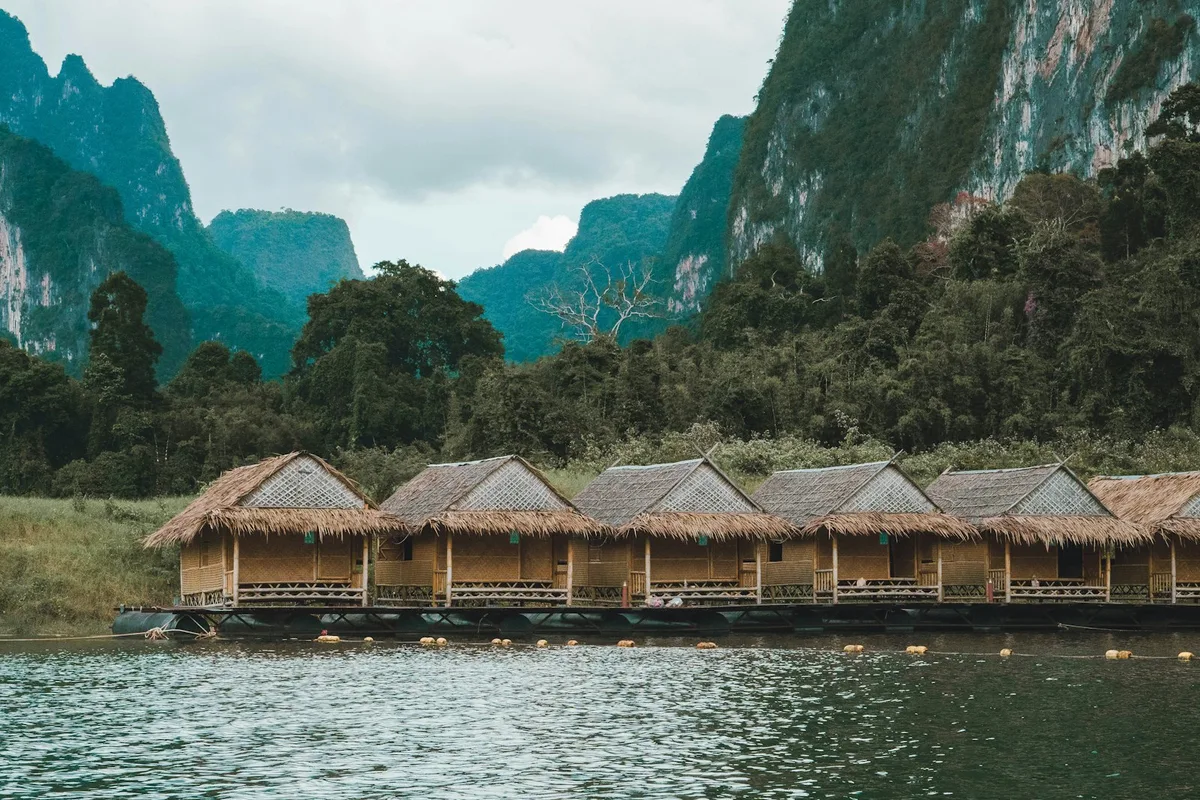
Rainforest older than the Amazon, with limestone karst towers rising from Cheow Lan Lake and floating bamboo bungalows built for overnight stays on the water.
Visitor guide
Khao Sok National Park is a protected area of rainforest, limestone karst and lake in Surat Thani Province, southern Thailand. It covers about 739 square kilometres, including the large Cheow Lan Lake, and is known for jungle-covered limestone towers, rivers, caves and a rich variety of wildlife.
According to Wikipedia, the park was established on 22 December 1980 and covers 461,712 rai, which includes the 165-square-kilometre Cheow Lan Lake. The lake was created when the Ratchaprapha Dam, about 94 metres high, blocked the Klong Saeng River; it was completed roughly two years after the park's designation. Sandstone and mudstone rise some 300 to 600 metres above sea level, and a north-south limestone range crosses the park, reaching about 950 metres. Erosion of the limestone produced the karst formations seen today, and the monsoon brings rain from both the Gulf of Thailand and the Andaman Sea, giving a long wet season from late April to December.
Wikipedia describes the park's rainforest as older and more diverse than the Amazon, a claim often repeated in tourism material but that the article itself notes is uncited, so it is best treated as a popular description rather than a verified comparison.
The park is best known for Rafflesia kerrii, a very large parasitic flower, and it is one of only two known sites for the endangered palm Kerriodoxa elegans. Dense bamboo, lianas and buttress-rooted giants shape the forest. Mammals recorded include Asian elephant, Malayan tapir, gaur, banteng, serow, sambar deer, macaques, langurs and white-handed gibbons. Many tourism sites claim tigers live here, but Wikipedia says there are historical records and no camera-trap evidence of a current population. Hornbills and other birds are among the species visitors may hear before they see them.
The earliest accounts of settlement in the Khao Sok area date from the 1800s, in the reign of Rama II, when people fled inland during the Burmese-Siamese war. In the 1970s the park's caves served for about seven years as strongholds for Thai student activists and communist insurgents. After the dam filled the valley, animals had to relocate, and a 1995 study reported the loss of about 52 fish species from the river, which could not survive in still water.
Cheow Lan Lake, with its limestone cliffs and green-turquoise water, is the park's most popular destination, and boat trips are the usual way to see it. Maintained trails start near the west entrance, local guides lead canoe and bamboo-raft trips on the Sok River, and caves such as Nam Talu and Diamond Cave can be explored. Temperatures stay between about 22 and 36 degrees Celsius through the year, with the driest months in January and February.
A private guided visit with a dedicated vehicle and driver simplifies the transfer into the park and onward to the lake. Overnight arrangements vary, so details are tailored on request.
See every tour and attraction we cover in Thailand.